
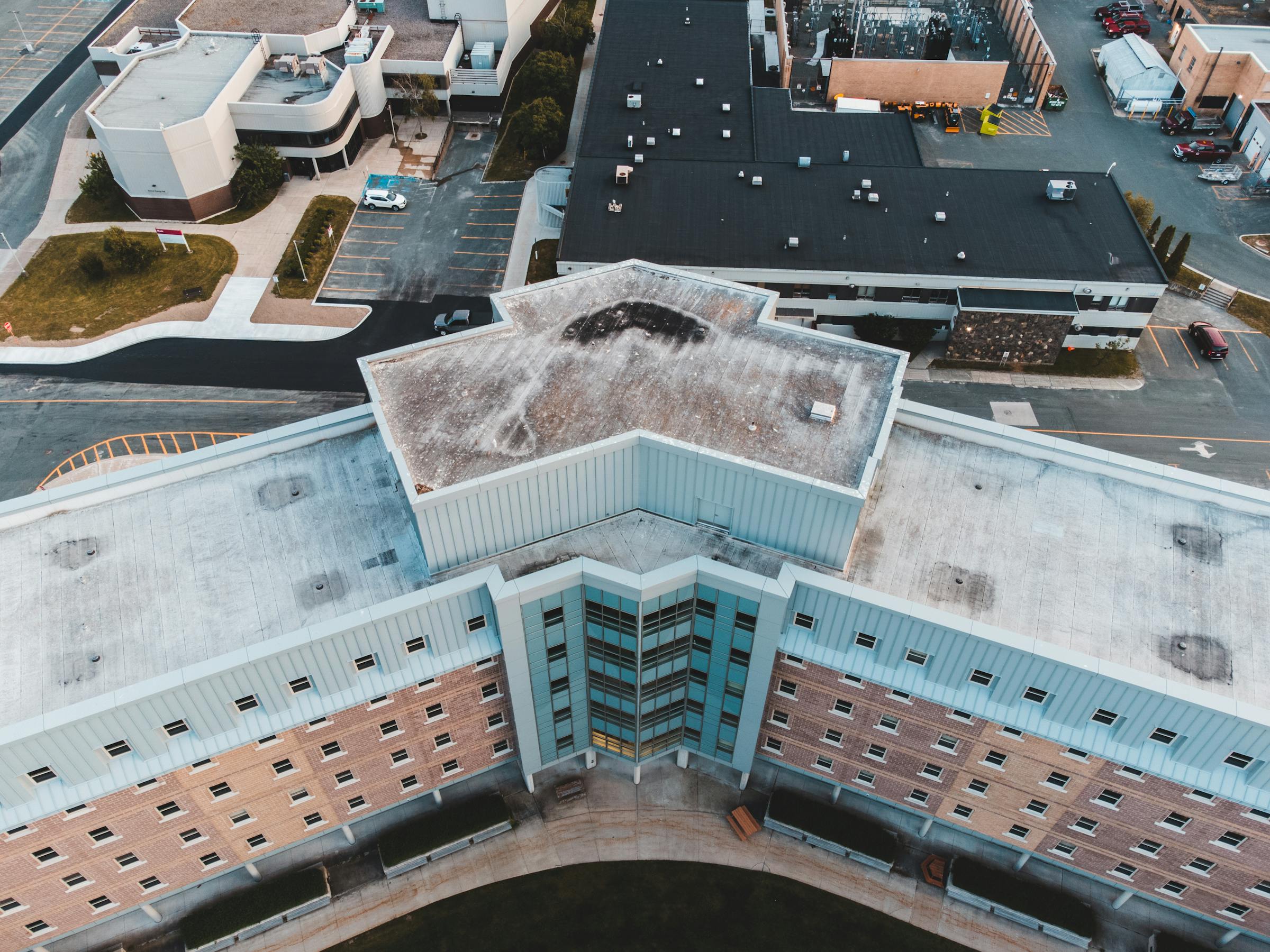
We walked a warehouse roof in Grandville last fall. The owner had zero interior leaks. Ceiling tiles dry, drains clear, no ponding visible from the ground. He was being told to budget $180,000 for a tear-off because the membrane was sixteen years old and the inspector said better safe than sorry.
We ran a moisture map. Twelve percent of the deck was saturated, concentrated in three sections around the original roof drains and one stretch along the south parapet. The other eighty-eight percent was dry and structurally sound. We restored the wet sections with Andek POLAROOF coatings, re-sealed the parapet, and left the rest of the roof alone. Total project cost ran roughly forty percent of the tear-off quote, with a 20-year warranty on the restored areas. No disruption to the warehouse operation, no dumpster, no eight weeks of lost productivity.
The whole job was possible because the moisture map showed us which sections were actually wet. Without that scan, the only safe answer is tear off everything. With it, we can do the work where the work is needed. This article is what every property owner should understand before they sign a tear-off quote — what moisture mapping is, how it actually works, what the report shows, and why we run it free.
What a Moisture Map Is
A moisture map is a thermal scan of the entire roof that shows, section by section, where water has gotten under the membrane. The deliverable is two things: a top-down image of the roof with the wet zones shaded in color, and a written report that quantifies how much area is compromised, where the water is most likely entering, and which sections are still sound enough to leave alone.
It exists because the visible part of a roof — the membrane, the seams, the flashings — is only the top of the system. Underneath sits insulation board, a vapor barrier, and the structural deck. Most roof failures start when water gets past the membrane and saturates the insulation. From the outside the roof still looks fine. From the inside the ceiling is dry. But the deck is rotting, the insulation has lost its R-value, and the cost to fix it doubles every year the leak goes unrepaired. A moisture map catches that window while the repair is still scoped, restorable, and cost-defensible.
How the Infrared Scan Works
The physics is simple. Water has a much higher thermal mass than dry roofing material. After a sunny day, the entire roof heats up. Once the sun drops, the dry sections cool fast — air and dry foam release stored heat in minutes. The wet sections stay warm. The trapped water acts like a thermal battery and holds the heat for hours.
We point an infrared camera at the roof during that cooling window — typically between an hour before sunset and two hours after — and the wet zones show up as bright warm patches against the cooler dry field. The camera reads the surface temperature, but what we are actually inferring is the moisture content of the layer underneath the membrane.
The scan itself takes about an hour to ninety minutes on a commercial roof, depending on size. We walk the roof systematically, capture overlapping infrared frames, log GPS coordinates against each capture, and stitch the result into a single thermal image of the whole field. Any clear hot spot gets a follow-up moisture-meter probe to confirm the infrared reading and rule out non-water heat sources like a running rooftop unit.
What the Report Tells You
The finished report has six pieces:
- ◆Top-down thermal map. A single image showing the whole roof with wet zones shaded in color. You can see at a glance whether the problem is one corner or the entire south half.
- ◆Square footage of compromised area. Each wet zone is measured. The report tells you exactly how many square feet are saturated and what percentage of the total roof is affected. This is the number that defines whether you are looking at a targeted restoration or a tear-off.
- ◆Probable entry points. For each wet zone, we name the most likely failure point — a split lap seam, a rusted drain, a cracked vent base, a parapet flashing that pulled away. Without this, you fix the surface and water finds the same path in six months later.
- ◆Scan conditions. Date, ambient temperature, surface temperature differential, wind, and time of day. Insurance adjusters and property managers want this. It proves the scan was run inside the conditions the technology actually works under.
- ◆Visual photos. We photograph any visible failure we find during the roof walk and tag it to the corresponding thermal zone in the report. Black mold streaks, corroded fasteners, separated lap seams, ponding rings, all get captured.
- ◆Recommended action. Restore, replace, or maintain. The report makes a clear call based on the saturation percentage, the deck condition, and the age of the system. If we tell you to replace, we do not bid the restoration job. The honest call is the whole value of the scan.
The 12% Rule
The industry rule of thumb on commercial flat roofs is that under fifteen percent saturated area is restorable; between fifteen and twenty-five is borderline and depends on deck condition; over twenty-five percent the math usually favors tear-off. This is not a hard cutoff — a twenty-percent saturation in three concentrated patches is very different from a twenty-percent saturation spread evenly across the whole field — but it is the rough frame we work inside.
The Grandville warehouse story above came in at twelve percent. Restorable, easy call. We have also walked away from roofs in the high thirties and told the owner to tear it off and start over. Both answers come from the same scan, run the same way.
Why It Is Free
Most contractors do not own moisture-mapping equipment and do not know how to read the output. The default move is to cut a few core samples — destructive, time-consuming, and only tells you about the spots you cut — or to simply quote the worst case and write a tear-off bid. Either path leaves the owner overpaying for work that may not be needed.
We run the scan free because it is the only way our restoration bids make sense to the owner. Without the map, an Andek restoration looks like wishful thinking next to a $180,000 tear-off quote. With the map, the restoration scope is defensible — twelve percent saturation, three named entry points, a measured area to coat, a 20-year warranty. The free scan is not a loss leader. It is the diagnostic that makes the rest of our business model work.
One condition: if you take the report and hire another contractor, you keep the report at no charge. The only time there is a fee attached is if you decline any restoration work entirely and want a formal hard-copy MRI report for your own records or for property due diligence. That is the cost of the binding, the printing, and the deeper analysis that goes with a stand-alone deliverable. The walk-through scan and the digital report stay free regardless of outcome.
When To Get One
Five situations earn a moisture map:
- ◆You have a tear-off quote in hand. Before you sign, run the scan. If the contractor pushes back on a free second opinion, that is a flag. Tear-off is a one-way decision worth twenty thousand dollars to several hundred thousand.
- ◆Visible aging on a commercial flat roof. Membrane that is fading, brittle, or showing seam lift. Roof in year twelve to fifteen of a typical twenty-year service life. Recent ownership change with no maintenance history. Annual or biennial scans give you a baseline you can budget against.
- ◆Post-storm, post-hail. West Michigan storm season runs March through August. A scan run within thirty days of a documented storm event captures the damage cleanly for an insurance claim before wet sections spread and the carrier can argue the damage is pre-existing.
- ◆Property acquisition due diligence. A moisture map is the cleanest way to know what you are buying on a commercial property. The roof is usually the single largest deferred-maintenance line item in any acquisition. Scan it before close.
- ◆Active interior leak with no visible source. A ceiling stain in the office shows up but the membrane above looks intact. The water is traveling laterally under the membrane from somewhere else on the roof. A scan finds the entry point in an hour.
What Moisture Mapping Will Not Do
Two limits worth knowing before you call.
Infrared works on flat and low-slope membrane roofs. On steep-slope shingle roofs the airflow under the deck and the surface angle make the thermal signature unreliable. For residential storm and hail damage we use close-up visual inspection, drone overflight, and interior attic moisture readings on the underside of the deck. The free assessment still applies — the technology just changes based on the roof type.
The scan is also a snapshot. It captures the moisture state on the day of the scan. A roof that is dry today and gets scanned in a dry stretch may show clean. Two weeks later a new seam splits and water gets in. The map is not a prediction. It is a diagnosis. For commercial owners with high-value buildings, that is why annual or biennial scans in the second half of service life are the right rhythm — they catch the next wet zone before the next tear-off quote shows up.
Frequently Asked Questions
What is roof moisture mapping?
Moisture mapping is an infrared scan of a roof that detects water trapped under the membrane. A visual inspection tells you what is wrong on the surface. The infrared scan tells you what is wrong underneath — saturated insulation, wet decking, and rot in places that look perfectly fine from above. The output is a thermal image of the roof with wet sections shaded in and a written report that calls out square footage of compromised area, the suspected entry points, and which sections are still sound.
How does the infrared scan actually work?
Wet roof insulation holds heat differently from dry insulation. After the sun warms a roof during the day, the dry sections cool quickly once the sun drops. The wet sections hold the heat — water has a much higher thermal mass than dry foam or fiberboard. An infrared camera reads the surface temperature across the whole roof, and the wet areas show up as warm patches against the cooler dry field. We run scans in the late-afternoon and early-evening window when the temperature differential is sharpest.
Why does Platinum Roofing offer moisture mapping free?
Most roofs that get quoted for full tear-off do not need one. Without a moisture map, the only safe assumption is replace everything — the contractor cannot see which sections are wet, so the bid covers the worst case. With a moisture map, we can scope the work to the sections that actually need it. That makes the restoration price defensible to an owner and almost always cheaper than tear-off. The free scan is what lets us bid accurately. If you take the report and hire someone else, you keep it. The only time the report has a fee attached is if you decline restoration and want a hard-copy MRI report for your own records.
What does a finished moisture map report look like?
You get a top-down outline of the roof with wet zones shaded in color. Each zone is labeled with approximate square footage and a probable entry point — a failed seam, a rusted-through drain, a cracked vent base, or a gap at a parapet wall. The report includes the date, the ambient and surface temperatures during the scan, the equipment used, and photos of any visible failures we found while walking the roof. Owners use the report for restoration scoping, capital budget planning, insurance documentation, and tear-off avoidance during property due diligence.
Does moisture mapping work on residential shingle roofs?
Infrared works best on flat or low-slope membrane roofs — TPO, EPDM, modified bitumen, PVC, and built-up. On steep-slope shingle roofs the airflow under the deck and the angle of the surface make the thermal signature less reliable. For residential storm and hail damage we use a combination of close-up visual inspection from a ladder, drone overflight, and interior attic inspection where moisture readings on the underside of the deck are more accurate. Free assessment either way — the technology just changes based on the roof type.
How long does the scan take and do I need to be there?
A typical commercial scan runs sixty to ninety minutes on the roof, plus another hour back at the shop to compile the report. You do not need to be there. We coordinate roof access with your facility manager or property management contact, run the scan, and email the report within forty-eight hours. For residential, we usually meet the homeowner on site for a walk-through after the inspection so we can review findings in person.
How often should a commercial roof be moisture mapped?
Industry standard is every three to five years on a healthy roof, every one to two years on a roof showing any failure signs, and every year once you are inside the last quarter of expected service life. After any major hail or wind event, an immediate post-storm scan is the cleanest way to document insurance-claimable damage before the wet sections spread. Annual scans are also worth running on roofs in transition — recent ownership change, deferred maintenance, or a section that was patch-repaired without full scope.
Free Moisture Mapping Across West Michigan
We scan commercial and industrial roofs across Grand Rapids, Jenison, Holland, Hudsonville, Wyoming, Grandville, Muskegon, Kalamazoo, Zeeland, and the surrounding West Michigan footprint. Schedule a scan, we coordinate roof access, you get the report inside forty-eight hours. No charge, no obligation, no hard upsell.
Call or text Matt directly at (616) 256-0831, or request a scan through our services page or the general contact page.
Andek POLAROOF coatings carry a 20-year manufacturer warranty when applied per spec. Same product family is on JFK Airport, NASA facilities, and the Pentagon. Serving warehouses, churches, schools, multi-family, retail, office, and residential properties across Kent and Ottawa Counties.