
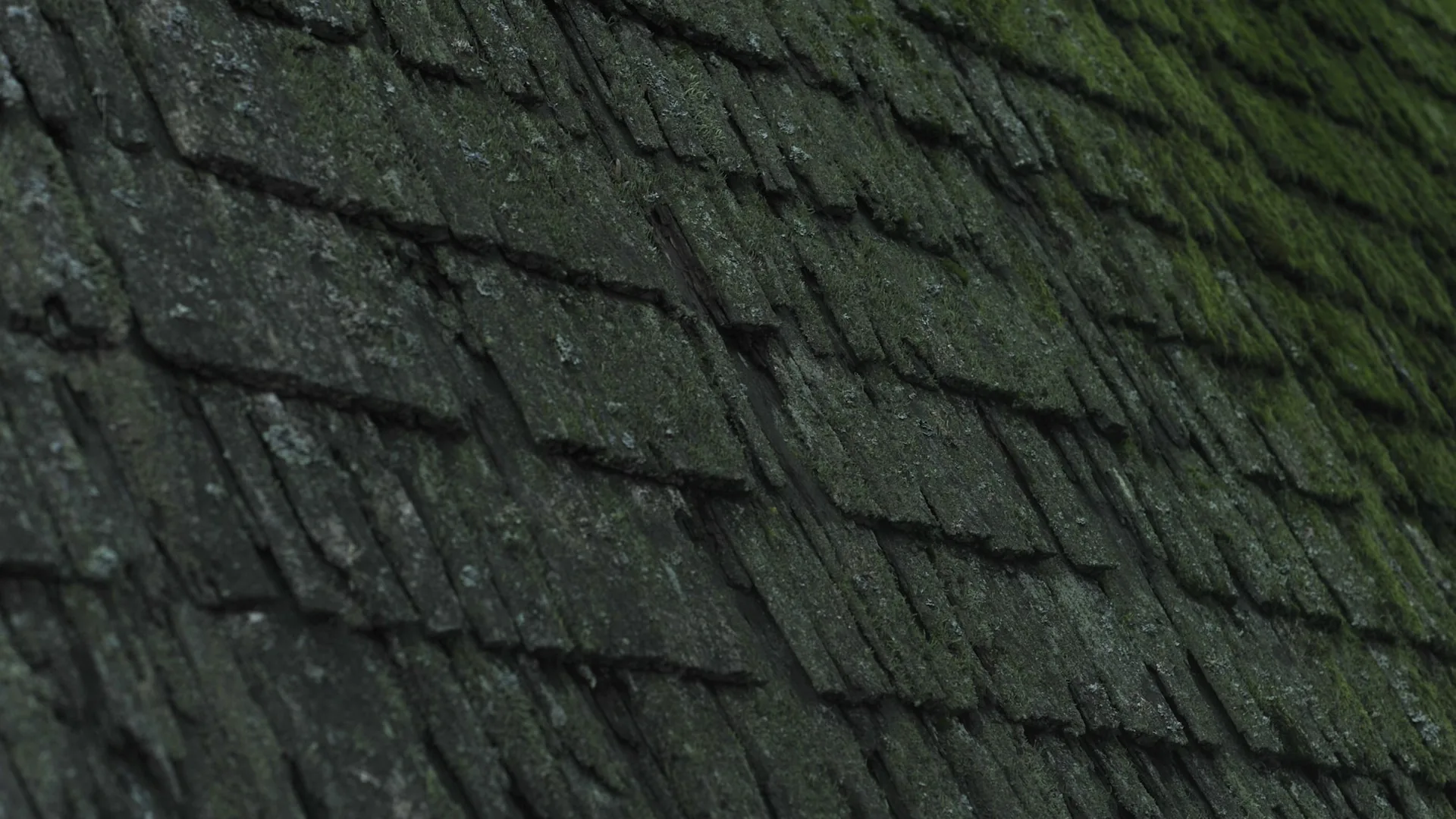
Roof growth usually becomes obvious on a shaded slope first. A homeowner sees dark lines below the ridge, green material along tab edges, or pale patches that look fused to the granules.
Those patterns do not all call for the same response. The roof material, age, surface condition, drainage, and written shingle guidance matter more than the color alone.
Read the Pattern Before Naming the Problem
Black or brown streaks
Biological staining often forms narrow marks that follow water down the slope and gradually widen. Similar dark areas can come from chimney runoff, tree debris, soot, or exposed shingle material. A wide photo of the whole slope helps show where the pattern begins.
Moss
Moss has visible green growth and thickness. It commonly gathers where a roof stays shaded or debris collects. As a patch grows, it can hold moisture against the surface and lift the edges of shingles, making the underlying condition hard to see.
Lichen
Lichen often appears as flat, crusty, pale green or gray patches. It can bond tightly to the mineral surface. Pulling or scraping it away may remove granules with it, especially on older shingles.
Appearance does not tell you what is happening underneath
A stained roof can still have sound shingles and decking. A heavily covered area can also hide splits, loose tabs, exposed fasteners, or soft wood. Inspect first so cleaning does not erase evidence or worsen a weak surface.
What Growth Can Do to a Shingle Roof
Dark staining may begin as a surface appearance issue. Moss and lichen create a more physical concern when they build thickness, bridge shingle edges, or stay attached as the roof moves through wet and dry cycles.
Lifted tabs can admit wind-driven rain. Dense patches can conceal granule loss and cracks. Debris trapped near a valley, wall, skylight, or gutter can slow drainage in an area that already handles concentrated water. None of those signs proves the deck is damaged, but each deserves a closer look.
Why Aggressive Cleaning Creates New Problems
High-pressure water can damage the surface
A concentrated stream can dislodge mineral granules, cut into worn material, and force water beneath tabs or flashing. The spray also makes the roof slippery while the operator is standing on it.
Scraping can tear what is still attached
Moss may release from one area and remain rooted at another. Lichen can take granules with it. Stiff tools can crease a warm tab or break a brittle one.
An improvised chemical mix may not fit the roof
Shingle manufacturers publish product-specific cleaning and safety guidance. The wrong concentration or application can affect roofing, metal, siding, plants, and runoff areas. Check the written instructions and any applicable warranty terms before treatment.
Signs to Photograph From the Ground
- ●Dark streaks that start below the ridge, vent, chimney, or overhanging tree
- ●Green growth concentrated along shingle edges, valleys, or the lower roof
- ●Crusty patches with missing granules around their edges
- ●Lifted, curled, split, or sliding shingles within the covered area
- ●Overflowing gutters, debris piles, stained fascia, or a new interior water mark
Take one image of the whole roof plane and closer zoomed images from a safe location. Note whether the slope faces a shaded yard, sits below branches, or dries more slowly than the opposite side. Do not climb onto a damp roof to take a better picture.
What a Useful Inspection and Treatment Plan Includes
- 01Identify the roof material, approximate age, growth pattern, shaded areas, and likely debris sources.
- 02Check tabs, granules, fasteners, flashing, valleys, gutters, and accessible decking before cleaning.
- 03Compare the roof condition with the shingle manufacturer's cleaning instructions and warranty documents.
- 04Protect people, siding, metals, landscaping, gutters, and runoff areas during any approved treatment.
- 05Reinspect after the surface clears and repair shingles or details that were hidden by the growth.
A newer, flexible roof with isolated staining may be a treatment and maintenance question. Brittle tabs, widespread granule loss, soft decking, or repeated leaks can change the scope. Our guides to granules in gutters and roof repair versus replacement explain those next decisions.
Frequently Asked Questions
Are black streaks on asphalt shingles always mold?
No. Dark roof streaks are commonly associated with biological staining, but color alone cannot identify the growth or rule out soot, runoff, exposed substrate, or material wear. An inspector should look at the pattern and the shingle surface before recommending treatment.
Does moss mean an asphalt roof is leaking?
Moss does not prove there is a leak. Dense growth can hold moisture and lift shingle edges, though, so the roof should be checked for soft decking, damaged tabs, exposed fasteners, failed flashing, and interior moisture evidence.
Can asphalt shingles be pressure washed?
High-pressure washing can dislodge granules, damage the shingle surface, force water beneath tabs, and create a slippery work area. Cleaning should follow the shingle manufacturer's written instructions and be performed with methods compatible with the specific roof.
Can I scrape moss or lichen off my roof?
Aggressive scraping can tear shingles and remove protective granules, especially where lichen is firmly attached. Pulling growth from a roof without fall protection is also dangerous. Have the roof condition and product guidance checked before choosing a removal method.
Will moss return after roof cleaning?
Growth can return when shade, debris, slow drying, and nearby organic material remain. A useful plan looks beyond the visible patch and checks drainage, overhanging branches, gutter flow, ventilation openings, and the roof's remaining condition.
Inspect the Shingles Before Cleaning Them
Platinum Roofing inspects asphalt roofs across Grand Rapids, Jenison, Holland, Muskegon, Kalamazoo, and nearby West Michigan communities. Call or text (616) 256-0831 or send photos of the affected slope, gutters, nearby trees, and any interior stain.