
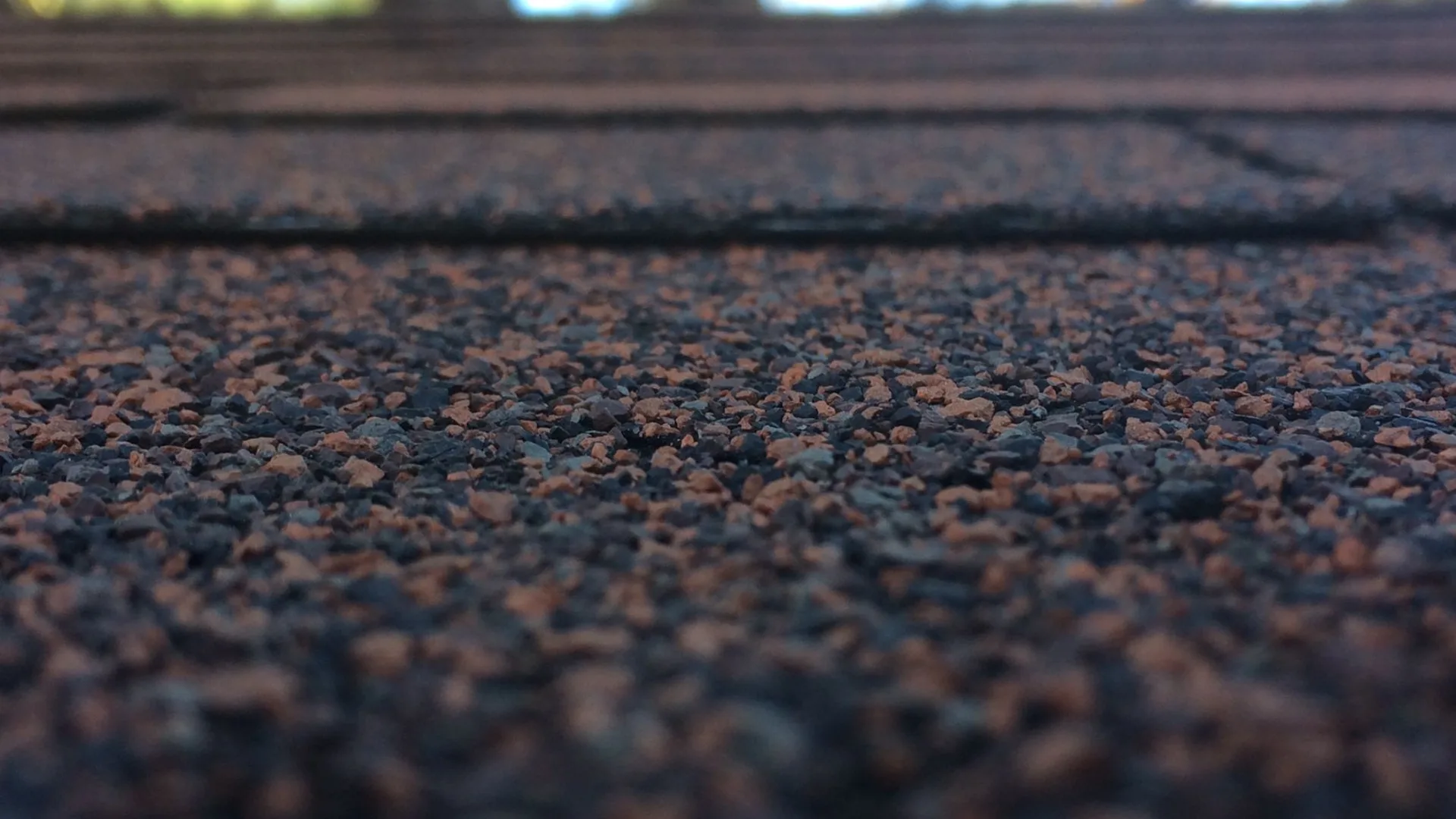
You clean a gutter or check the end of a downspout and find what looks like coarse black sand. Those particles may be mineral granules from asphalt shingles. Finding them is worth recording, but it does not automatically mean the roof needs replacement or that a recent storm caused damage.
A useful evaluation connects the granules with the age of the roof, recent installation or repair work, the slopes feeding that gutter, and what the shingle surface looks like. The pattern matters more than one handful.
What Granules Do on an Asphalt Shingle
The visible face of an asphalt shingle is covered with embedded mineral granules. They give the roof its color and help shield the asphalt layer from sunlight and surface wear. A finished roof should have a consistent granule covering even though individual pieces are not all identical.
Some granules are not fully embedded. Loose material can move during packaging, delivery, installation, foot traffic, rain, snow movement, and ordinary aging. Roof runoff carries it toward valleys and gutters, where many square feet of drainage concentrate the particles into one visible pile.
The gutter is a collection point, not a diagnosis
A downspout combines runoff from a large roof area. Granules found there may have accumulated over weeks or months. Their location does not tell you which shingle released them, when it happened, or why.
Four Details That Give the Finding Context
1. Roof age and recent work
A recently installed roof can shed loose surface material left from production and handling. On an older roof, a new increase deserves comparison with the condition of the shingle tabs, edges, and exposed surface. If you do not know the age, old permits, invoices, or seller documents may help establish it.
2. Change over time
One gutter cleaning provides no baseline. Take a clear photo with a common object for scale, note the date, and compare the next cleaning. A sudden change after roof work or severe weather is more useful to an inspector than describing the amount as a lot.
3. Where the material collects
Record the gutter section or downspout and which slopes drain toward it. Valleys and steep sections may concentrate runoff differently than a short simple slope. Keep your observations at ground level or from a safely accessible window.
4. Changes visible on the roof
From the ground, look for areas that appear darker, smoother, or different from surrounding shingles. Also note lifted edges, cracks, missing tabs, exposed fasteners, or debris impact. Binoculars or a zoomed photo are safer than climbing onto the roof.
Surface Changes That Deserve Inspection
Ask for a closer inspection when distinct patches have lost their textured covering, the dark asphalt layer appears exposed, shingle reinforcement is visible, or the same area shows cracking, curling, tearing, or impact marks. A recurring pile combined with obvious surface change is more meaningful than either observation alone.
Granule loss is only one part of roof condition. Flashing, seal strips, fasteners, ventilation, decking, and the remaining shingle field all affect whether a small repair is sensible. Our guide to asphalt shingle roof lifespan in West Michigan explains the broader aging signs.
What Granules Cannot Prove by Themselves
Loose granules do not prove hail damage, a manufacturing issue, incorrect installation, or the need for full replacement. Each conclusion requires more evidence. Storm inspection should compare patterns across multiple slopes and review other building surfaces that faced the same weather.
If you suspect storm damage, save the date and photos, then arrange inspection before making assumptions about coverage. Insurance terms depend on the specific policy and documented cause of loss. See our hail damage inspection guide for the roof and property details an evaluation should cover.
Do Not Scrub or Pressure Wash the Shingles
Sweeping, stiff brushing, pressure washing, and unnecessary walking can disturb the shingle surface. They also make it harder to tell whether the original condition was weathering, impact, biological growth, or damage caused during cleaning.
Gutter maintenance still matters. Use safe access or hire a qualified service, keep outlets open, and avoid pushing tools under the shingle edge. If gutter debris includes pieces of shingle, torn tabs, or roofing fasteners, photograph and save a sample for the inspector.
What a Useful Roof Inspection Should Document
- 01The roof age information, shingle type, and any recent installation or repair work.
- 02Which gutter or downspout held the granules and which slopes drain into it.
- 03Close photos of representative shingles and wider photos showing the pattern across each slope.
- 04Any exposed asphalt, reinforcement, cracks, lifted tabs, impact marks, or related flashing concerns.
- 05Whether a local repair is practical and how the surrounding roof condition affects that choice.
A good inspection explains what is visible and what remains uncertain. It should not turn a cup of gutter debris into a replacement recommendation without checking the roof.
Frequently Asked Questions
Is it normal to find roof granules in the gutters?
Some loose granules can collect during manufacturing, transport, installation, and normal weathering. The amount alone does not diagnose a failed roof. The roof surface, age, location, recent work, and change over time provide the useful context.
Do granules in a downspout mean I have hail damage?
No. Granules can loosen for several reasons, and a pile at a downspout does not identify the cause. A hail evaluation looks for a consistent damage pattern on the shingles and related exterior surfaces, not one gutter observation by itself.
What do bald spots on asphalt shingles look like?
A bald area has noticeably fewer granules than the surrounding shingle and may expose a darker asphalt surface or reinforcement below. Color variation, shadow, algae, and photography can imitate a spot, so close inspection matters.
Can granule loss be repaired?
A roofer may be able to replace isolated damaged shingles when compatible material is available and the surrounding roof remains serviceable. Broad, repeated surface loss may point to a larger aging or performance issue that cannot be solved by coating loose granules back onto the shingles.
Should I clean granules off the roof?
Do not sweep, scrub, or pressure wash asphalt shingles. Those methods can disturb the surface and create a fall risk. Keep gutters draining safely, document what you find, and have the roof inspected if the amount or roof appearance concerns you.
Get the Roof Surface Checked in Context
Platinum Roofing inspects asphalt shingle roofs across Grand Rapids, Jenison, Holland, Muskegon, Kalamazoo, and surrounding West Michigan communities. Call or text (616) 256-0831 or send your photos through our contact form to request a free inspection.