
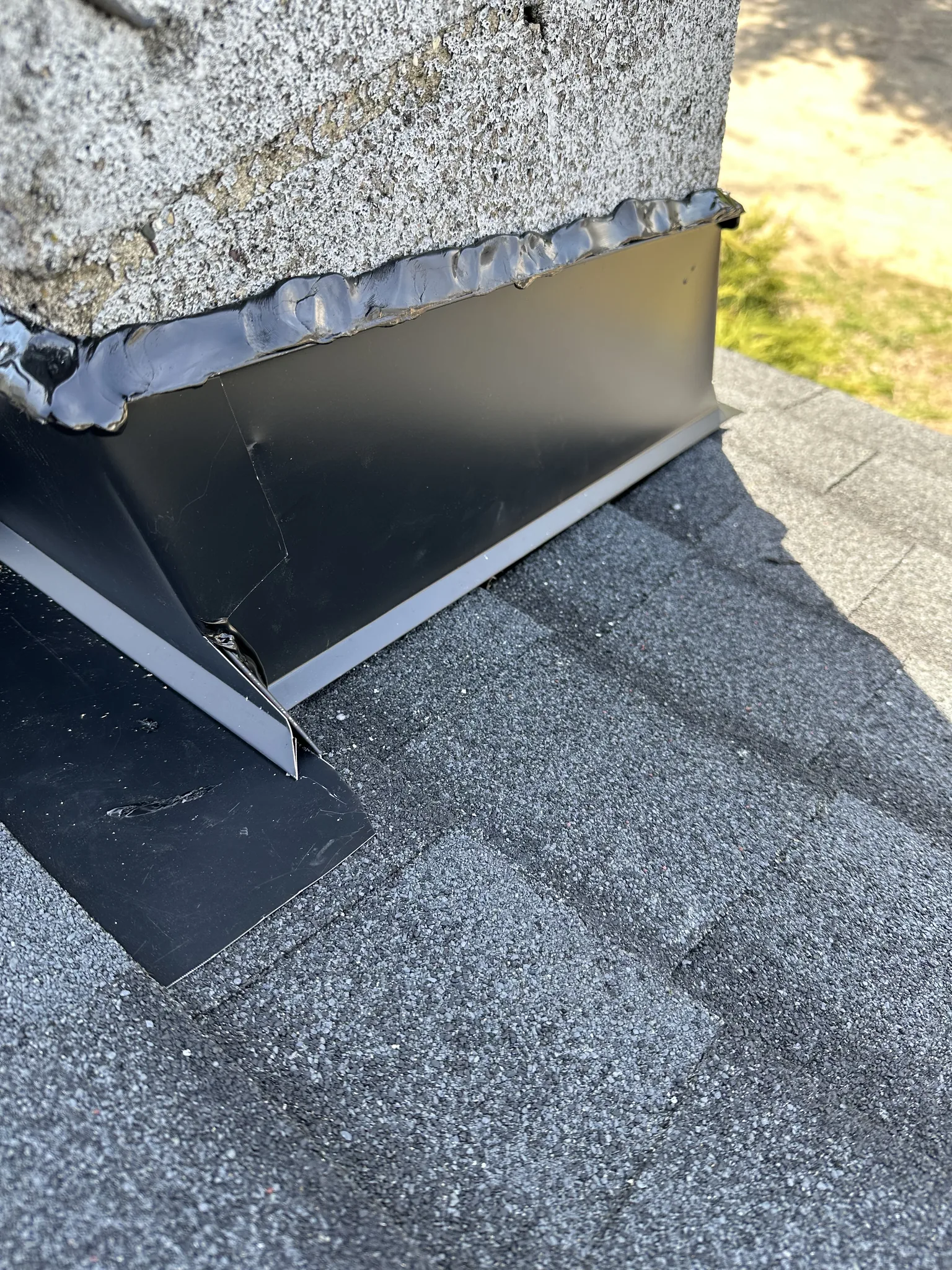
A brown ceiling stain beside the fireplace often gets blamed on the chimney itself. Sometimes the masonry is the problem. Just as often, water is getting through the small transition where brick, metal, and asphalt shingles meet.
That transition has to drain water while the roof and masonry move at different rates through West Michigan heat, rain, snow, and freezing temperatures. A durable detail uses several overlapping pieces of metal. A quick patch usually uses exposed sealant. Knowing the difference helps you judge whether a proposed repair addresses the leak or only covers it.
Why a Chimney Is a Tough Roof Detail
Shingles work because every course overlaps the course below it. Water runs down a continuous path without meeting an exposed joint. A chimney breaks that path. Water reaches the uphill face, moves around both sides, and must return to the shingle field below without slipping behind the roofing.
The chimney and roof also move independently. Wood decking expands and contracts with moisture. Metal changes size with temperature. Masonry moves very little by comparison, but mortar can crack and absorb water. A rigid smear of roof cement across all three materials cannot handle that movement for long. Proper flashing can.
The Parts of a Complete Chimney Flashing System
Chimney flashing is a system, not one strip of metal. Each part has a specific job in the water path.
Apron flashing at the downhill face
The front piece bridges the chimney and the shingles below it. Its lower edge stays exposed so water exits onto the roof rather than behind the shingles.
Step flashing along both sides
Small L-shaped pieces are layered one per shingle course. Each piece overlaps the one below it. If one piece is missing, too short, fastened incorrectly, or left behind during a reroof, that side can become a hidden water channel.
Counterflashing at the masonry
Counterflashing covers the upper edge of the step flashing and ties the assembly to the chimney. It should shed water over the base flashing while allowing the roof-side pieces to move. A loose edge or failed masonry joint can let water enter behind the entire system.
The uphill transition
The back of the chimney receives runoff from the roof above. The detail must direct that water around the corners without creating a pocket for leaves, snow, or standing water. Wider chimneys may use a small peaked diverter called a cricket, depending on the roof geometry and the required detail.
Five Common Reasons Chimney Flashing Leaks
- 01Old flashing was reused during a reroof. Reusing metal can leave old nail holes, bent corners, and pieces that no longer line up with the new shingle courses. A clean roof surface does not guarantee a new transition underneath.
- 02Counterflashing has pulled away. Mortar can crack, fasteners can loosen, and metal edges can open. Water then gets behind the base flashing instead of flowing over it.
- 03Sealant became the primary defense. A bead of compatible sealant has a place in a detailed assembly. A thick exposed patch across every edge usually signals that the metal beneath it was never corrected.
- 04Water or debris collects uphill. Leaves and roofing debris can slow drainage behind the chimney. Water then spends more time against seams that normally see only brief runoff.
- 05The leak is actually in the masonry. A damaged crown, open mortar joint, or porous masonry can admit water above the roof line. New roof flashing will not repair a chimney that is taking in water several feet higher.
What You Can Check Without Climbing the Roof
Start inside. Note whether the stain appears after wind-driven rain, steady rain, or melting snow. Look in the attic if it is safely accessible. Wet decking, dark tracks, rusty nails, or damp insulation can show the route, but remember that water may travel before it drips.
From the ground, use binoculars or a zoomed photo. Look for metal lifting away from brick, large black patches, missing shingles beside the chimney, cracked mortar, and debris piled on the uphill side. Do not walk a wet or steep roof to get a closer look. The useful next step is a roof and attic inspection, not a risky ladder climb.
A ceiling stain does not mark the entry point
Water can follow decking, framing, flashing, or a chimney surface before it reaches drywall. Repairing the roof directly above the stain can miss the actual opening. A good leak inspection traces the path from inside and outside before materials are removed.
When a Focused Repair Is Enough
A localized repair is often reasonable when the surrounding shingles still have useful life, the roof deck is sound beyond a small area, and the leak can be tied to one incomplete flashing detail. The work may involve removing shingles around the chimney, replacing damaged decking, installing new apron and step flashing, correcting the counterflashing, and weaving new shingles back into the field.
A bigger roofing conversation makes sense when shingles are brittle across the slope, several penetrations are failing, decking damage is widespread, or the roof is already near the end of its service life. Our guide to roof repair versus replacement explains how to weigh those conditions without jumping straight to a full tear-off.
What a Chimney Flashing Estimate Should Say
A useful written scope identifies what will be removed, which metal components will be replaced, how the masonry transition will be handled, whether deck repair is included or priced as discovered work, and how replacement shingles will be matched. It should also say who handles masonry repairs if the inspection finds problems above the roof line.
Watch for a one-line quote that only says "seal chimney." Ask whether the crew is exposing the step flashing or applying material over the existing assembly. Our guide on how to read a roofing estimate covers the other scope details that make two prices hard to compare.
Frequently Asked Questions
Why does my roof leak only near the chimney?
A chimney interrupts the shingle field and creates several joints where water must be redirected. A leak can start when step flashing is missing or reused, counterflashing pulls away from the masonry, the uphill side traps water, or nearby shingles are damaged. The stain inside may appear a few feet from the entry point because water can travel along the roof deck or a rafter before dripping.
Can roof cement or caulk stop a chimney leak?
Sealant can be useful at a small, properly detailed joint, but it is not a substitute for correctly layered metal flashing. Thick roof cement often hides the joint for a while, then cracks or separates as the roof and masonry move through temperature changes. A lasting repair manages water with overlapping materials instead of relying on one exposed bead of sealant.
What is the difference between step flashing and counterflashing?
Step flashing consists of individual bent metal pieces installed along the chimney sides, with one piece layered into each shingle course. Counterflashing is attached to or set into the masonry above it and covers the top edge of the step flashing. Together they let the roof and chimney move independently while keeping the water path shingled from top to bottom.
Does a chimney leak mean I need a whole new roof?
Usually not. If the surrounding shingles and roof deck are sound, a roofer may be able to remove a limited area, replace the flashing, repair any localized deck damage, and reinstall matching shingles. A larger replacement becomes more reasonable when the roof is already near the end of its life, the same failure appears in several areas, or opening the assembly reveals widespread deterioration.
Who should inspect a leak around a chimney?
Start with a roofer who will inspect the shingles, flashing, roof deck, and attic path. If the masonry crown, mortar joints, or chimney structure is also deteriorated, a qualified masonry contractor may need to handle that part. Some leaks involve both trades, so the inspection should identify the actual entry point before either repair begins.
Get the Leak Traced Before It Gets Patched
Platinum Roofing inspects the chimney transition, surrounding shingles, and accessible attic path before recommending a repair. If the problem belongs to the roof, we will explain which flashing layer failed and what has to come apart to correct it. If the evidence points to masonry, you will know that before paying for roof work that cannot solve the leak.
For a free roof inspection in Grand Rapids, Jenison, Holland, Muskegon, Kalamazoo, or the surrounding West Michigan area, call or text (616) 256-0831 or send us the details through the contact form.