
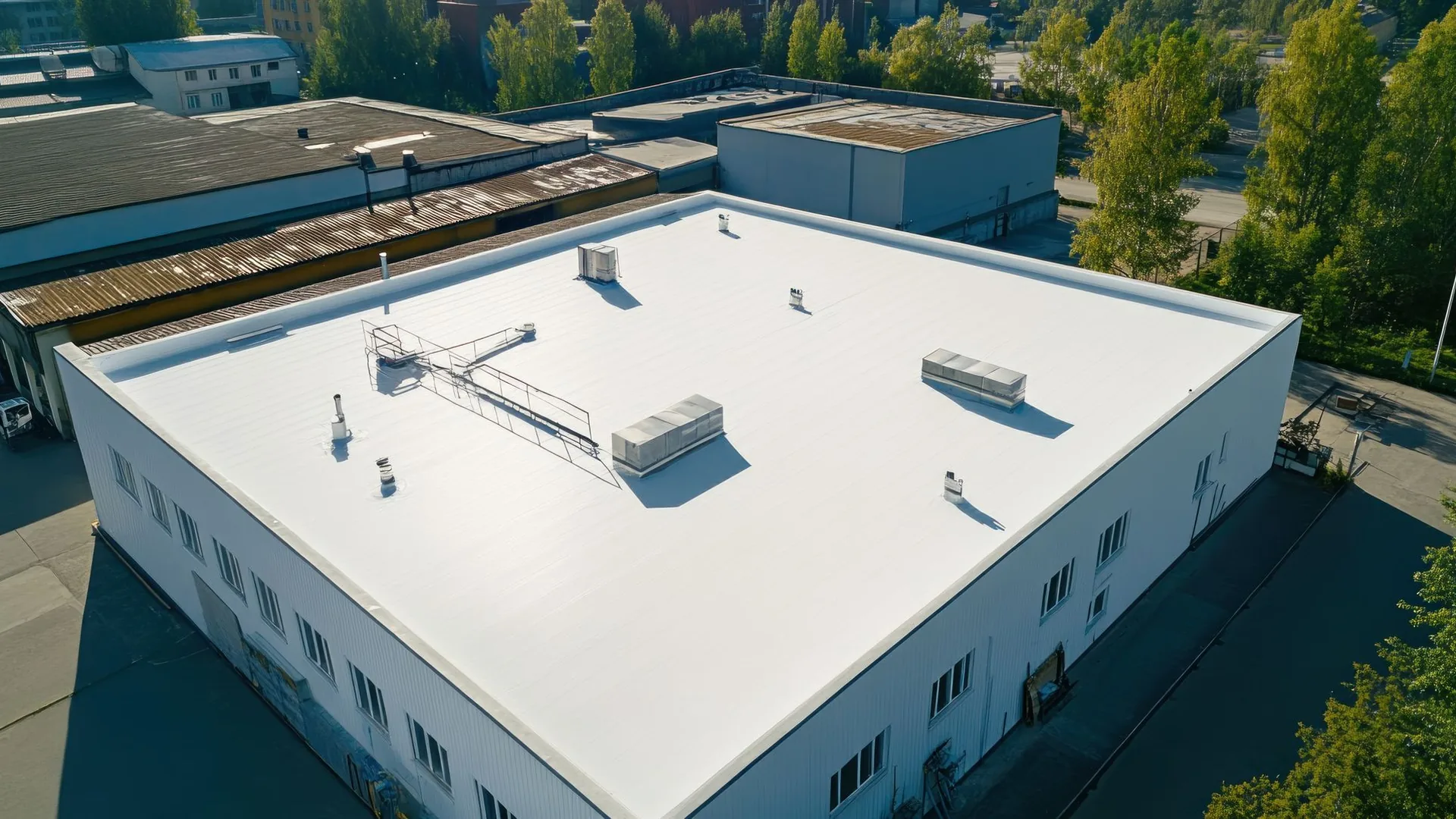
Commercial owners often ask for one number: how many years will this coating last? The honest answer starts with the roof in front of us. Two roofs coated in the same year can age differently because one drains cleanly while the other holds water beside curbs and receives weekly service traffic.
Product, preparation, application, substrate, weather, and maintenance all matter. A useful plan tracks the installed system and current roof condition instead of waiting for a generic anniversary to decide whether it needs a repair, maintenance coat, or larger scope.
Service Life Starts With the Installed System
Identify what was installed, over which roof assembly, and at what specified thickness. Keep the proposal, product data, warranty, inspection records, repair notes, and final photos. Without that file, a future contractor has to reconstruct the system from field clues.
Surface preparation is part of the system. Dirt, loose material, incompatible patches, trapped moisture, and weak seams do not become sound because coating covers them. Repairs and reinforcement at drains, penetrations, curbs, transitions, and parapets need to be completed in the order specified for the selected system.
Six Conditions That Change Coating Life
1. Drainage
Slow drains, clogged strainers, and low areas keep sections wet longer than the open field. Track where water remains after rain and whether that footprint is growing. Our guide to ponding water on flat roofs explains the building risks below the surface.
2. Foot traffic
Service routes to HVAC equipment can wear sooner than quiet areas. Dropped panels, screws, tools, and repeated turns at access points create concentrated damage. Walkway protection and clear routes help keep service work off vulnerable details.
3. Rooftop changes
New conduit, pipes, curbs, supports, and abandoned penetrations change the waterproofing. Document every trade that works on the roof and inspect the area when the work finishes.
4. Weather exposure
West Michigan roofs handle summer sun, freeze-thaw cycles, snow, wind, hail, and sharp temperature swings. Perimeters and corners see different forces than protected field areas.
5. Movement at details
Seams, curbs, parapets, expansion joints, drains, and dissimilar materials move differently. Cracks or stress at those transitions deserve investigation before another layer hides the evidence.
6. Repairs and compatibility
An undocumented patch may not be compatible with the existing coating. Keep product names and photos with the repair record so a future maintenance scope can test and prepare the area correctly.
Inspection is a comparison, not a lap around the roof
Use consistent overview and detail photos. Mark each condition on a roof plan. Compare cracks, ponding footprints, traffic wear, repairs, and moisture findings with the previous visit. A dated record shows whether a condition is stable or changing.
What a Coated Roof Inspection Should Document
Check the field for cracks, blisters, punctures, exposed reinforcement, discoloration, and worn traffic paths. At edges and details, inspect seams, terminations, parapets, drains, scuppers, curbs, pipes, pitch pockets, fasteners, and counterflashing.
Start inside too. Record active stains, damp insulation, odor, and the weather associated with a leak. Water may travel before it appears. Moisture mapping can help locate suspected wet areas beneath the visible surface and focus confirmatory investigation.
Use a Regular Inspection Rhythm
A practical maintenance program includes scheduled inspections at least twice a year, often in spring and fall, plus checks after major weather and after rooftop service work. The exact schedule should follow system documents, building use, roof access, and observed conditions.
Clear debris where it can be done safely. Keep drains and scuppers open. Correct punctures and open details promptly with compatible materials. Delaying a small repair gives water more time to reach insulation and expand the scope below the coating.
Repair, Recoat, or Replace?
A focused repair may fit when deterioration is limited and the surrounding assembly remains sound. Recoating may fit when the existing system is compatible, well bonded, dry enough for the proposed scope, and repairable at details. Testing and manufacturer requirements guide surface preparation, reinforcement, and application.
Broad wet insulation, loose materials, structural trouble, widespread failure, or an incompatible assembly can require removal or a different plan. Adding coating does not dry insulation or secure a failed roof. Platinum uses Andek restoration systems on qualifying commercial roofs, with moisture findings and detail repairs addressed before the finish system. Read our guide to commercial roof restoration versus tear-off for the larger decision.
Build a Roof File the Next Inspector Can Use
- 01Roof plan with drains, equipment, access points, and repair locations.
- 02Installed system, product data, specified thickness, warranty, and contractor records.
- 03Dated overview photos taken from the same positions at each inspection.
- 04Close photos and notes for cracks, blisters, seams, penetrations, edges, and traffic wear.
- 05Moisture findings, confirmatory checks, repair products, invoices, and completion photos.
Frequently Asked Questions
How long does a commercial roof coating last?
There is no responsible single number for every coated roof. Service life depends on the coating system, specified thickness, substrate preparation, drainage, weather exposure, foot traffic, repairs, and maintenance. The installed system documents and current roof condition are more useful than a generic lifespan claim.
How often should a coated commercial roof be inspected?
A practical program includes scheduled inspections at least twice a year and checks after major weather or rooftop service work. The exact schedule should follow the system documents, building use, and roof conditions. Keep dated photos and repair records so changes can be compared over time.
Can a commercial roof be recoated without a tear-off?
Often, yes, when the existing assembly is a suitable candidate and the work follows a compatible, documented system. Wet insulation, loose materials, failed seams, drainage trouble, and damaged penetrations must be addressed first. Testing and inspection determine whether recoating is appropriate.
What are the warning signs that a roof coating needs attention?
Look for exposed reinforcement, cracks, blisters, open seams, punctures, worn traffic paths, loose flashing, discolored ponding areas, and deterioration around drains, curbs, pipes, and parapet transitions. Interior stains or changing moisture readings also deserve prompt investigation.
Does adding more coating fix wet insulation?
No. Coating over trapped water does not dry or replace wet insulation and can hide the repair area. Moisture mapping and confirmatory investigation help define what must be removed before repairs or recoating proceed.
Plan the Next Scope Before the Leak Chooses It
A coated roof gives owners visible conditions to track. Regular records make it easier to handle local repairs early and budget for a larger maintenance scope while the building is still dry.
Platinum Roofing inspects commercial roofs across Grand Rapids, Jenison, Holland, Muskegon, Kalamazoo, and surrounding West Michigan communities. For a free commercial roof assessment, call or text (616) 256-0831 or send the building details through our contact form.