
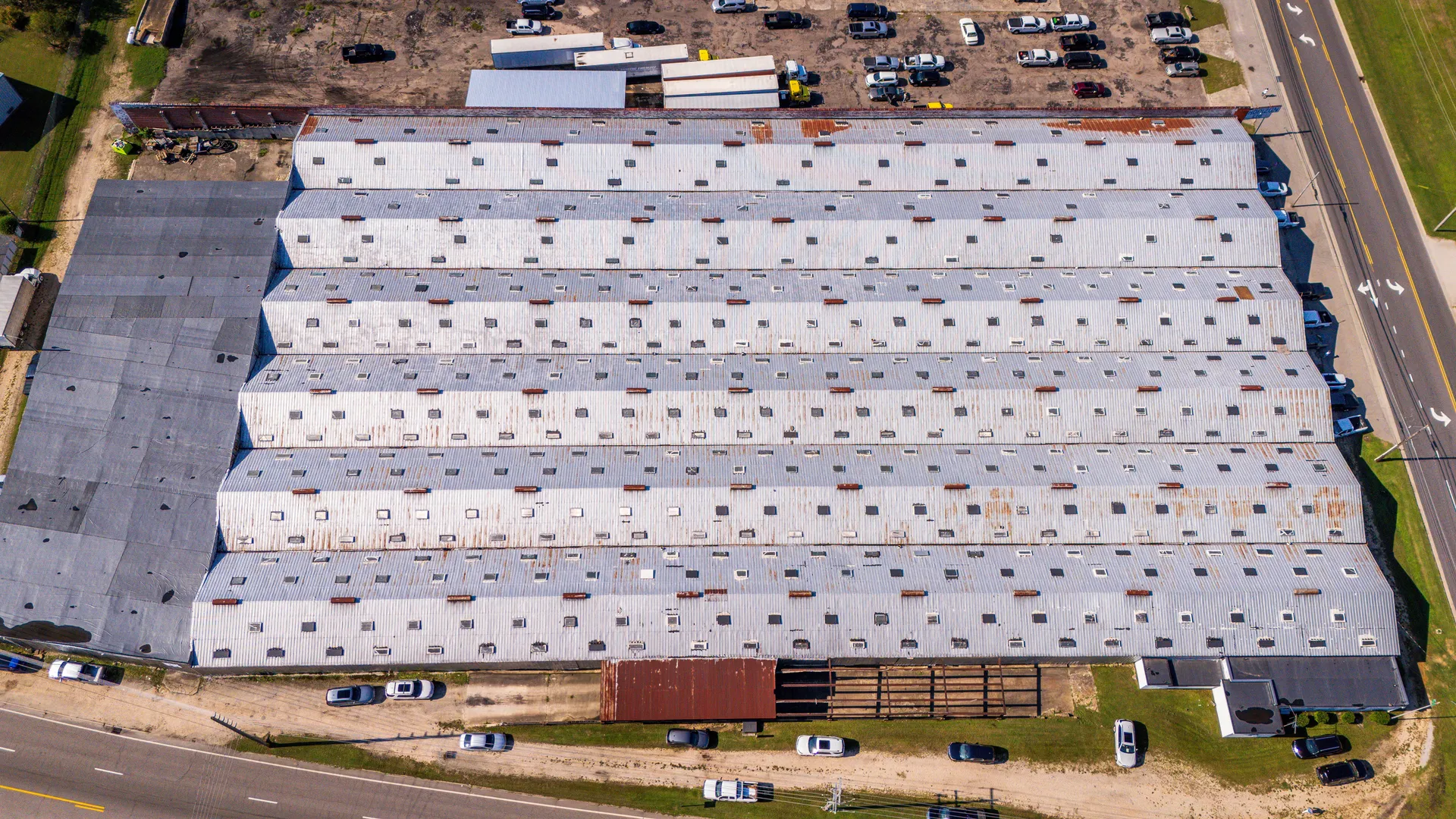
A drain can look clear from ten feet away while leaves are packed below its strainer. A scupper can be open at the wall but blocked at the downspout. On a large metal roof, a bent gutter or plugged outlet can back water into seams and edge details that were meant to shed it.
Commercial drainage is a complete path, not one piece of hardware. It starts with slope across the roof surface, continues through an outlet, and ends where water is discharged. A useful inspection follows that path and records where flow slows, changes direction, or escapes.
Four Common Commercial Roof Drainage Paths
Interior roof drains
The roof slopes toward a drain bowl, and piping carries water through the building. The visible assembly may include a dome or strainer, clamping components, flashing, membrane, and a sump area shaped to bring water to the opening. Trouble can be roofing related, plumbing related, or both.
Scuppers through a parapet
A scupper lets water pass horizontally through a wall or raised roof edge. It may empty into a conductor head and downspout or discharge away from the wall. Corners, seams, membrane terminations, and the outlet below all need inspection.
Gutters and downspouts
Metal buildings and some low-slope roofs move water over an edge into an exterior gutter. Fasteners, joints, end caps, outlet tubes, hangers, and downspouts can loosen or clog. A full gutter does not protect the roof edge simply because it remains attached.
Secondary overflow paths
Overflow drains or scuppers provide another route when the primary system becomes restricted. Their location and height are building-specific. They should stay visible, open, and included on the roof plan rather than treated as unused openings.
Unexpected overflow is an inspection signal
Water leaving an overflow outlet shows that the roof reached that elevation. Record when it happened, how long flow continued, and which primary outlets were active. Do not plug an overflow to stop the visible discharge.
What Blocks or Slows the System
Leaves, seed pods, windblown packaging, loose ballast, roofing scraps, ice, and nests can collect at outlets. Debris may sit below a dome or inside a conductor head where a quick walk does not reveal it. Recent mechanical work can also leave screws, wire, or packaging in a flow path.
The roof surface matters too. Compressed insulation, settlement, wrinkles, displaced pavers, or an old patch can create a low area that holds water before it reaches the outlet. Our guide to ponding water on flat roofs explains why the size and duration of that footprint belong in the inspection record.
Warning Signs Inside and Outside
- ●Water remains around a drain or gutter after surrounding areas have dried.
- ●A strainer is missing, cracked, loose, or packed with debris.
- ●Water uses an overflow during ordinary rain or stains the wall below a scupper.
- ●Gutters sag, separate at joints, spill behind the edge, or pull away from supports.
- ●Membrane, coating, or sealant is split around the outlet or clamping area.
- ●Ceiling stains, damp insulation, or odors appear near a drain line or exterior wall.
An interior stain below a roof drain does not prove the membrane failed. Water can enter at the flashing, leak from drainage piping, or travel from another roof opening. Note whether the stain follows rain, snowmelt, a plumbing event, or freezing conditions before choosing a repair.
What a Drainage Inspection Should Record
- 01A roof plan showing primary drains, scuppers, gutters, downspouts, and overflow outlets.
- 02Overview photos showing slope, low areas, debris patterns, and water marks around each outlet.
- 03Close photos of strainers, clamping areas, seams, flashings, conductor heads, joints, and supports.
- 04Interior observations below drain lines, exterior discharge points, and active wall staining.
- 05The weather before inspection and how long visible water remained after precipitation ended.
Use the same photo positions at the next visit. Changes in staining, debris, corrosion, low spots, and repair edges are easier to judge when the record shows the previous condition.
Match the Repair to the Failure
Clearing surface debris may restore flow when the outlet and roof assembly remain sound. Damaged membrane, failed drain flashing, loose clamping components, wet insulation, separated gutter joints, or poor slope require a different scope. Drainage piping and structural concerns may need the appropriate plumbing or design professional.
Coating over a wet low area does not create positive drainage. New sealant around the top of a loose drain does not secure the assembly below it. Before a coating or restoration scope, moisture mapping and focused checks can help define wet material and detail repairs. See our commercial roof coating maintenance guide for the larger planning process.
Frequently Asked Questions
What is the difference between a roof drain and a scupper?
A roof drain collects water at a low point and carries it through piping inside the building. A scupper is an opening through a parapet or edge that lets water leave the roof. Either may serve as a primary or overflow path depending on the building design.
Why does water collect around a commercial roof drain?
Debris, a blocked strainer, restricted piping, settlement, compressed insulation, or poor slope can slow drainage. The drain flashing or surrounding membrane may also be damaged. Inspection should identify whether the problem involves maintenance, roofing, plumbing, structure, or a combination.
Can a commercial roof drain be repaired with sealant?
Sealant may be part of a compatible repair, but it cannot correct a clogged pipe, loose drain body, failed clamping ring, wet insulation, or poor slope. The repair should address the actual drainage and flashing condition.
How often should commercial roof drainage be checked?
Inspect drainage during scheduled roof checks and after major weather, high winds, nearby tree debris, or rooftop work. Many owners use spring and fall inspections as a baseline, then adjust the schedule for the building and observed conditions.
Should overflow drains or scuppers be tested?
They should remain open and be included in the roof inspection record. Any flow test, piping work, or design evaluation should be handled safely by qualified roofing, plumbing, or design professionals as appropriate.
Follow the Water From Roof to Discharge
The best time to map drainage is before the ceiling starts dripping. A labeled roof plan and repeat photos give owners a practical way to track outlets, maintenance, and developing low areas across seasons.
Platinum Roofing inspects commercial roofs across Grand Rapids, Jenison, Holland, Muskegon, Kalamazoo, and surrounding West Michigan communities. For a free commercial roof assessment, call or text (616) 256-0831 or send the building details through our contact form.