
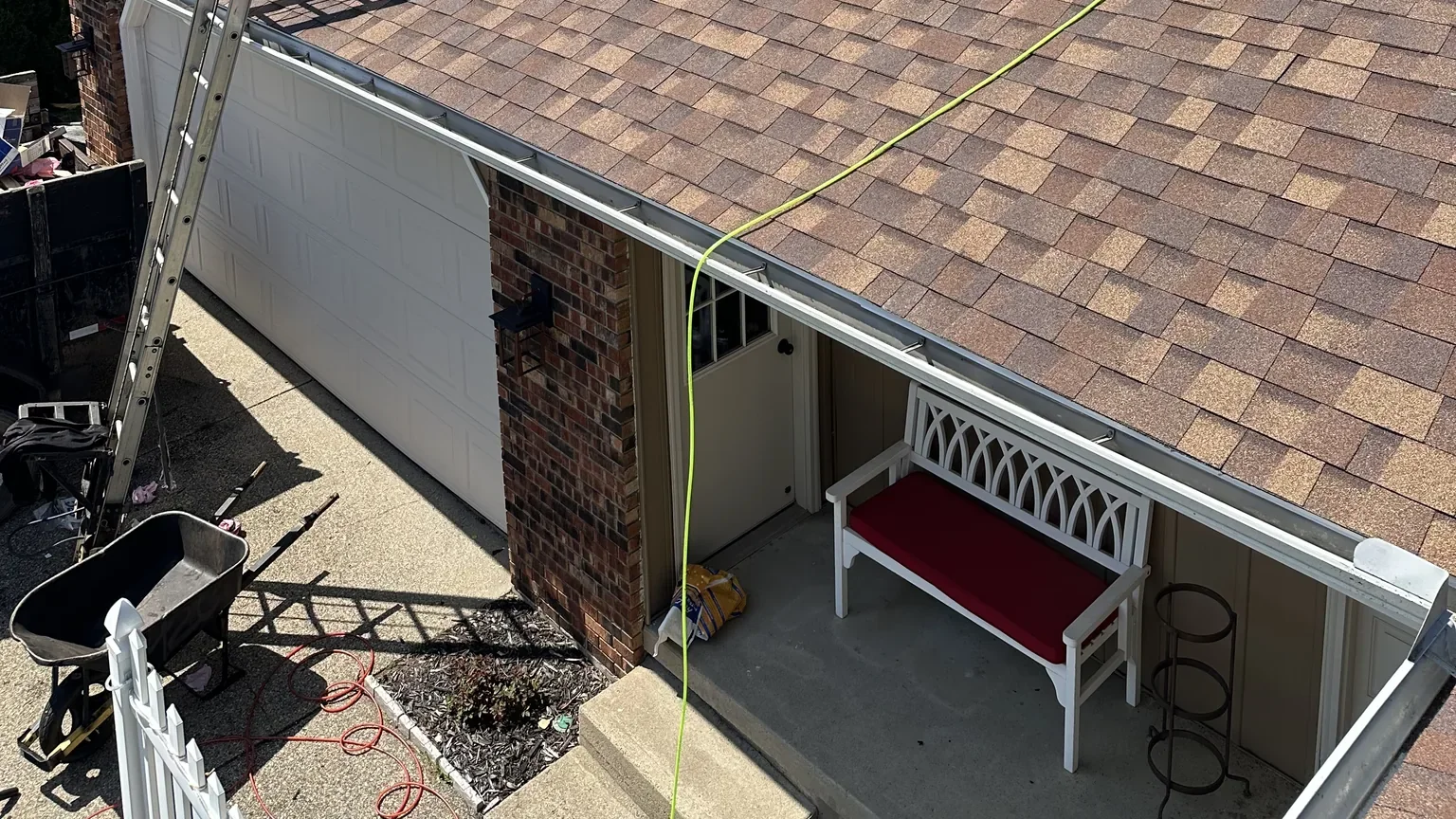
Soft wood at an eave rarely starts with one dramatic hole. More often, runoff follows the wrong path a little at a time. It slips behind a gutter, wets the fascia, reaches the outer edge of the roof deck, and dries too slowly between storms.
Paint may peel first. A gutter can pull away next. By the time the lower shingles feel soft underfoot, several materials may need attention. The repair has to correct the water path as well as replace the damaged wood.
The Parts at a Residential Eave
The roof deck ends above the fascia board. Underlayment and shingles cover the deck. Drip-edge metal protects the perimeter and helps direct water away from the wood. The gutter receives runoff below that edge and carries it to downspouts.
Each part depends on the others. A clean gutter cannot correct shingles that stop short. Fresh fascia will get wet again if water still runs behind the metal. Drip edge cannot help much when a loose gutter blocks the intended drainage path.
Six Ways Water Reaches the Roof Edge
1. Runoff curls behind the edge
Water can follow the underside of a shingle or flashing edge through surface tension. A clean projection and properly placed metal help break that path before it reaches the wood.
2. The gutter sits too low or pulls away
Loose hangers, damaged fascia, or a gutter mounted below the runoff path can leave a gap. Water then strikes the fascia or passes between the gutter and the roof edge.
3. Debris blocks the gutter or outlet
Leaves and roofing granules reduce capacity. During hard rain, water can spill over the front, rise at the back, or concentrate at a low section. Staining behind the gutter deserves a closer look.
4. The lower shingles are damaged
Cracked tabs, old fastener holes, lifted starter shingles, and worn corners can admit water before it reaches the drip edge. Wind damage often appears first at exposed perimeters.
5. Flashing and underlayment do not connect
The perimeter metal, underlayment, and shingles need a continuous downhill drainage path. Gaps or reversed laps can send water under the roof covering and into the deck edge.
6. Ice or snow holds water at the eave
West Michigan freeze and thaw cycles can keep the lower roof wet and push water into weak joints. Ice also adds load to gutters and can expose loose hangers or already weakened fascia.
Replacing fascia alone can hide the source
New trim may look finished while the outer roof deck remains soft and the drainage detail remains wrong. A useful inspection looks above, behind, and below the gutter before deciding where the repair starts.
Warning Signs From the Ground
Look for peeling paint, dark streaks behind the gutter, a wavy fascia line, sagging gutter sections, loose downspouts, or water spilling from one place during ordinary rain. A gap between the gutter and fascia is another clue.
Inside, stains at an exterior wall, damp soffit material, musty attic insulation near the eave, or darkened roof decking can point toward the same area. Do not climb a wet ladder to investigate. Photos during rain can help a roofer see where runoff actually travels.
What the Inspection Should Uncover
The inspection should follow water from the roof surface through the gutter and downspout. Check the lower shingles, starter course, visible flashing, gutter position, hangers, seams, outlets, downspout discharge, fascia, soffit, and the deck edge from above and below where accessible.
The gutter may be part of the problem without being the only problem. Soft decking can no longer hold edge fasteners reliably. Wet fascia may not support gutter hangers. Removing a short lower section often reveals more than another line of sealant can show.
What a Lasting Roof-Edge Repair Includes
- 01Remove the necessary gutter section and lower shingles so the edge can be inspected.
- 02Replace deteriorated fascia and roof decking rather than fastening into soft wood.
- 03Restore the underlayment and drip-edge sequence with a continuous downhill path.
- 04Install compatible starter and field shingles with the intended edge projection.
- 05Reset or replace the gutter, confirm outlet flow, and document the completed layers.
A limited area may be repairable without replacing the whole roof. Broad deck deterioration, widespread shingle wear, repeated ice trouble, or failure along several eaves can justify a larger scope. Our guide to roof repair versus replacement explains how the rest of the roof affects that choice.
Keep the Edge Visible and Draining
Clear gutters and outlets when it can be done safely. Watch the eave during rain from the ground. Record a sag, overflow point, or stain instead of waiting for the next season. If a roof replacement is being planned, ask how the proposal handles starter shingles, edge metal, damaged decking, and gutter removal. Our guide to reading a roofing estimate lists the other terms worth getting in writing.
Frequently Asked Questions
Why is the wood at the edge of my roof rotting?
Water may be running behind the gutter, missing the gutter, entering through damaged shingles or flashing, or backing up at the eave. Repeated wetting can affect the fascia and the outer edge of the roof deck. An inspection should identify the path before damaged wood is covered.
What does drip edge do on a roof?
Drip edge is metal flashing installed along roof edges. It helps direct runoff away from exposed wood and into the intended drainage path while protecting the edge of the roof deck. It must work with the underlayment, shingles, and gutter rather than as an isolated trim piece.
Can clogged gutters damage the roof edge?
Yes. Debris, poor outlet flow, loose hangers, or an incorrect gutter pitch can keep water against the eave or send it behind the gutter. Overflow alone does not prove the roof deck is damaged, but persistent wetting deserves inspection.
Can rotten fascia be repaired without replacing the whole roof?
Often, yes, when the damage is limited and the surrounding roof remains serviceable. The repair may require removing the gutter and lower shingle courses, replacing damaged fascia or decking, correcting the flashing and drainage path, and reinstalling compatible roofing materials.
What should a roof-edge repair estimate include?
A clear estimate should identify the suspected water path, state which shingles and gutter sections will be removed, include terms for fascia and deck replacement, explain the drip-edge and underlayment work, list materials, and describe cleanup and workmanship coverage.
Trace the Water Before Covering the Wood
Platinum Roofing inspects residential roof edges across Grand Rapids, Jenison, Holland, Muskegon, Kalamazoo, and surrounding West Michigan communities. Call or text (616) 256-0831 or send photos of the gutter line and interior stain through our contact form.