
“How long does a roof last?” is the question we get asked more than any other, and the honest answer is a range, not a number. A roof is not a single product with a shelf life — it is a system, and how long it holds up depends on what it is made of, how it was installed, and what the weather throws at it.
In West Michigan, the weather throws a lot. Here is what an asphalt shingle roof realistically lasts in this climate, the three things that decide whether you get the long end of the range or the short end, and the signs that tell you the clock has run out.
The Honest Answer: A Range, Not a Number
Most West Michigan homes wear asphalt shingles, and they come in two broad grades. Knowing which one is on your house is the first step to knowing how much life is left in it.
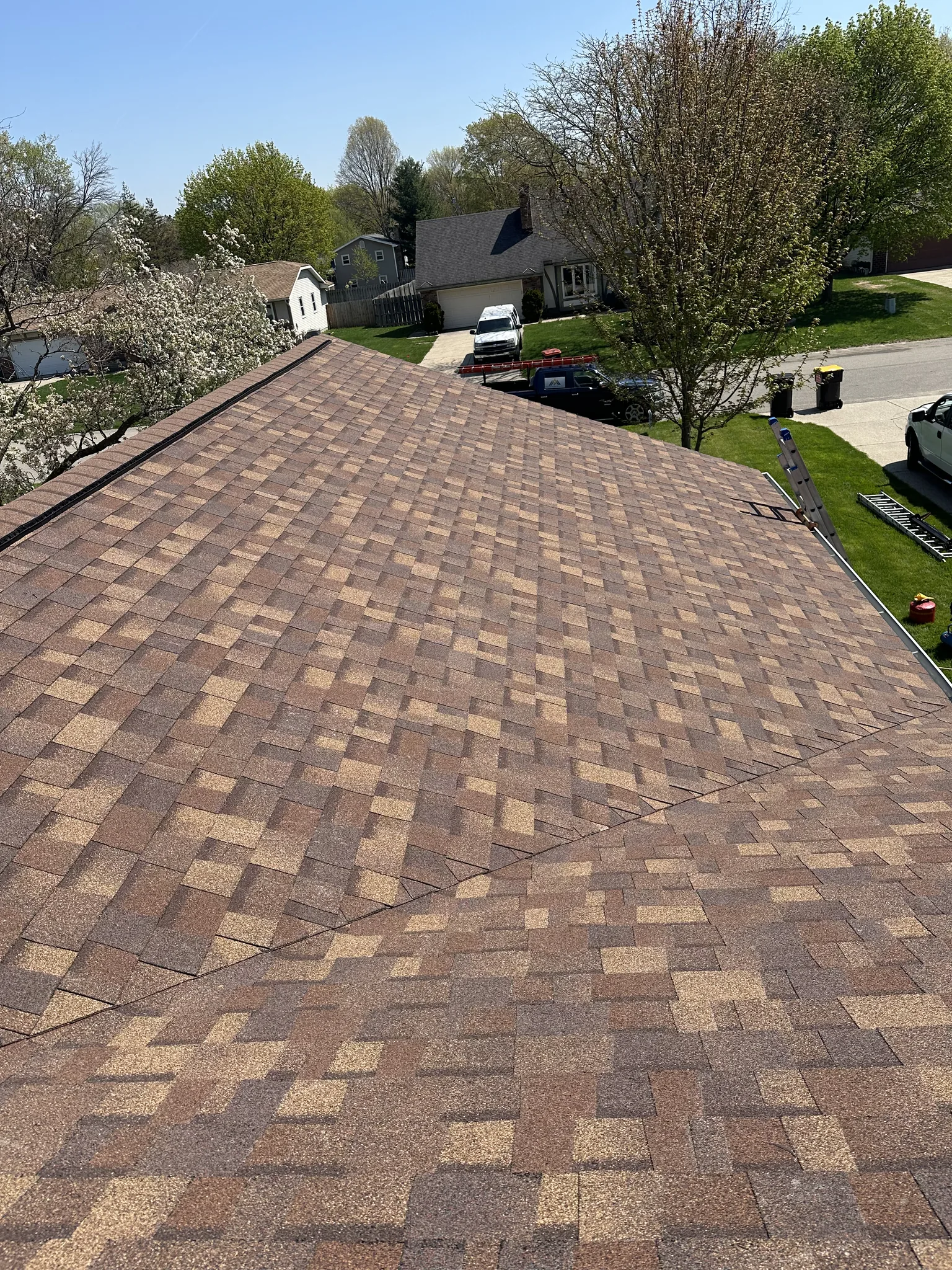
- ◆Architectural (dimensional) shingles are the thicker, layered shingles on most homes built or re-roofed in the last fifteen years. Rated around 30 years, they realistically last 22–28 in West Michigan when installed and vented correctly.
- ◆Three-tab shingles are the older, flat, single-layer style with the repeating rectangular cutouts. Rated closer to 25 years, they usually give you 15–18 here before they are visibly done.
Notice the gap between the rated number and the real one. That rating is a laboratory figure measured under ideal conditions. Your roof does not live in a laboratory — it lives outside in Michigan, and that is where the years come off.
What Michigan Weather Does to a Roof
No single Michigan weather event ends a roof. The damage is cumulative — a decade of small insults that add up to a roof that ages faster than the package promised.
- ◆Freeze-thaw cycles. West Michigan crosses the freezing line dozens of times each winter. Water finds its way into tiny cracks and under shingle edges, freezes, expands, and pries them open a little wider every cycle.
- ◆Ice dams. Lake-effect snow melts off a warm roof, runs to the cold eaves, and refreezes into a ridge of ice that backs water up under the shingles at the most vulnerable edge of the roof.
- ◆Summer heat and humidity. Hot, humid days followed by cool nights expand and contract the shingle over and over, drying out the asphalt binder that keeps it flexible and weatherproof.
- ◆Hail and wind. Spring and summer storm season bruises and cracks shingles and strips granules. A single storm can take years off a roof at once — and most of that damage is invisible from the ground.
The Three Things That Decide 18 Years or 28
Two identical roofs on the same street can age a full decade apart. The difference almost always comes down to three things — and only one of them is the weather.
- 01The shingle itself. Architectural shingles simply outlast three-tab. If you are re-roofing, the upgrade to architectural is usually modest and buys you years of additional life.
- 02Attic ventilation. This is the one almost nobody thinks about, and it is the biggest lever of the three. An under-vented attic bakes the shingles from below all summer and routinely cuts 5–10 years off a roof. We cover exactly how that works in our guide to attic ventilation and shingle life.
- 03Installation quality. Proper underlayment, correct nailing, ice-and-water shield at the eaves and valleys, and clean flashing decide whether a roof reaches its potential or fails early at the details. It is also the hardest thing for a homeowner to verify, which is why who installs the roof matters as much as what goes on it.
The Biggest Lifespan Killer Isn't the Weather
When a West Michigan roof fails years early, the homeowner almost always blames the shingles or the storms. Most of the time it is the attic. A poorly vented attic that runs 140–160°F every summer afternoon cooks the underside of the deck, dries out the shingles from the back, and ages the whole roof prematurely.
The good news: ventilation is fixable, and correcting it on a new roof is what protects the warranty and the lifespan you are paying for.
The Signs It's Time — What to Look For From the Ground
You do not need a ladder to read most of these. One sign on a young roof is usually a repair. Several of them on a roof past 18–20 years usually means it is time to plan the replacement.
- ◆Granules in the gutters. The single most reliable tell. Those sandy granules are the shingle's sunscreen. When they wash into the gutters and downspout splash blocks, the asphalt underneath is exposed and the clock is running out.
- ◆Curling, cupping, or clawing shingles. Edges lifting up or centers pulling down mean the shingle has dried out and lost its seal. Look hardest at the south- and west-facing slopes, which take the most sun.
- ◆Cracked or missing shingles. Especially after a windstorm. Bare spots are an open door for water, and brittle, cracking shingles are a roof that has gone past flexible.
- ◆Dark streaks and moss. Black streaking is algae; green is moss. Both hold moisture against the roof and, on an older roof, signal a surface that stays wet longer than it should.
- ◆Daylight, stains, or sag from the attic. Light through the decking, water stains on the underside, or any dip in the roofline are the urgent ones — they mean water is already getting in.
- ◆Failing flashing and a neighborhood going at once. Rusted or lifting metal around the chimney and valleys is a common leak point. And if the houses around you — same builder, same age, same storms — are all getting new roofs, yours is probably on the same clock.
First, Find Out How Old Your Roof Actually Is
Age frames everything else, so it is worth pinning down. Check your closing documents or the seller's disclosure from when you bought the house — a re-roof is often listed there. Your local building department keeps permit records that date most legitimate replacements. If neither turns it up, a roofer can estimate the age from granule wear, shingle type, and the state of the flashing. And if you simply do not know how old the roof is on a house that is more than fifteen years old, that uncertainty is itself a good reason to have it looked at.
Don't Wait for the Leak
The most expensive way to replace a roof is to wait until it leaks. By then water has already passed the shingles, the underlayment, and often the decking, and may have reached insulation and drywall — turning a roofing job into a roofing-plus-repairs job. The cheapest year to replace a worn roof is the year before the first leak.
If your roof is in the grey zone — old enough to worry about, not yet leaking — the right next step is usually an honest look rather than a sales pitch. Our guides to roof repair versus replacement and to moisture mapping walk through how to tell whether a roof has years left in it or is genuinely done.
Frequently Asked Questions
How long does an asphalt shingle roof last in Michigan?
It depends mostly on the shingle. A modern architectural (dimensional) asphalt roof is rated for about 30 years and, installed and vented correctly, realistically lasts 22–28 years in West Michigan. Older three-tab shingles are rated closer to 25 years and usually deliver 15–18 here. The rating on the wrapper is a lab number under ideal conditions — Michigan's freeze-thaw winters, ice dams, summer heat, and storm season almost always pull the real-world number to the lower end of the range.
Does Michigan weather really shorten a roof's lifespan?
Yes, and more than most homeowners expect. Repeated freeze-thaw cycles work water under shingles and into cracks, then expand it. Ice dams back meltwater up under the courses at the eaves. Summer heat and humidity swings dry out the asphalt binder, and spring and summer hail and wind take their own toll. No single one is dramatic, but stacked over a decade they are why a roof in West Michigan rarely reaches the number printed on the package.
What are the signs I need a new roof?
The clearest tells you can see from the ground are granules collecting in the gutters and downspout splash blocks, shingles that are curling, cupping, or clawing, cracked or missing shingles after a windstorm, and dark streaks or moss holding moisture on the surface. Inside, daylight or water stains in the attic and any sag in the roofline are urgent. One sign on a young roof is usually a repair; several signs on a roof past 18–20 years usually points to replacement.
How can I tell how old my roof is?
Start with your closing documents or the seller's disclosure from when you bought the house — a roof replacement is often listed. Your local building department keeps permit records, which date most legitimate re-roofs. If neither turns it up, a roofer can estimate the age from granule wear, shingle type, and the condition of the flashing and underlayment. If you genuinely do not know how old your roof is and the house is more than 15 years old, that uncertainty itself is a good reason to get it looked at.
Should I replace my roof before it actually leaks?
Usually, yes. By the time a roof leaks into the living space, water has already passed the shingles, the underlayment, and often the decking, and may have reached insulation and drywall. The cheapest year to replace a worn roof is the year before the first leak, not the year after. Planning the replacement while the roof is intact also lets you do it on your schedule and budget instead of as an emergency.
Can I get more life out of the roof I already have?
Often, yes — especially if it is not yet near the end of its range. Correcting attic ventilation stops shingles from being cooked from below, keeping the gutters clear prevents standing water and ice dams, and repairing failed flashing or a few damaged shingles promptly stops small problems from spreading. A free inspection tells you whether you are looking at a few more good years with minor upkeep or a roof that is genuinely at the end of its life.
Find Out Exactly Where Your Roof Stands
If you are not sure how many years are left in your West Michigan roof, we will tell you straight. A free inspection comes with full photo documentation and a written condition report — yours to keep whether you hire us or not. No pressure, no scare tactics, just an honest read on whether you are looking at a few more good years of upkeep or a roof that is at the end of its life.
Call or text us at (616) 256-0831, or request an inspection through the form on our storm damage page or the general contact page.
Serving Grand Rapids, Jenison, Holland, Hudsonville, Muskegon, Kalamazoo, Wyoming, Grandville, Zeeland, and all of West Michigan. Lifespan ranges in this article are general estimates — the condition of your specific roof is what determines its remaining life.