
A roofing quote that says "install over existing shingles" can look appealing. There is less material to remove, less debris to haul away, and less time spent exposing the roof deck. The part missing from that short scope is everything the old shingles keep hidden.
An overlay and a tear-off can both leave a house with new shingles on top. They do not create the same opportunity to inspect and rebuild the roof underneath. Before comparing the bottom-line numbers, compare what each contractor will actually see, remove, and correct.
The Difference in Plain English
A roof overlay places new asphalt shingles over the existing shingle layer. The old roof stays in place. Fasteners pass through both layers and into the deck below.
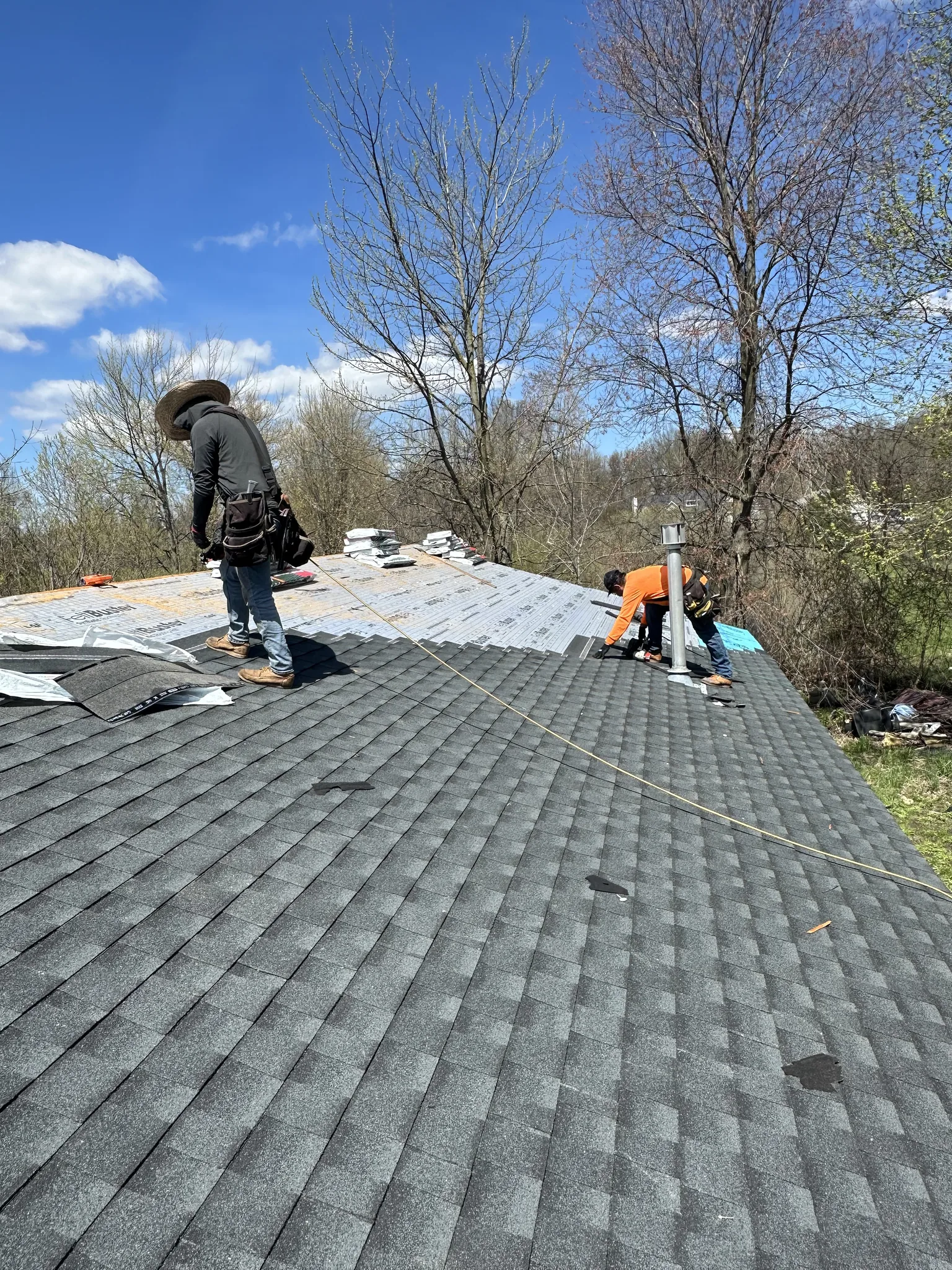
A full tear-off removes the old shingles and underlayment down to the wood sheathing. The crew can then inspect the entire exposed deck, replace damaged sections, rebuild flashing details, install new underlayment, and start the shingle system on a clean surface.
The visible finish may look similar from the street. The difference is the amount of the roof that was inspected before it disappeared under the new material.
What an Overlay Leaves Hidden
Soft or deteriorated roof decking
Attic staining and a careful roof walk can reveal some trouble, but neither exposes the whole deck. Small soft areas, old leak paths, separated sheathing, and damaged edges may remain covered. New shingles do not strengthen weak wood underneath them.
Old underlayment
Underlayment is the drainage layer between shingles and wood. On an overlay, most of that existing layer stays buried. The crew cannot verify its continuity, repair every torn area, or install a complete new layer directly over the deck without removing the shingles above it.
Flashing and penetration details
Chimneys, sidewalls, valleys, vents, and plumbing pipes depend on materials that are woven into the shingle courses. Some details can be opened and rebuilt during an overlay, but that requires deliberate removal around each area. A scope that simply covers the field may leave old flashing in the new system.
The reason the first roof failed
If poor ventilation, recurring leaks, uneven decking, or failed details shortened the old roof, covering the symptoms does not remove the cause. The inspection should explain why the existing shingles need replacement and whether the proposed scope corrects that condition.
Why the Surface Matters to the New Shingles
Asphalt shingles follow the surface below them. Curled tabs, raised edges, old patchwork, and uneven courses can show through the new layer. That uneven base may make the finished roof look wavy and can complicate fastening because the crew is working through material it cannot see through.
A tear-off gives the installer a flat reference surface. High spots can be corrected, loose sheathing can be secured or replaced, and the layout starts from the deck rather than from another roofer's old courses. That clean start is one reason a full tear-off is easier to document and inspect as work progresses.
The key question for an overlay quote
Ask how the contractor verified the deck, underlayment, flashing, ventilation, and number of existing layers. If the answer is only "the roof looks fine from outside," the scope is based on an assumption that will be buried under the new shingles.
When an Overlay May Be Considered
An overlay is not automatically wrong in every situation. It may be considered when the existing roof is a single, flat shingle layer; the deck is dry, sound, and reliably inspected; the flashings and penetrations can be rebuilt correctly; the roof plane is not curled or uneven; and the proposed assembly follows local requirements and the written instructions for the selected roofing products.
That is a demanding list because every hidden condition shifts risk to the homeowner. If the contractor cannot establish those facts, the overlay is cheaper partly because inspection and correction were removed from the scope.
Product warranty terms and insurance guidelines also vary. Ask for the exact manufacturer installation document and check with your insurer before deciding. A verbal "it should be fine" is not a substitute for written requirements tied to the materials on your house.
When a Full Tear-Off Is the Clearer Choice
- ◆The existing shingles are curled, brittle, uneven, patched, or visibly failing across more than one area.
- ◆The attic or roof inspection finds moisture staining, soft spots, deflection, active leaks, or uncertain deck condition.
- ◆Chimney flashing, wall flashing, valleys, pipe boots, or other integrated details need to be rebuilt rather than covered.
- ◆The number of existing layers is uncertain, or the contractor cannot document that another layer is acceptable for the home and selected system.
- ◆You want the replacement scope to include a complete deck inspection and a new drainage layer rather than relying on the previous roof assembly.
What a Good Tear-Off Scope Should Include
"Remove old roof" is a start, but a useful estimate should explain the work that follows removal. Look for these details in writing:
- 01Removal and disposal. The scope should identify the existing roof covering being removed and include cleanup and debris handling.
- 02Deck inspection and repair terms. Hidden damage should be photographed, explained, and priced by a defined unit rather than handled as an open-ended surprise.
- 03New water-shedding layers. The estimate should name the underlayment, edge details, and any additional membrane used in vulnerable areas.
- 04Flashing and penetrations. Chimneys, sidewalls, valleys, vents, and pipe boots should be addressed individually instead of grouped under "as needed."
- 05Ventilation review. Intake and exhaust should be inspected as a system so the new roof is not installed over an attic condition that damaged the old one.
Our guide to reading a roofing estimate explains how to compare these line items across bids. If you are still deciding whether the roof needs a limited fix or complete replacement, start with our guide to roof repair versus replacement.
Frequently Asked Questions
What is a roof overlay?
A roof overlay installs a new layer of asphalt shingles over an existing shingle roof without removing the old covering first. The crew prepares the surface, addresses accessible details, and fastens the new shingles through the old layer into the deck. The old shingles, underlayment, flashing, and most of the deck remain covered.
What is a full roof tear-off?
A full tear-off removes the existing shingles and underlayment down to the roof deck. That gives the crew access to inspect the sheathing, replace weak sections, correct flashing and penetration details, install new underlayment, and build the new roof on a known surface.
Is it always wrong to put new shingles over old shingles?
No, but the conditions have to be unusually favorable. The existing roof must be flat and sound, the deck and flashing must be reliably assessed, the added layer must be acceptable for the structure, and the proposed system must follow local requirements and the written instructions for the selected products. Those questions should be answered before an overlay is quoted, not after work starts.
Can a roofer find rotten decking without tearing off the shingles?
An attic inspection can reveal staining, visible deterioration, deflection, and active leaks from below. A careful roof walk may also find soft areas. Those checks are useful, but they cannot expose every square foot of deck or show the condition beneath old underlayment. A tear-off provides the most complete deck inspection because the covering is removed.
Why does a tear-off estimate include a decking allowance or unit price?
Some deck damage stays hidden until the old roof is removed. A clear estimate explains how discovered sheathing replacement will be documented and priced, often by sheet or another defined unit. That protects the homeowner from a vague open-ended charge and lets the crew replace unsafe or deteriorated material instead of covering it again.
Will an overlay affect a shingle warranty or homeowners insurance?
There is no universal answer. Product installation instructions, warranty terms, insurer guidelines, and the condition of the existing roof all matter. Ask the contractor to identify the exact roofing system and provide the written manufacturer requirements. Ask your insurer how an additional layer affects its records or future claim handling before choosing an overlay.
Compare the Roof Underneath, Not Just the Shingles on Top
Platinum Roofing inspects the roof surface, accessible attic, deck condition, flashing, and ventilation before recommending a scope. If an overlay is proposed, the reasons and limitations should be clear. If a tear-off is the responsible path, the estimate should explain how hidden deck repairs will be documented before extra work begins.
For a free roof inspection in Grand Rapids, Jenison, Holland, Muskegon, Kalamazoo, or the surrounding West Michigan area, call or text (616) 256-0831 or send us the details through the contact form.