
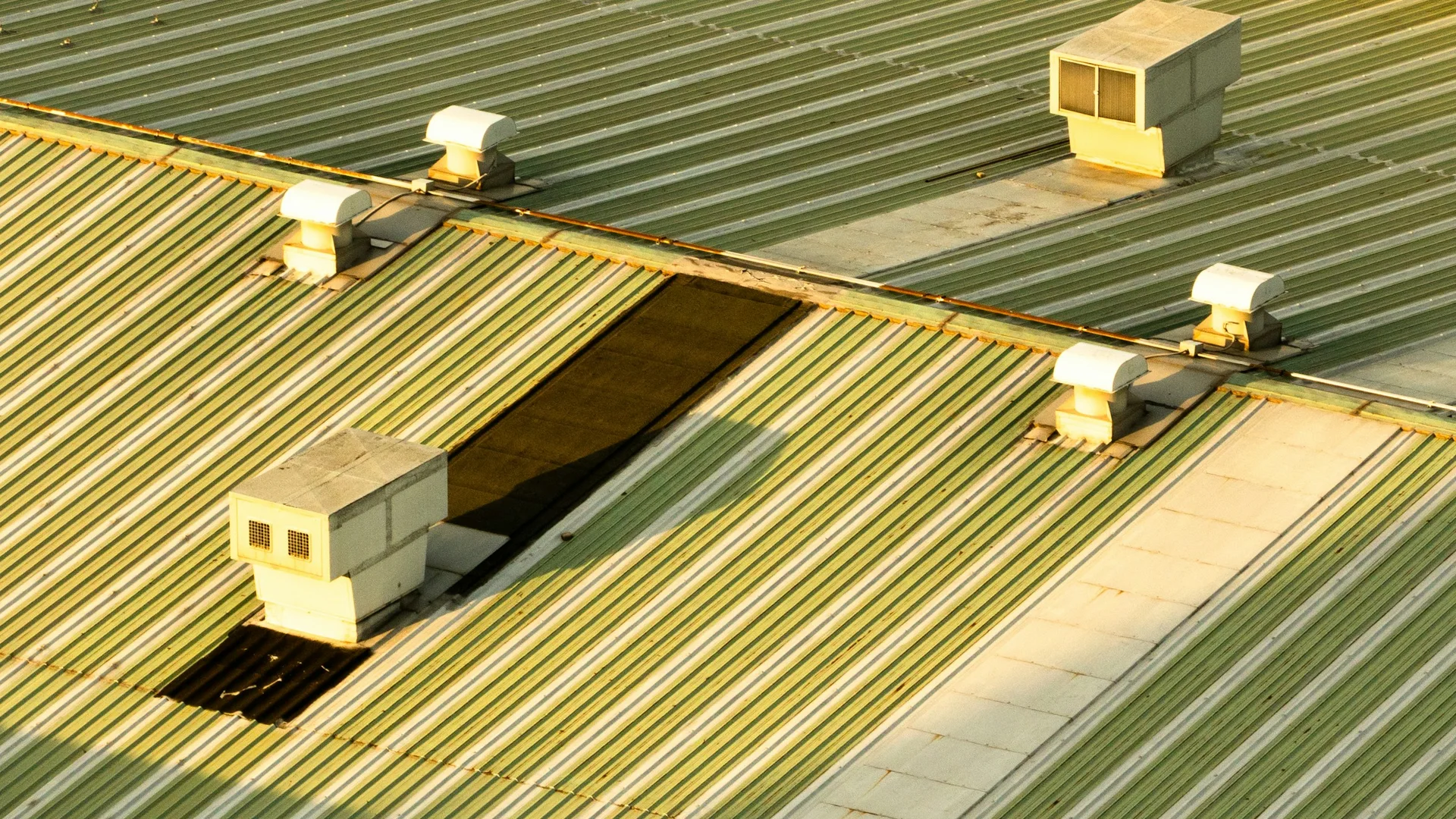
A commercial roof may be the only practical route to air handlers, exhaust fans, solar equipment, antennas, piping, and signs. Some traffic is unavoidable. Problems start when every contractor chooses a different path, hardware is left behind, or heavy equipment crosses a surface that was never prepared for it.
Foot traffic damage is not always an obvious puncture. Repeated loading can compress insulation, stress seams, scuff coatings, deform metal panels, or create low areas that hold water. A facility team can reduce that risk by controlling access before anyone reaches the roof.
Why the Service Route Matters
The shortest line from a hatch to an HVAC unit may cross a drain bowl, a repaired seam, a soft area, or a section where water collects. A good service route avoids vulnerable details and keeps traffic in a predictable corridor that can be checked after work.
Access patterns also concentrate wear. A technician may step in nearly the same places on every visit. If the roof has compressible insulation below the membrane, repeated point loading can leave an indentation even when the top surface is not torn. On metal roofs, foot placement and panel support matter as well.
The hatch is the start of the route
Post a simple roof plan near the hatch or access door. Mark approved paths, restricted areas, drains, frequently serviced equipment, known repairs, and the contact who must approve penetrations or material staging.
What Service Crews Can Leave Behind
Screws, sheet-metal offcuts, wire, zip ties, drill bits, and packaging can become sharp points under a boot or equipment cart. Condensate lines may be moved across drainage paths. Access panels and filters can be set directly on the roof, then dragged when the work is done.
Cleanup should include the work zone and the entire route back to the hatch. A magnetic sweep can help with ferrous hardware, but it will not collect aluminum, copper, plastic, or roofing scraps. A visual closeout is still necessary.
When Walk Pads May Help
Walk pads or compatible traffic surfaces can define a route and spread routine wear. They are commonly considered between access points and equipment that receives regular service. They may also provide a designated standing area at panels, filters, or controls.
A walk pad is part of the roof assembly, not a loose mat from a hardware store. Its material, attachment, spacing, drainage, temperature movement, and maintenance access all need review. Pads should not block water, cover a drain, bridge an active defect, or hide a seam that still needs inspection.
Plan Heavy Work Separately
Replacing a rooftop unit, moving compressors, installing solar racks, or staging ductwork is different from one technician carrying a tool bag. Loads may need temporary protection and a planned path that accounts for the roof deck and insulation below the visible surface.
Do not assume loose plywood is suitable protection. Edges, fasteners, trapped debris, and movement can create damage of their own. The roofer and equipment contractor should agree on protection, staging, penetrations, flashing responsibility, and final inspection before the project begins.
Coordinate Other Trades Around Roof Details
Mechanical and electrical contractors are responsible for their systems, but new pipes, conduit, supports, or curbs also interrupt the waterproofing layer. A roofing contractor should handle or approve roof-system work rather than relying on sealant around a new opening.
Keep routine traffic away from drains, scuppers, perimeter flashing, penetrations, pitch pockets, and recently repaired areas. Our guides to commercial HVAC curb leaks and commercial roof drainage explain why those locations deserve special attention.
Use Before and After Photos
Before work starts, photograph the route, equipment area, nearby seams, drains, curbs, and existing repairs. Repeat the same views after tools and materials leave. Matching angles make a new scuff, puncture, displaced line, or missing cover easier to identify.
Photos also protect every contractor from blame for an old condition. Record uncertainty honestly. A stain or wrinkle may predate the visit, and surface appearance alone may not establish whether moisture is trapped below.
Commercial Roof Closeout Checklist
- 01Walk the approved route and work zone for hardware, scraps, packaging, tools, and displaced components.
- 02Check seams, flashing, coatings, membrane, or metal panels for cuts, scuffs, open laps, or new deformation.
- 03Confirm drains, scuppers, gutters, and overflow paths remain open and unchanged.
- 04Photograph every new penetration, support, curb modification, condensate line, and repaired area.
- 05Record who inspected the roof, which concerns were reported, and when corrective work is scheduled.
Frequently Asked Questions
Does walking on a commercial roof damage it?
Necessary access does not automatically damage a roof. Repeated traffic, sharp debris, carts, unsuitable footwear, and walking during vulnerable conditions can stress the surface. Roof type, condition, temperature, route, and work method all matter.
Does every commercial roof need walk pads?
No. Walk pads are most useful where traffic is frequent or concentrated, such as the route from a hatch to regularly serviced equipment. Material, attachment, spacing, drainage, and compatibility must suit the existing roof system.
Can walk pads be installed over an existing roof?
Often they can, but the roof should be inspected first. Trapped moisture, weak insulation, deteriorated membrane, active leaks, or incompatible materials need attention before adding a traffic surface.
Who should inspect after HVAC or electrical work?
A qualified commercial roofer should inspect the work area and access route when a project involved heavy traffic, new penetrations, equipment movement, dropped hardware, or changes near curbs and drains. The other trade should document its own work and cleanup.
What belongs in a roof access log?
Record the date, company, purpose, entry point, equipment serviced, route used, surface condition, penetrations or material movement, before and after photos, and who confirmed cleanup or reported damage.
Build an Access Plan Before the Next Service Call
Platinum Roofing inspects and restores commercial roofs across Grand Rapids, Jenison, Holland, Muskegon, Kalamazoo, and nearby West Michigan communities. Call or text (616) 256-0831 to schedule a free assessment and review high-traffic roof areas.