
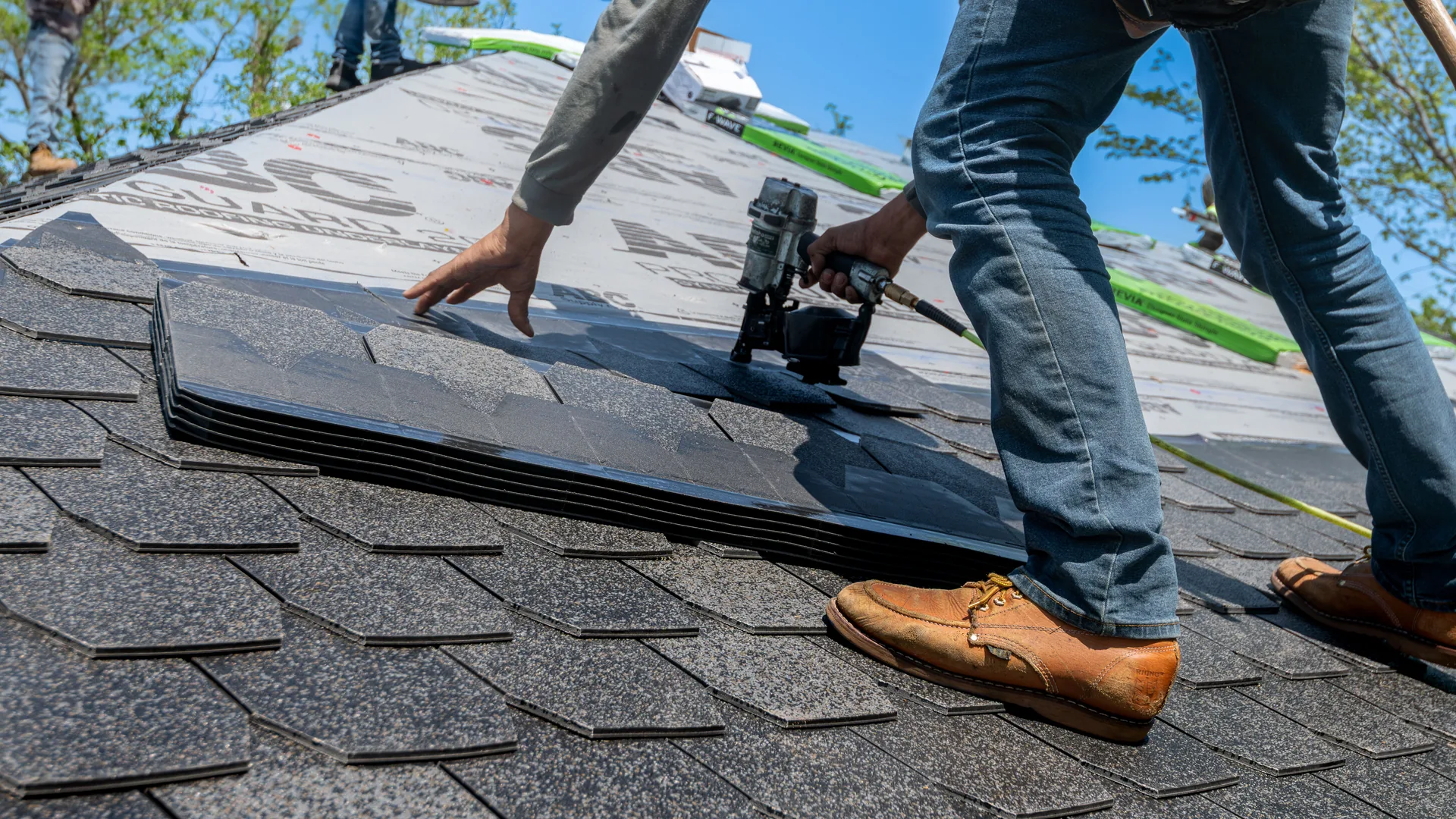
A plumbing vent may be only a few inches wide, but it passes through every water-shedding layer on the roof. The pipe boot has to seal against the pipe while its flashing sends rain back onto the shingles. A crack or misplaced layer can create a ceiling stain several feet away.
The stain does not identify the source by itself. Rain can enter around the boot, travel along the pipe or roof deck, and drip near a bathroom wall. Water can also start farther uphill. In cold weather, condensation on the pipe can imitate a roof leak without rain entering at all.
What a Pipe Boot Does
The plumbing vent carries sewer gases safely above the roof. Where that pipe passes through an asphalt roof, a boot or flashing assembly closes the gap. Many common assemblies use a metal or plastic flange with a flexible collar that fits around the pipe.
The flange belongs inside the shingle pattern. Its lower section drains over the shingles below it, while the upper section is covered by the courses above. That overlap matters more than a thick bead of sealant. It gives moving water a continuous downhill path across the roof.
Five Places the Detail Can Fail
1. The collar cracks or separates
Sun, temperature changes, and normal aging can leave a flexible collar split or pulled away from the pipe. Water then runs through the opening and follows the pipe into the attic.
2. The flashing is layered incorrectly
A flange installed on top of every surrounding shingle relies on exposed edges and sealant to resist water. Correct integration lets the upper shingles cover the flashing while the lower edge remains free to drain.
3. Fasteners loosen or sit in the water path
Exposed nails and screws can back out, rust, or lose their seal. Fastener holes near the uphill side of the flange receive runoff before it reaches the lower courses.
4. The pipe and roof move differently
Framing, the vent pipe, and the roof covering expand and contract. A pipe leaning against one side of the collar can stretch the seal and place uneven pressure on the flashing.
5. Nearby shingles or decking are damaged
Cracked shingles, old repair holes, soft decking, or deteriorated underlayment can keep the area leaking after a new collar is added. The repair needs to cover the whole transition, not one visible gap.
The stain may be downhill from the opening
Water can follow the pipe, a rafter, the underside of the deck, or an insulation facer before it drops. Mark the interior stain, inspect the attic, and trace the slope above it. Replacing the closest boot without following the path can leave the real opening untouched.
Rain Leak or Attic Condensation?
Timing helps separate the two. Moisture that appears during wind-driven rain points toward a roof opening, although the entry may still be uphill. Drips that appear during a cold snap or a thaw without recent rain may come from frost or condensation on the vent pipe and nearby roof surfaces.
From the attic, look for a fresh water track on the pipe, darkened wood, rusted fasteners, compressed insulation, frost, and damp roof sheathing. Also check whether bath fans or other humid exhausts discharge into the attic. Our guide to attic ventilation and roof damage explains how heat and moisture affect the larger assembly.
Why Another Surface Patch Often Fails
Roof cement and sealant have specific uses, but a thick patch over the collar and shingles does not rebuild the drainage pattern. The patch can harden, crack, separate from a dusty surface, or trap water behind an edge. It also makes the next inspection harder.
A focused repair usually requires enough shingle removal to expose the complete flange and surrounding deck. That is the point when hidden nail holes, wet underlayment, and soft wood become visible. Read what goes under asphalt shingles for a closer look at how those layers work together.
What a Lasting Repair Should Include
- 01Confirm the water path from the room and attic before opening the roof.
- 02Remove enough nearby shingles to expose the full boot, underlayment, and deck.
- 03Replace damaged wood and close abandoned fastener holes instead of covering them.
- 04Install a compatible boot or flashing assembly in the shingle pattern, with the lower edge able to drain.
- 05Replace disturbed shingles and document the completed layers with photos.
If the surrounding roof is still serviceable, this can remain a localized repair. Widespread shingle wear, repeated patches, multiple failing penetrations, or broad deck damage may justify a larger conversation. The findings should drive that decision. Our roof repair versus replacement guide explains how to evaluate the rest of the roof.
Frequently Asked Questions
Why does my roof leak around a plumbing vent?
Common causes include a cracked pipe boot collar, loose or exposed fasteners, flashing that is not layered correctly with the shingles, movement between the pipe and roof, or damage to the surrounding shingles. Water can also travel from an opening farther uphill, so the visible stain does not prove the boot is the source.
Can a leaking pipe boot be repaired without replacing the roof?
Often, yes. When the surrounding shingles, decking, and underlayment remain serviceable, a roofer may be able to remove the nearby shingles, replace or rebuild the flashing detail, repair damaged wood, and weave compatible shingles back into the roof. The inspection should determine the scope before work begins.
Will roof cement stop a pipe boot leak?
Roof cement may slow water temporarily in some situations, but a surface patch can crack, separate, or hide a failed collar and damaged material below it. A lasting repair addresses the flashing layers, fasteners, surrounding shingles, and any wet or deteriorated decking.
Can condensation look like a pipe boot leak?
Yes. Warm, humid indoor air can condense on a cold vent pipe or nearby roof surfaces in the attic. Frost may form during cold weather and drip when temperatures rise. An inspection should compare the timing of the moisture and check the attic before assuming rain entered through the roof covering.
What should a pipe boot repair estimate include?
The estimate should identify the suspected failure, state how many surrounding shingles will be removed, explain whether the flashing or boot will be replaced, include terms for damaged decking, list the materials used, and describe cleanup and workmanship coverage.
Get the Water Path Traced Before It Spreads
A small pipe boot failure can wet insulation and decking before the ceiling stain becomes obvious. Catching it early gives the roofer a better chance to keep the repair focused.
Platinum Roofing inspects residential leaks across Grand Rapids, Jenison, Holland, Muskegon, Kalamazoo, and surrounding West Michigan communities. Call or text (616) 256-0831 or send us the stain location and leak timing through the contact form.