
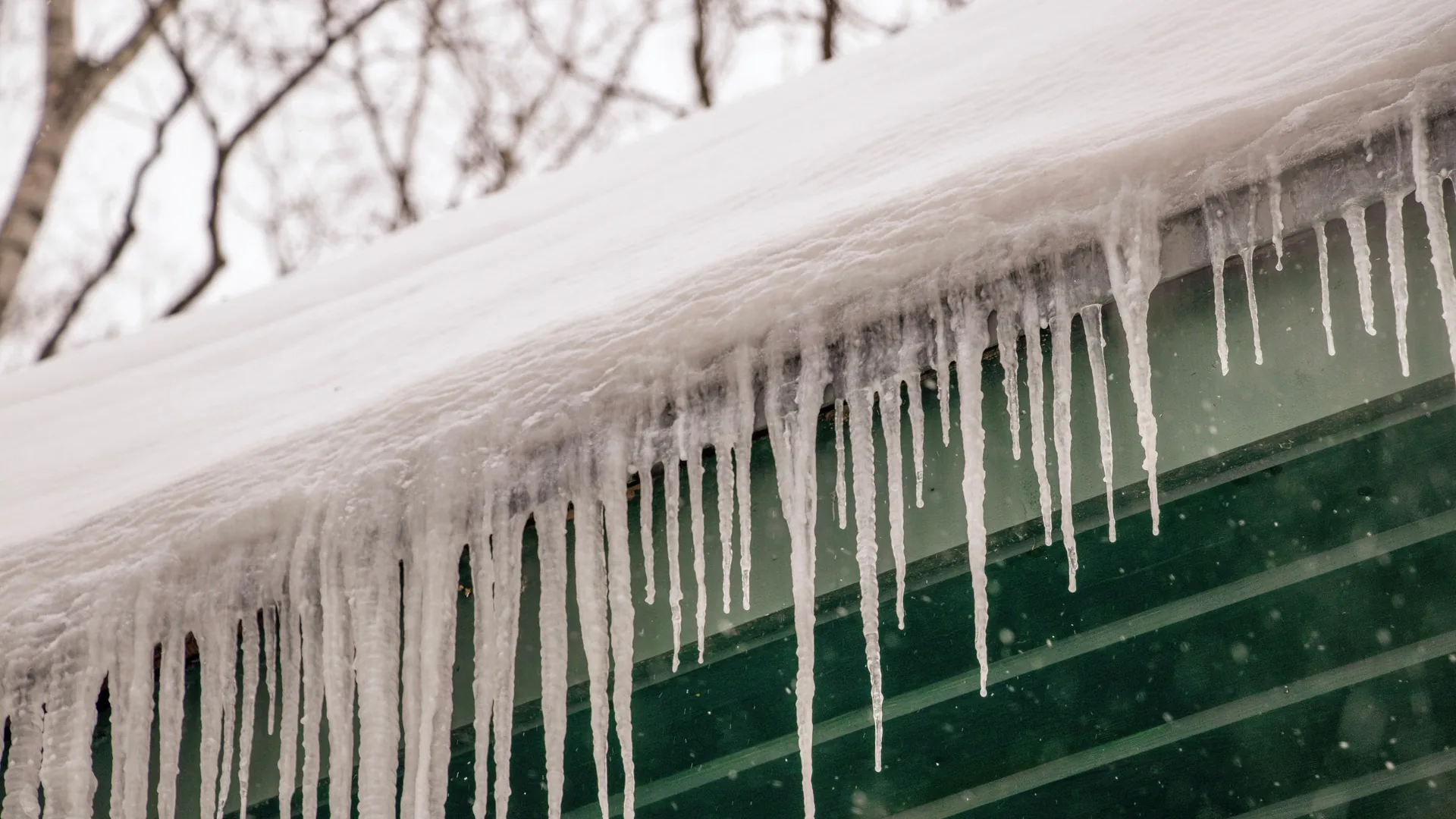
A row of icicles can look like an ordinary part of a West Michigan winter. The condition deserves attention when ice forms a ridge along the eave and meltwater has nowhere to drain. Water can then move beneath shingles at a weak edge, valley, or flashing joint.
The repair should not begin with a guess about the gutter. Ice dams involve the roof surface, indoor heat reaching the attic, insulation, ventilation, and outdoor drainage. Looking at the complete path before winter gives a homeowner time to correct accessible defects while the roof is still visible.
How an Ice Dam Forms at the Eave
Warm air leaking into the attic can heat part of the roof deck above the outdoor temperature. Snow on that warmer area melts. The water runs downhill until it reaches the colder overhang, where there is no heated room below, and freezes again near the roof edge.
Repeated melting and freezing can build a raised band of ice. Later runoff collects behind that band. Asphalt shingles are designed to shed water downhill, so water held above an eave can reach joints and details from a direction they do not normally face.
Icicles are a clue, not a complete diagnosis
Icicles confirm that water melted and refroze at an edge. They do not show whether water reached the roof deck or entered the house. Compare the ice pattern, attic conditions, roof details, and interior staining before assigning a cause.
Start the Inspection Inside the Attic
An accessible attic can show where indoor heat and moisture are reaching the roof assembly. Look for uneven insulation, gaps around an attic hatch, dark marks on the roof deck, rusty fastener tips, damp insulation, frost, or previous repairs. Bath and kitchen exhaust should discharge outdoors rather than release warm, moist air into the attic.
Ventilation also needs a clear path. Soffit intake can be blocked by insulation or storage, while several competing exhaust types can move air unpredictably. Our guide to attic ventilation and shingle life explains how intake and exhaust are meant to work together.
Check Where Water Slows Down
Ice trouble does not always form in one straight line. Pay attention to lower roof sections below taller walls, shaded eaves, valleys, dormer corners, roof-to-wall joints, and places where several slopes deliver water to one edge. Snow can hide old patches and damaged shingles after winter starts.
Before snow arrives, document lower shingle courses, starter shingles, drip edge, flashing, gutter attachment, downspout outlets, and the roof deck from the attic where accessible. Soft wood or recurring perimeter stains may connect ice trouble with an existing drainage defect. Our guide to roof-edge rot, gutters, and fascia covers the layers that need to be checked together.
A Frozen Gutter Is Only Part of the Picture
Leaves, roof granules, and frozen debris can block a gutter or downspout. That restriction can hold water at the eave and place extra weight on hangers and fascia. Cleaning the drainage path before winter is useful, but it does not correct warm air leaking into an attic.
Removing gutters does not solve the temperature difference across the roof either. A complete plan checks why snow is melting, where the water refreezes, and whether the edge assembly can drain safely after it thaws.
What to Do When Water Appears Indoors
Protect the room and move belongings away from the wet area. Keep people clear of a sagging ceiling. If water is near a light fixture, outlet, or electrical equipment, avoid the area and contact qualified help. Record the stain, the outside ice pattern, the time, and recent weather without climbing onto the roof.
A ceiling stain can spread away from the entry point as water follows framing, insulation, or the underside of the roof deck. The photos and notes in our guide to documenting a roof leak before repair can preserve useful evidence before finishes dry or change.
Avoid Tools That Damage the Roof Edge
Do not strike ice with an axe, hammer, or metal shovel. Those tools can cut shingles, bend gutters, loosen flashing, and leave the roof with a new opening after the ice melts. Falling ice also creates a serious drop zone below the eave.
Heating cables and temporary melting methods may create drainage channels in a planned system, but they do not repair wet decking, failed flashing, missing insulation, or attic air leakage. Any electrical product needs to be selected and installed for its intended location and instructions.
Build the Repair Around the Actual Cause
- 01Document the ice pattern, interior stain, attic conditions, and roof edge before materials are moved.
- 02Correct accessible attic air leakage, misplaced exhaust, insulation gaps, and blocked ventilation with the appropriate qualified trade.
- 03Repair damaged shingles, flashing, edge metal, decking, fascia, gutters, and downspouts where the inspection finds defects.
- 04Use compatible underlayment and leak-protection details when roofing materials are opened, following the written roof-system requirements.
- 05Keep final attic, roof, and concealed-work photos with the repair record so the same areas can be compared after winter weather.
A self-adhered leak barrier near vulnerable edges can provide backup protection when it is part of a compatible roofing assembly. It does not remove the heat source or guarantee that water cannot enter through a damaged detail. The roof and attic causes still need correction.
A Leak Does Not Automatically Require a New Roof
Limited damage may support a focused edge or flashing repair when the surrounding shingles and deck remain serviceable. Repeated ice problems, widespread wear, soft decking, or several failed details can justify a larger scope. Our guide to roof repair versus replacement explains how the rest of the roof affects that decision.
Frequently Asked Questions
Do icicles always mean there is an ice dam?
No. Icicles show that water melted and refroze at an edge, but they do not prove water is trapped beneath the shingles. A continuous ridge of ice, repeated interior staining, or wet roof-edge materials deserves a closer roof and attic inspection.
Do clogged gutters cause ice dams?
A blocked or frozen gutter can hold water and add stress at the eave, but the main cycle usually starts when heat reaches the roof, melts snow higher on the slope, and the runoff freezes again at a colder edge. Inspect the roof, attic, and drainage path together.
Can I chip an ice dam off my roof?
Striking ice with a hammer, axe, or metal shovel can damage shingles, gutters, and flashing. It also puts the person below falling ice and near a slippery roof edge. Keep people away from the drop zone and use a qualified contractor when removal is necessary.
Does an ice-dam leak mean I need a new roof?
Not automatically. A focused repair may be enough when damage is limited and the remaining roof is serviceable. Widespread shingle wear, soft decking, repeated leaks, or failed edge details can support a larger repair or replacement scope.
What should be checked before winter?
Check the lower shingles, edge metal, gutters, downspouts, valleys, wall intersections, attic air leakage, insulation coverage, intake and exhaust ventilation, and any old interior stains. Document the findings before snow hides the roof surface.
Inspect the Roof Edge Before Snow Covers It
Platinum Roofing inspects residential roofs across Grand Rapids, Jenison, Holland, Muskegon, Kalamazoo, and nearby West Michigan communities. Call or text (616) 256-0831 to schedule a free roof assessment before winter.