
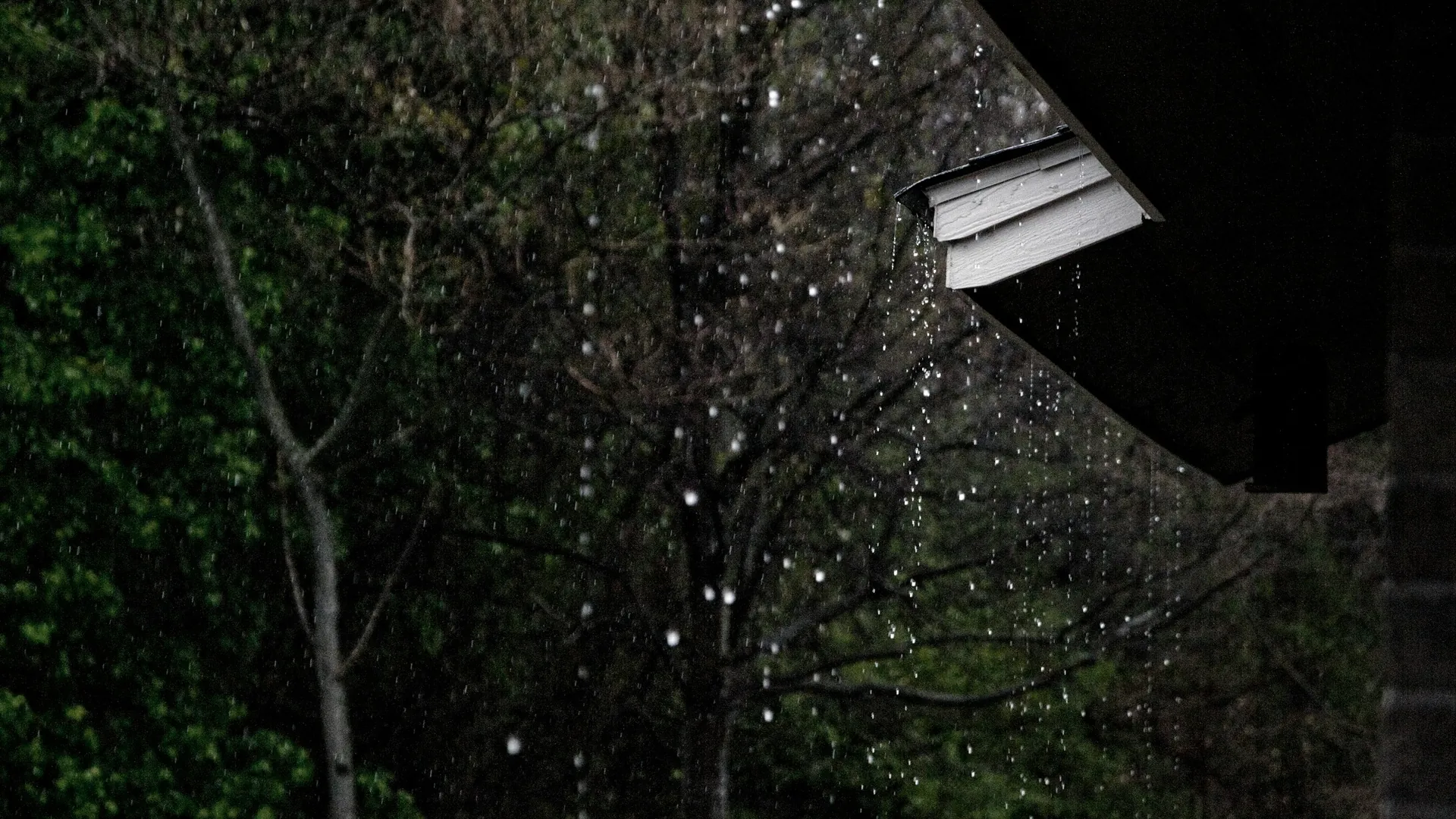
A ceiling can stay dry through several ordinary showers and show a fresh stain during one hard rain. That pattern is useful evidence. It tells the inspector to look at rain direction, runoff volume, storm duration, and details that receive water only under certain conditions.
The downpour did not necessarily create a new opening. It may have exposed a small defect that light rain never reaches, or it may have filled a drainage path faster than the system could release water. A lasting repair starts by recreating the water path on paper before anyone covers the visible spot with sealant.
Heavy Rain Changes More Than the Amount of Water
Rain intensity increases the flow moving down each roof slope. Valleys receive runoff from two planes. A lower roof may also receive discharge from an upper downspout or a taller wall. One area can handle a light shower yet spill, back up, or stay submerged when several water paths arrive at once.
Duration matters too. Water may need time to pass through a narrow opening, wet an underlayment seam, reach the deck, and follow framing to the ceiling. Write down when the rain began and how long it took for the stain or drip to appear. That delay can help separate a direct opening from a slower concealed route.
The stain marks the end of the visible path
Water can enter higher on the roof, move along the deck or a rafter, and drip only when it reaches a joint, fastener, pipe, or low point. Measure the stain from fixed walls and photograph a wide view before tracing the exterior area.
Wind Can Send Rain Sideways
Shingles are arranged to shed water down the slope. Wind-driven rain approaches from a different angle. It can reach a lifted shingle edge, loose ridge cap, open wall joint, damaged vent, or flashing lap that stays protected when rain falls more vertically.
Record which side of the house faced the wind and whether leaks appear only with wind from that direction. Inspect roof-to-wall joints, rake edges, ridge and off-ridge vents, chimney sides, skylights, and plumbing penetrations on the exposed slope. Our guide to roof-to-wall flashing explains how those transitions return water to the shingle field.
Drainage Restrictions Show Up Under Volume
Leaves, roof granules, nests, and loose material can narrow a valley, gutter, outlet, or downspout. Heavy runoff may then cross a valley edge, pour behind a gutter, or wet fascia and siding. An upper downspout that empties onto a lower roof adds concentrated flow to the same shingle path during every downpour.
Look from the ground while it is raining if you can stay under safe cover. Photograph overflowing corners, water running behind the gutter, a downspout joint spraying the wall, or one roof area carrying much more water than the surrounding slope. After the rain, check for debris lines and wet streaks without climbing onto a slick roof. The roof-edge and gutter guide covers the layers that should be evaluated together.
Flashing Defects Often Need the Right Direction
Flashing redirects water where the roof meets a chimney, wall, skylight, vent, or another roof plane. A short piece, open lap, failed corner, exposed fastener, or sealant-only patch may leak only when wind pushes water uphill or runoff rises above its usual line.
Check the exterior feature that lines up with the wet room, but do not stop there. Water may enter on the uphill side of a chimney and appear near a lower wall. It may pass a skylight frame and follow the shaft. Our guides to chimney flashing and skylight leaks show what each inspection should separate.
Build a Rain Record Before the Inspection
- ●Photograph the full room, the stain close up, and any active drip
- ●Mark the time rain began and the time water first appeared
- ●Note wind direction and which side of the house was taking the rain
- ●Record overflowing gutters, concentrated roof discharge, and wet wall streaks
- ●Check the accessible attic for damp decking, insulation, fasteners, and framing
- ●Keep older stain photos so the size and location can be compared
Protect belongings and keep people away from a sagging ceiling. If water is near a light fixture, outlet, or electrical equipment, avoid the area and contact qualified help. More documentation steps are available in our guide to recording a roof leak before repair.
Controlled Water Testing Should Isolate One Detail
Sometimes visual and attic evidence narrow the problem but do not confirm it. A controlled water test may help when the roof is dry and the interior can be watched. The test should begin below the suspected area, wet one detail at a time, and allow enough observation time before moving uphill.
Spraying several roof sections at once defeats the purpose. Pointing a hose upward under shingles or flooding a vent can create a leak that normal rain would not produce. Roof access, water volume, and stop conditions should be handled by a qualified person who can prevent added damage.
Match the Repair to the Failed Path
- 01Use the rain record and interior measurements to define the likely exterior area.
- 02Inspect shingles, flashing, vents, valleys, edges, gutters, and the accessible deck before assigning a cause.
- 03Open enough material to verify concealed laps, underlayment, fasteners, and deck condition where evidence supports it.
- 04Repair the failed layer with compatible materials instead of coating the general area with sealant.
- 05Keep before, concealed-work, and completed-repair photos for comparison during the next hard rain.
One Heavy-Rain Leak Does Not Decide the Whole Roof
An isolated flashing, valley, shingle, vent, or drainage defect may allow a focused repair when the surrounding roof remains serviceable. Repeated leaks in different areas, brittle shingles, soft decking, or several failed transitions can support a broader scope. The decision should follow the documented condition, not the size of one ceiling stain. Our repair versus replacement guide explains how the rest of the roof affects that choice.
Frequently Asked Questions
Why would a roof leak in heavy rain but not light rain?
Heavy rain adds more water in less time, while wind can push it toward joints and openings that stay dry in a light vertical rain. A restriction in a valley, gutter, or downspout can also hold water against a weak detail only when runoff reaches a higher volume.
Does a heavy-rain leak always start directly above the stain?
No. Water can travel along roof decking, underlayment, rafters, pipes, or insulation before it drips. The indoor stain identifies where water became visible, not necessarily where it entered the exterior assembly.
Can clogged gutters make a roof leak during a downpour?
A clogged gutter or downspout can overflow, wet fascia and wall surfaces, and hold water near the roof edge. It may contribute to a leak, but the inspection should also check edge metal, shingles, decking, wall joints, and the final discharge path.
Should I use a garden hose to find a roof leak?
Uncontrolled spraying can send water where normal rain does not, create interior damage, and confuse the diagnosis. When controlled water testing is appropriate, a qualified person should isolate one area at a time, start low, monitor indoors, and stop as soon as water appears.
Does a leak during heavy rain mean I need a new roof?
Not automatically. An isolated flashing, shingle, vent, valley, or drainage defect may support a focused repair when the surrounding roof is serviceable. Widespread wear, soft decking, repeated leaks, or several failed details can justify a larger scope.
Bring the Rain Pattern to the Roof Inspection
Platinum Roofing traces residential roof leaks across Grand Rapids, Jenison, Holland, Muskegon, Kalamazoo, and nearby West Michigan communities. Call or text (616) 256-0831 to schedule a free roof assessment and share the photos, timing, and rain direction you recorded.