
Water at the upper corner of an RV slide-out can come from the room's roof, a perimeter seal, a wall joint, a window, or the main RV roof above the opening. The wet trim identifies where water became visible, not where it entered.
Slide position gives the inspection useful evidence. A leak that appears only while extended exposes a different set of surfaces than one that appears while retracted or after travel. Record that difference before the room moves and wipes away the path.
The Slide-Out Has Its Own Roof and Perimeter
When the room extends, its top surface becomes a small roof. That surface meets front and rear sidewalls, an outer fascia, and the RV wall opening. Flexible wiper and bulb seals help manage the moving perimeter, but the exact arrangement varies by manufacturer and room design.
Inspect the assembly as a connected water path. A sound-looking seal at eye level cannot rule out an opening at the upper corner or damage on the slide roof. Likewise, a stain beside the room may begin at a main-roof seam and travel down the wall cavity.
Keep clear of a moving slide room
Do not place hands, tools, ladders, or loose covers near the room while it operates. Never climb onto a slide roof unless the RV manufacturer specifically permits access and the correct support and fall protection are in place. Ground-level photos are safer and preserve the condition before service.
Start With the Slide Roof Surface
From a safe vantage point, look for debris, low areas, punctures, abrasion, loose edge material, separated trim, earlier patches, and changes around fasteners or corner pieces. Photograph the full top from both ends when possible, then take close views with a fixed reference for scale.
Leaves and small branches can hold water or interfere with a seal as the room retracts. Ice and snow can add another obstruction. Follow the owner's manual before clearing or operating the room, and do not sweep material toward an open seal or stand where it can fall onto someone below.
Read the Upper Corners and Side Seals Together
Upper corners combine several materials in a small area. Roof skin or membrane, edge trim, sidewall finish, seal ends, fasteners, and molded pieces may all meet there. A loose corner, short overlap, cracked compatible sealant, or distorted part can let water behind the visible surface.
Wiper seals should lie in the intended direction and move without tears, folds, or trapped debris. Bulb seals should not be crushed, detached, or split. Do not coat a moving rubber surface with general-purpose roof material. Cleaning, conditioning, replacement, and adjustment should follow the written instructions for that RV and seal.
A Slide Topper Changes Exposure, Not the Need for a Sound Roof
A fabric topper can help keep leaves and direct sun off the slide roof. It can also hide the roof from a quick inspection. Check for tears, loose attachment, rubbing, uneven rolling, debris beneath the fabric, and water collecting where the material sags.
The topper is not proof that the slide roof beneath it is dry. Wind can carry rain under the ends, and runoff can still reach the perimeter. If the topper limits safe access or needs removal, let a qualified RV technician handle its tensioned components before the roofing detail is opened.
Use Timing to Narrow the Water Path
Write down whether the room was extended or retracted, which side faced the wind, how long rain lasted, and whether water appeared during the storm, during retraction, or hours later. Repeat photos from the same interior and exterior positions. The sequence can separate active rain entry from water carried inward on a wet surface.
A leak after only wind-driven rain may involve an end or corner that stays protected in lighter weather. Water after every retraction may involve standing water, a folded seal, debris, or operation rather than one open roof joint. Our guide to leaks that appear only in heavy rain explains why direction and duration belong in the record.
Map the Interior Before It Dries
Check the top corners, ceiling edge, wall trim, cabinets, window header, floor covering, and storage below the slide. Photograph the wet boundary and note whether the room is level and fully seated in its current position. Do not remove electrical trim or touch a wet outlet.
Soft or swollen material can extend beyond the first stain. A qualified inspection may need to open trim or use moisture readings to define affected substrate. Odor or unknown surface growth should be evaluated without scraping, bleaching, or guessing at the material. The documentation steps in our roof leak photo guide also work inside an RV.
Separate Roofing Work From Slide Adjustment
A punctured slide roof, failed compatible edge detail, or unsound substrate belongs in the waterproofing scope. A room that sits unevenly, fails to compress seals, moves out of square, or makes unusual contact may need mechanical diagnosis from an RV service technician.
Fixing only the surface can leave a misaligned room stressing the new material. Adjusting the room can leave a damaged roof open. The inspection should state which trade handles each condition and which work has to happen first. For other moving roof details, see our guide to RV roof seams, vents, and sealants.
Build the Repair Record Around Both Slide Positions
- 01Photograph the room extended and retracted, including the roof, upper corners, seals, topper ends, wall opening, and interior marks.
- 02Identify the RV, slide, roof, seal, and earlier repair materials before selecting cleaners, sealants, membranes, or coatings.
- 03Define wet or damaged substrate and remove failed material far enough to tie the repair into sound, compatible surfaces.
- 04Coordinate roof repair with seal replacement, topper service, or room adjustment when those conditions affect the same water path.
- 05Test operation only under the manufacturer's procedure, document the finished details, and inspect again after the next practical rain.
Frequently Asked Questions
Why does my RV slide-out leak only when it is extended?
Extending the room exposes its roof, outer corners, and perimeter seals to rain. Debris, a damaged roof surface, an open corner, a worn seal, or water moving beneath a topper may affect the extended room differently than the retracted room. Record the rain direction and exact wet area before moving the slide so the inspection can compare both positions.
Does a slide topper stop RV slide-out roof leaks?
A topper can reduce debris and direct exposure on the slide roof, but it is not the room's primary waterproofing layer. Water may still reach the roof and seals from the ends, wind, runoff, or a damaged topper. The roof surface, perimeter, corners, and wall opening still need to keep water out.
Can I seal an RV slide-out leak with caulk?
Do not cover every seal and joint with an unknown sealant. Wiper seals need to move, some joints require specific compatible materials, and a surface bead can hide a loose corner, damaged roof edge, wet substrate, or drainage problem. Identify the failed detail and follow the RV and component instructions for that repair.
Should I retract a wet slide-out?
Follow the RV manufacturer's operating instructions. If it is safe and accessible from the ground, remove loose debris and note standing water before operation. Never climb onto a wet slide roof or reach into moving mechanisms. Water brought inside during retraction does not by itself prove a roof opening, so document where it appears.
Who repairs a leaking RV slide-out?
The answer depends on the source. Roofing or coating work may address the slide roof surface and compatible edge details. Seal adjustment, alignment, rollers, motors, and room mechanisms may require a qualified RV service technician. A clear inspection should separate those scopes instead of asking one patch to correct every condition.
Trace the Slide Perimeter Before Winter Storage
Platinum Roofing inspects qualifying RV roof surfaces and waterproofing details across Grand Rapids, Jenison, Holland, Muskegon, Kalamazoo, and nearby West Michigan communities. Call or text (616) 256-0831 to schedule an RV roof assessment and coordinate mechanical slide work with a qualified RV technician when needed.
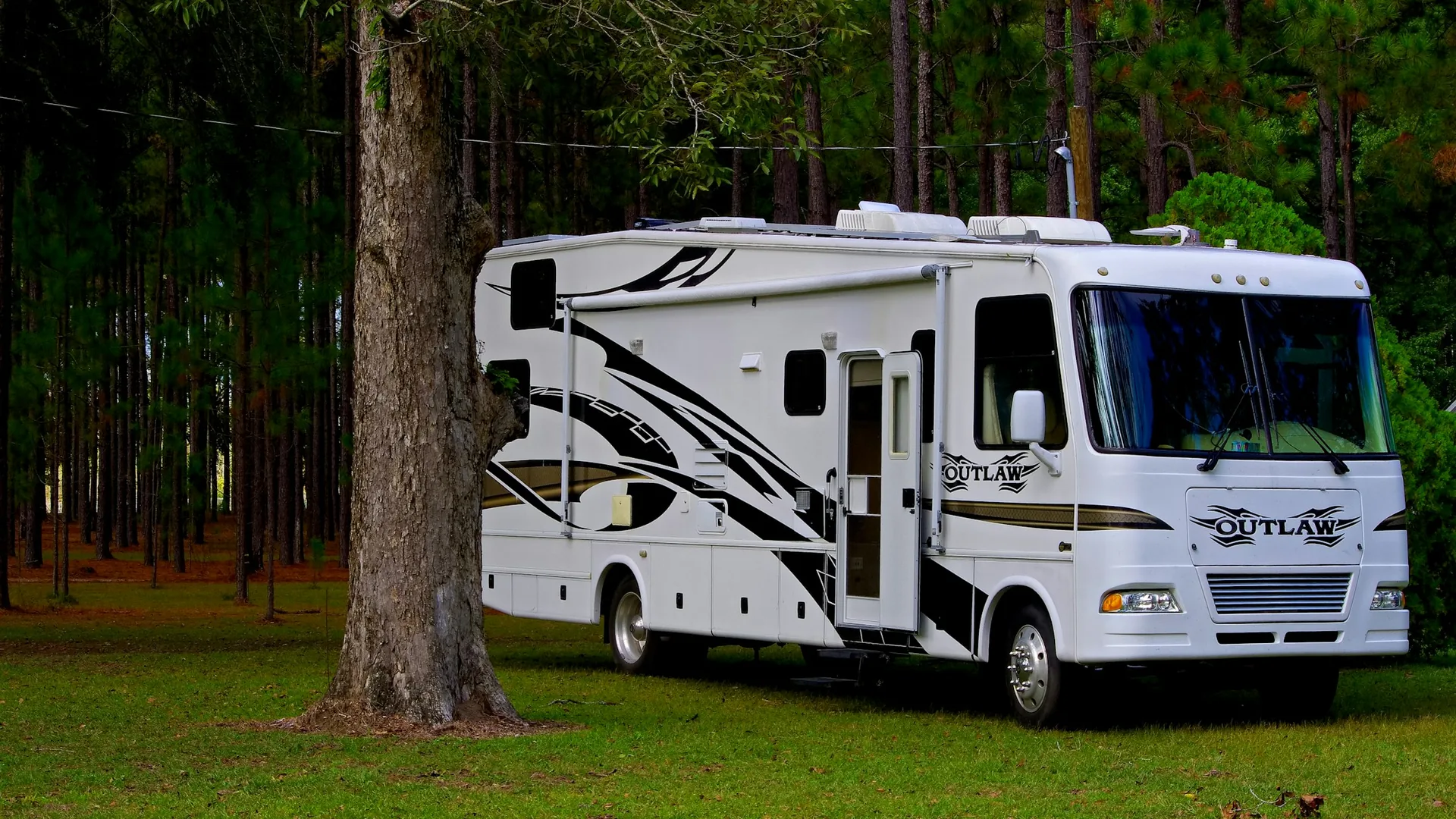
The stock photo shows a parked Class A motorhome with an extended side slide-out, awning, and rooftop equipment. It does not document a Platinum Roofing project, a slide topper, water damage, or a diagnosed leak.