
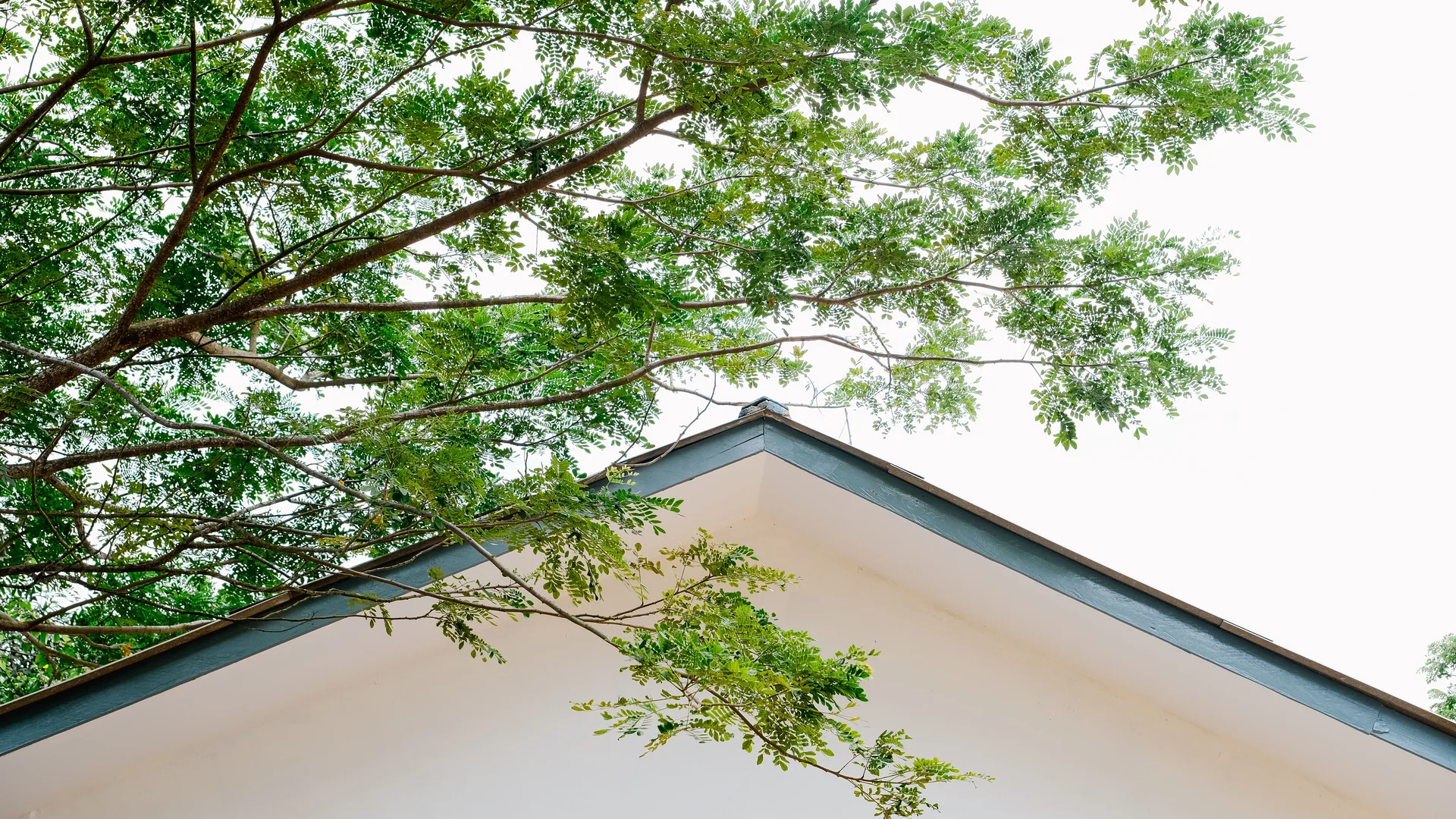
A healthy tree near a house is not automatically a roofing problem. The concern starts when branches touch the roof, limbs can fall across it, or leaves and needles repeatedly collect where water needs to move.
Late summer is a useful time to look from the ground while the canopy is full. Homeowners can see which branches hang over ridges, valleys, gutters, chimneys, and service lines before autumn debris makes those relationships harder to ignore. This is an inspection prompt, not a reason to climb onto the roof or cut limbs without a plan.
Direct Contact Can Wear the Roof Surface
A branch that moves across asphalt shingles can act like a slow scraper. Repeated contact may dislodge granules, mark the surface, lift a shingle edge, or rub against ridge caps and flashing. Twigs can also catch beneath tabs or sealant edges.
Look for a repeated arc of scuffing below a branch, bare-looking patches, loose tabs, bent metal, or fresh debris concentrated in one spot. The branch does not have to look heavy for movement to matter. Wind-driven rubbing over months can produce a different pattern than one sudden impact.
Falling Limbs Create Impact Damage
A fallen limb can crack shingles, dent metal, loosen flashing, damage gutters, or break roof decking. Some damage is obvious from the yard. Smaller punctures and displaced materials may be hidden by leaves or by the limb itself.
After a limb falls, keep people away from the area below and do not pull it across the roof. Photograph the scene from a safe location. A qualified tree service should handle unstable wood, and the roof should be checked after the limb is removed. If water entered the house, our guide to documenting a roof leak explains what to record before finishes are disturbed.
Keep cutting equipment off the roof
Roof edges, ladders, falling sections, and power equipment are a dangerous combination. Tree work near a building should be planned so cut pieces are controlled and roofing materials are protected. Utility lines require additional clearance and professional coordination.
Leaves and Needles Change Drainage
Organic debris tends to collect in valleys, behind chimneys, beside dormers, and at gutter outlets. A thin layer can redirect water sideways. A compacted layer can hold moisture against shingles and hide an open flashing edge or damaged fastener.
Check gutters and downspouts from the ground during normal maintenance. Overflow marks, water spilling behind a gutter, plants growing in debris, or a valley that never clears deserve attention. Cleaning the gutter without checking the roof path above it may leave the source of repeated blockage in place. Our guide to roof edges, gutters, fascia, and drip edge covers the connected materials.
Shade Can Slow Drying
A shaded roof section may stay damp longer after rain or morning dew than an open section. That does not mean the tree has caused a leak. Roof orientation, ventilation, debris, surface age, and local airflow also affect drying.
Compare the shaded and open roof areas. Note dark streaking, moss, lichen, curled tabs, soft decking, and granule loss without assuming they share one cause. Aggressive scraping or pressure washing can damage shingles. Read our guide to black streaks, moss, and lichen before choosing a cleaning method.
Branches Can Create Access Routes
Branches near an eave can give squirrels and other animals an easier path to gutters, soffits, vents, and damaged trim. Scratching sounds, disturbed vent screens, nesting material, or chewed openings call for inspection. Closing an opening before confirming that it is empty can trap an animal inside, so roofing and wildlife work may need coordination.
A Ground-Level Inspection Checklist
- 01Walk the property from safe ground and photograph branches above ridges, valleys, roof edges, chimneys, vents, and utility lines.
- 02Look for contact marks, broken or hanging limbs, dead sections, cracks at branch unions, and branches that move across the roof.
- 03Check for concentrated leaves, needles, gutter overflow marks, stained fascia, displaced shingles, bent flashing, and dented metal.
- 04Compare shaded and open roof areas for differences in drying, growth, granule condition, and shingle shape.
- 05After pruning, have vulnerable roof areas checked for damage that was hidden by the canopy or caused during removal.
Coordinate the Tree and Roof Work
There is no single trimming distance that fits every tree, roof, and site. A tree professional should evaluate branch health, species, structure, utilities, and pruning method. A roofer should evaluate shingles, flashing, drainage, decking, and any impact path.
Good coordination also prevents a repair from being damaged during later pruning. Photograph the roof before work starts, identify protected staging areas, and inspect again after limbs and debris are gone.
Frequently Asked Questions
Do all branches above a roof need to be removed?
No. A branch can be above the roof without touching it or creating an immediate defect. Its health, movement, distance from the roof, debris load, and position over vulnerable details matter. A qualified tree professional can assess the tree while a roofer checks the roof.
Can a small branch damage asphalt shingles?
Repeated rubbing can wear granules, scrape the surface, lift an edge, or stress nearby flashing even when the branch is not large. Damage depends on contact, movement, roof condition, and how long it has continued.
Does shade cause moss on a roof?
Shade does not create moss by itself, but shaded areas may dry more slowly. Moisture, organic debris, roof orientation, surrounding vegetation, and surface condition can all affect biological growth.
Should a roofer or tree service remove an overhanging limb?
Tree pruning should be planned and performed by a qualified tree professional, especially near a building, utility line, or large limb. A roofer can document roof damage and protect or repair the roof after safe access is established.
What should be inspected after branches are trimmed?
Check shingles, ridges, valleys, flashing, gutters, downspouts, vents, and any area where limbs or cut sections passed over the roof. Photograph impact marks, displaced materials, trapped debris, and interior moisture evidence before repairs.
Check the Roof After the Canopy Is Clear
Platinum Roofing inspects residential roofs across Grand Rapids, Jenison, Holland, Muskegon, Kalamazoo, and nearby West Michigan communities. If branches have rubbed, fallen, or left heavy debris on your roof, call or text (616) 256-0831 to schedule a free assessment.