
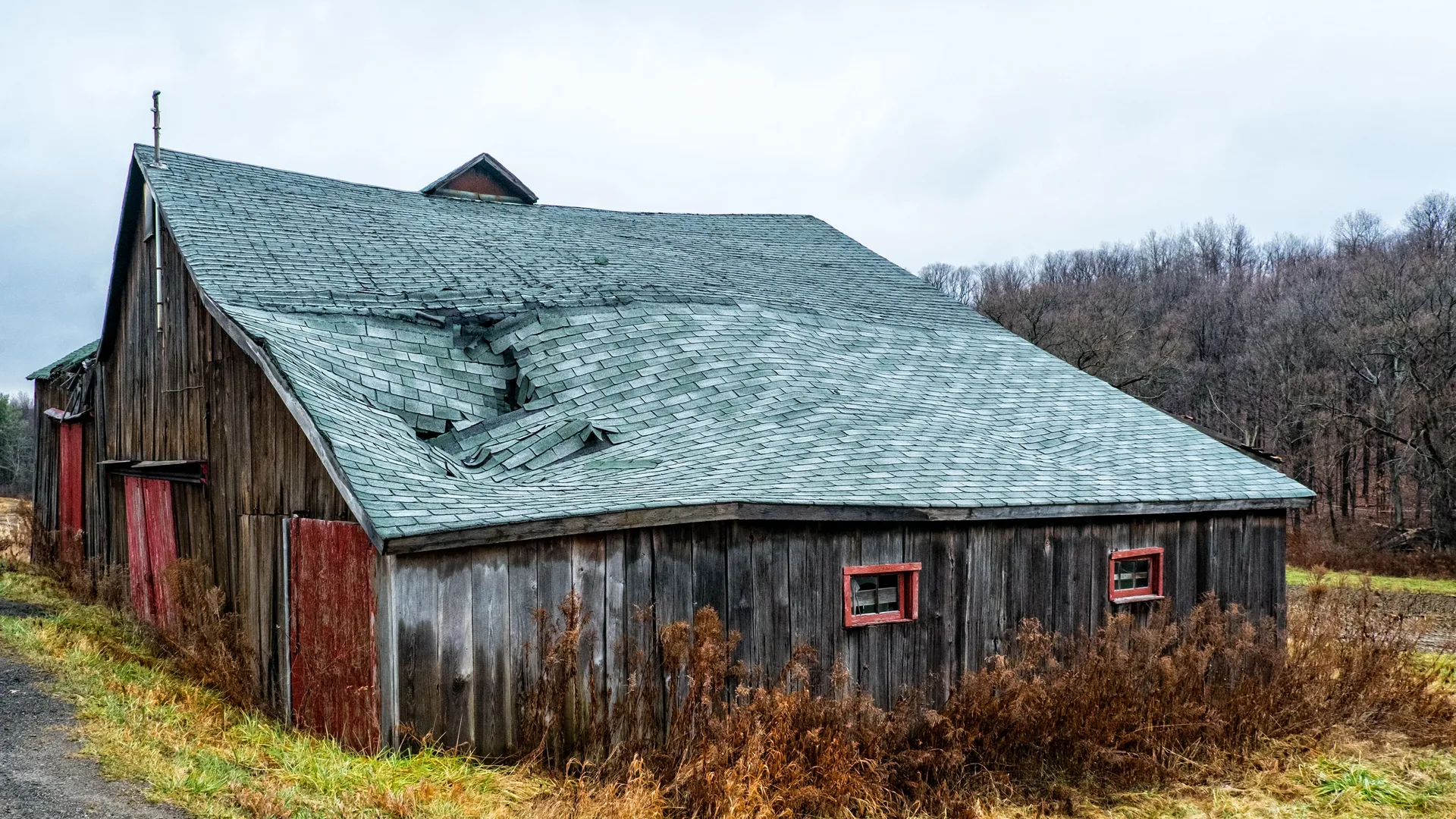
Stand at the end of a house when the sun is low and small changes in the roof surface become easier to see. One area may ripple across a few shingle courses. A straight ridge may follow a sheet of roof decking. A larger section may dip between the ridge and eave.
Those shapes do not all point to the same repair. The shingles, underlayment, decking, framing, and previous roof layers can each affect what the finished surface looks like. Start by documenting the pattern instead of naming the cause from the driveway.
First, Decide Which Layer Appears to Move
A surface-only change may involve lifted tabs, wrinkles, buckling, or shingles that are not lying flat. A straight raised line can follow a decking edge or framing member below. A broad low area that changes the outline of the roof may involve the deck, rafters, trusses, supports, or more than one layer.
View the roof from several safe ground positions. Compare both slopes, the ridge, eaves, valleys, and areas around chimneys or additions. A photo taken square to the roof plane often shows the geometry more clearly than an angled close-up.
Keep people off visibly distorted areas
A pronounced dip, broken roof line, soft area, or active movement needs controlled access. Do not climb onto it to press on the shingles or test the deck. The photo above shows an advanced example where the roof plane and surface materials are severely distorted.
Shingle Ripples and Buckling
Asphalt shingles can look raised when a course does not lie flat, a tab lifts, material bunches, or movement below pushes through the surface. On a newer roof, cool conditions or storage shape may affect how the shingles first settle. The installer should still inspect pronounced, repeated, or persistent distortion.
On an older roof, surface changes may appear with brittle tabs, cracks, granule loss, exposed fasteners, failed seals, or previous patch work. Those surrounding signs help determine whether the issue is isolated or part of broader wear. Our guide to roof nail pops and exposed fasteners covers one source of smaller raised spots.
Decking Edges Can Show Through
The roof deck forms the surface beneath the underlayment and shingles. If adjacent panels do not remain even, their edges can create straight ridges or low lines through the finished roof. Movement, damaged wood, installation conditions, or differences in the existing deck may contribute.
An attic inspection can add useful evidence where the underside is accessible. Look for dark water marks, gaps, damaged panels, uneven edges, displaced fasteners, or framing that no longer meets the deck evenly. Do not assume every visible panel joint is defective. The roof surface, attic view, and change over time need to be considered together.
A Broad Sag Points Deeper
A roof plane should not be diagnosed from one shadow, but a broad dip deserves prompt attention. The deck may be damaged or poorly supported. Framing may be displaced, altered, overloaded, or deteriorated. A support below may have moved. Water damage can affect several of those components at once.
Cracked finishes, sticking doors, new ceiling lines, active leaks, or visible framing movement inside the attic are important observations to record. Severe or changing distortion may require structural evaluation in addition to roofing work.
Old Roof Layers Can Affect the Surface
New shingles installed over an existing roof can follow the uneven surface below. Old curled tabs, patch edges, soft decking, and built-up transitions may remain visible through the new covering. The finished color changes, but the concealed geometry does not become flat.
A tear-off exposes the deck so damaged or uneven sections can be evaluated before new roofing covers them. Our overlay versus tear-off guide explains why access to the deck changes the scope.
Compare New Photos With Older Ones
A roof that has looked the same for years presents a different question from a dip that appeared or grew recently. Search appraisal photos, listing images, inspection reports, project records, and your own seasonal pictures for the same roof plane.
Take new photos from repeatable ground locations. Record the date, recent precipitation, visible interior changes, and any roof, attic, solar, HVAC, or remodeling work that happened before the shape changed. Do not assign blame based on timing alone, but preserve the sequence for the inspector.
What a Useful Inspection Should Include
- 01Map the visible pattern and photograph the ridge, eaves, valleys, walls, penetrations, and surrounding roof plane from safe positions.
- 02Check the shingle surface for lifted tabs, buckling, cracks, open seals, exposed fasteners, wear, and previous repairs.
- 03Inspect accessible decking and framing from the attic for moisture marks, gaps, damaged wood, uneven support, and movement.
- 04Compare current conditions with older photographs and note whether the shape is stable, seasonal, or changing.
- 05Define whether the next step is monitoring, a focused roofing repair, selective deck work, broader replacement, or structural evaluation.
Repair the Cause, Then Rebuild the Surface
Flattening or fastening the visible shingle does not correct a damaged deck or moving frame below it. A lasting scope should name the affected layer, explain what will be opened, and describe how sound surrounding material will support the repair.
If the roof is opened, ask for photographs of the decking and framing before new underlayment and shingles hide them. Our guide to what goes under asphalt shingles explains the layers a repair may need to expose.
Frequently Asked Questions
Does a wavy roof always mean the framing is failing?
No. A wave may come from shingles that have not settled, uneven decking edges, an old roof layer below, installation details, or framing movement. The pattern, age, attic condition, and changes over time help separate those possibilities.
Can new shingles look wavy after installation?
Some shingles may need warm conditions and time to relax and seal, especially after cool-weather storage or installation. Large humps, repeated deck-line ridges, loose tabs, or a roof plane that continues changing still deserve inspection.
What is the difference between buckled shingles and a sagging roof?
Buckling usually describes raised or distorted roofing material at the surface. Sagging describes a low area in the roof plane that may involve decking, framing, supports, or several layers together. Both can appear in the same area.
Is it safe to walk on a sagging roof?
Do not walk on an area that looks soft, low, cracked, or structurally distorted. Keep people out of the area below if movement appears active, and have qualified professionals determine safe access and the next steps.
Can a sagging section be repaired without replacing the whole roof?
Sometimes a defined area can be repaired, while widespread movement or damaged framing may require a broader scope. The decision depends on the cause, affected layers, surrounding roof condition, and whether sound material can support a durable tie-in.
Get the Roof Plane Inspected Before Covering It
Platinum Roofing inspects and repairs residential roofs across Grand Rapids, Jenison, Holland, Muskegon, Kalamazoo, and nearby West Michigan communities. Call or text (616) 256-0831 to schedule a free roof assessment.