
Scratching above one bedroom does not prove an animal entered through the roof directly over that room. Attics connect long sections of the house. An animal can enter at an eave, move along a truss or attic floor, and become audible several rooms away.
Treat wildlife removal and roof repair as connected jobs with a specific order. First confirm the activity and protect people. Then locate every opening, complete the appropriate removal or exclusion, inspect the damaged layers, and rebuild the roof detail without trapping an animal or blocking drainage and ventilation.
Roof Access Is Different From an Entry Point
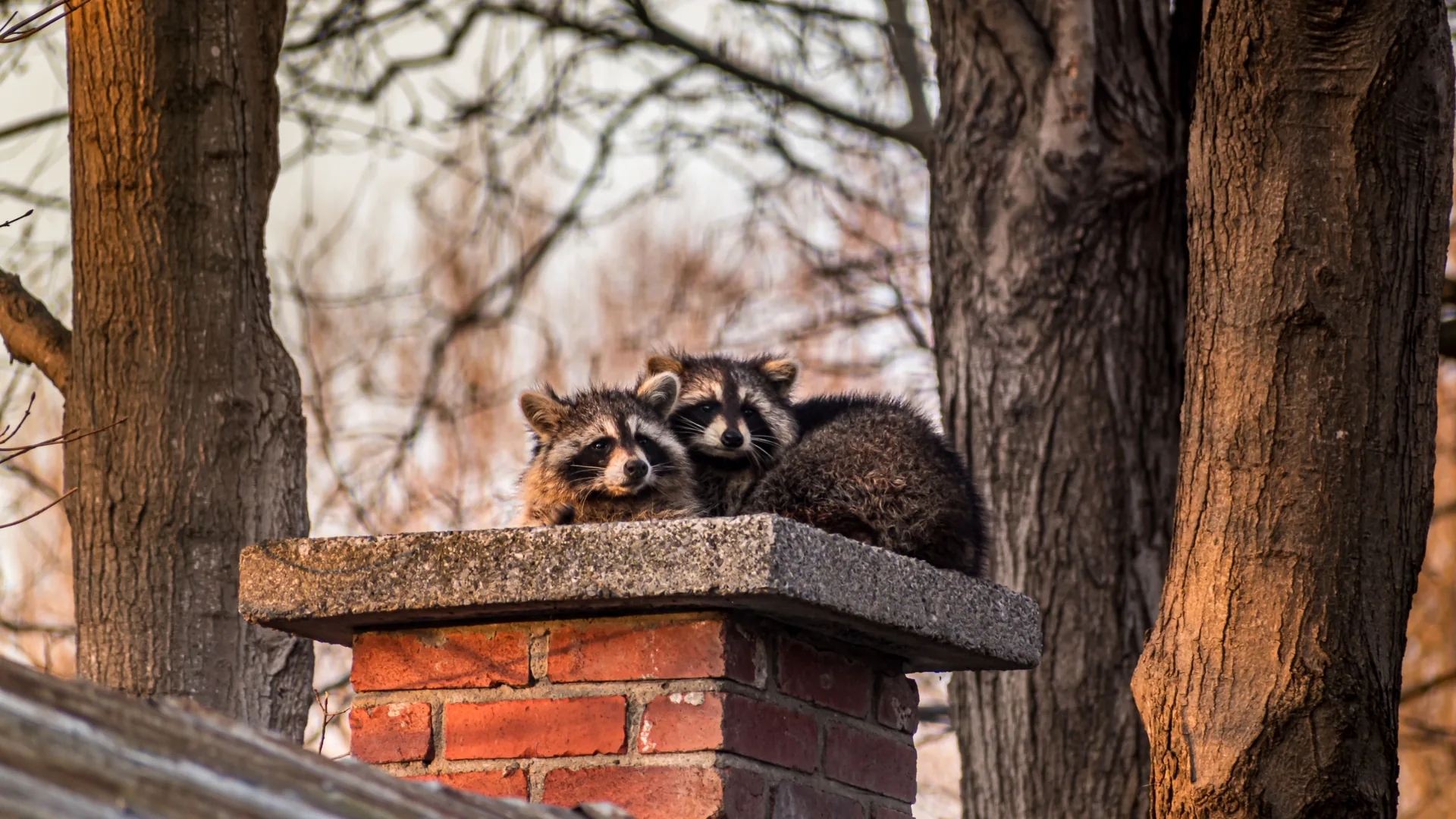
Trees, fences, decks, downspouts, and nearby structures can help an animal reach the roof. That route does not identify the hole. Seeing a squirrel cross the ridge or a raccoon sit near a chimney only confirms roof access. Repeated movement toward one edge or vent provides a better lead for inspection.
Watch from the ground or a window. Note where the animal appears, the direction it travels, and when it disappears from view. Do not follow it onto the roof. A steep, wet, frosted, or damaged surface is unsafe, and approaching wildlife at an opening may push it farther into the building.
Do not close a suspected active opening first
A board, patch, or piece of metal can trap wildlife inside or force it to damage another area. A qualified wildlife professional should confirm the species, activity, and removal or exclusion plan before the permanent roof detail is closed.
Soffits and Fascia Form the Lower Roof Edge
The fascia covers the outer edge of the roof structure, while the soffit closes the underside of the overhang. Vented soffit panels may also supply intake air to the attic. A loose panel, rotted wood, open corner, damaged trim, or gap behind a gutter can become a possible entry route.
Look for a panel hanging lower than its neighbors, fresh scratches, dark rub marks, bent metal, disturbed insulation near the edge, or an opening that has grown around a fastener. Water damage can weaken the same materials. Our guide to roof-edge rot, fascia, and gutters explains why the drainage path should be checked with the opening.
Vents Need Protection Without Losing Airflow
Gable vents, roof vents, ridge vents, and soffit intake create planned openings for air. Screens, baffles, caps, and formed components keep those openings functional while limiting access. Loose screening, a shifted vent cover, a damaged cap, or a gap where materials meet can undermine that protection.
Repairing a vent does not mean filling every opening with foam or solid material. The detail still has to move air, shed rain, and match the roof system. Check the vent body, flange, surrounding shingles, underlayment, fasteners, screen, and interior opening as one assembly. Our ridge cap and ridge vent guide shows how the upper roof layers work together.
Chimneys and Roof Intersections Add Concealed Gaps
Chimney flashing, siding transitions, dormer corners, and places where two roof levels meet contain several overlapping materials. Flashing can pull away. Trim can open at a corner. An old patch may hide damaged decking or a space behind the visible surface.
Photograph loose metal, cracked mortar, missing trim, bent shingles, or debris packed against the uphill side. Do not assume an animal caused every defect near its travel route. Age, wind, water, and previous work can create the original opening. The chimney flashing guide covers the water-shedding layers that still need restoration after wildlife work.
Damaged Shingles and Decking Need More Than a Cover Plate
A lifted shingle, broken roof-board edge, torn underlayment, or soft section of decking may create room beneath the surface. Once the wildlife work is complete, the roofer should open enough material to find sound boundaries. Covering the top with sheet metal can leave wet wood, a reversed water lap, or unsupported edges below.
A lasting repair reconnects each layer in order. Unsound wood is removed where needed. Underlayment and flashing return water to the exterior. Shingles or panels tie into the surrounding roof. Soffit or vent protection is secured to sound material while preserving the intended airflow.
Build a Useful Activity Record
- ●Record the date, time, room, duration, and type of sound without identifying a species from noise alone
- ●Photograph roof-edge gaps, loose vents, disturbed trim, scratches, and repeated travel routes from a safe location
- ●Note whether activity occurs during daylight, after dark, during rain, or when the attic changes temperature
- ●Keep pets and people away from the suspected opening and avoid handling wildlife, nesting material, or droppings
- ●Share older roof, gutter, tree, and exterior photos that may show when the opening or access route changed
From an attic hatch, a flashlight may reveal displaced insulation, daylight, staining, torn screening, or damaged wood. Do not enter a confined attic with active wildlife, exposed wiring, unstable footing, or contaminated material. Leave species identification, removal, and cleanup planning to qualified professionals.
Bat Contact Needs a Public-Health Response
Do not touch a bat with bare hands. The Centers for Disease Control and Prevention advises contacting animal control or a health department when a bat is found in the home so safe capture and possible testing can be discussed. A possible bite, scratch, or other contact needs prompt medical guidance.
Keep the public-health decision separate from the roof repair schedule. Do not release or seal out the animal before receiving the appropriate guidance when an exposure may have occurred. Once the immediate issue is handled, wildlife and roofing professionals can coordinate the building work.
Coordinate Removal and Roof Repair in Order
- 01Protect occupants and document the activity, travel route, suspected openings, and any possible wildlife contact.
- 02Have a qualified wildlife professional identify the activity and define the removal or exclusion sequence.
- 03After the space is cleared for building work, inspect the roof surface, soffit, fascia, vents, flashing, deck, and framing around every opening.
- 04Remove damaged material to sound boundaries and rebuild the water-shedding and ventilation layers with compatible components.
- 05Photograph concealed and completed work, then monitor the repaired areas from the ground and attic access point.
Reduce Repeat Access Without Creating Roof Problems
Repair weak building materials and restore missing screens or covers appropriate for the vent. Keep gutters clear so water does not continue softening the roof edge. Ask a qualified tree professional about branches that contact or overhang the roof, especially near the suspected route. Do not cut limbs from a ladder or roof. Our guide to branches over the roof separates tree work from roofing inspection.
Frequently Asked Questions
Does scratching in the ceiling prove an animal is in the attic?
No. Scratching, tapping, or movement may come from an animal, but wind, branches, plumbing, ducts, and building movement can create similar sounds. Record the time, room, duration, and weather, then have the accessible areas inspected without reaching into a hidden space.
Does seeing a raccoon or squirrel on the roof mean it entered the attic?
Not necessarily. An animal may cross or rest on a roof without finding an opening. Repeated travel to the same soffit, vent, chimney, roof edge, or wall intersection is more useful evidence and still needs confirmation before repair.
Should I seal an attic opening as soon as I find it?
Do not close a suspected active entry until a qualified wildlife professional confirms the removal or exclusion plan. Sealing an animal inside can create a larger safety, odor, and building-damage problem. Temporary protection also needs to preserve roof drainage and ventilation.
Who should I call first for an animal near the roof?
A nuisance wildlife professional can identify activity and plan removal or exclusion. A roofer can inspect and rebuild damaged roofing, soffit, fascia, flashing, vents, and decking. If a bat may have contacted a person or was found in a living or sleeping area, contact animal control or the local health department before releasing or handling it.
What should a roof repair after animal entry include?
The scope should identify the confirmed opening, remove damaged material, inspect the surrounding deck and framing, restore the water-shedding layers, repair vent or soffit protection without blocking airflow, and include photos of concealed and completed work.
Repair the Opening After the Activity Is Resolved
Platinum Roofing inspects damaged roof edges, soffits, vents, flashing, shingles, and decking across Grand Rapids, Jenison, Holland, Muskegon, Kalamazoo, and nearby West Michigan communities. Call or text (616) 256-0831 to schedule a free roof assessment after the wildlife-removal plan is in place.