
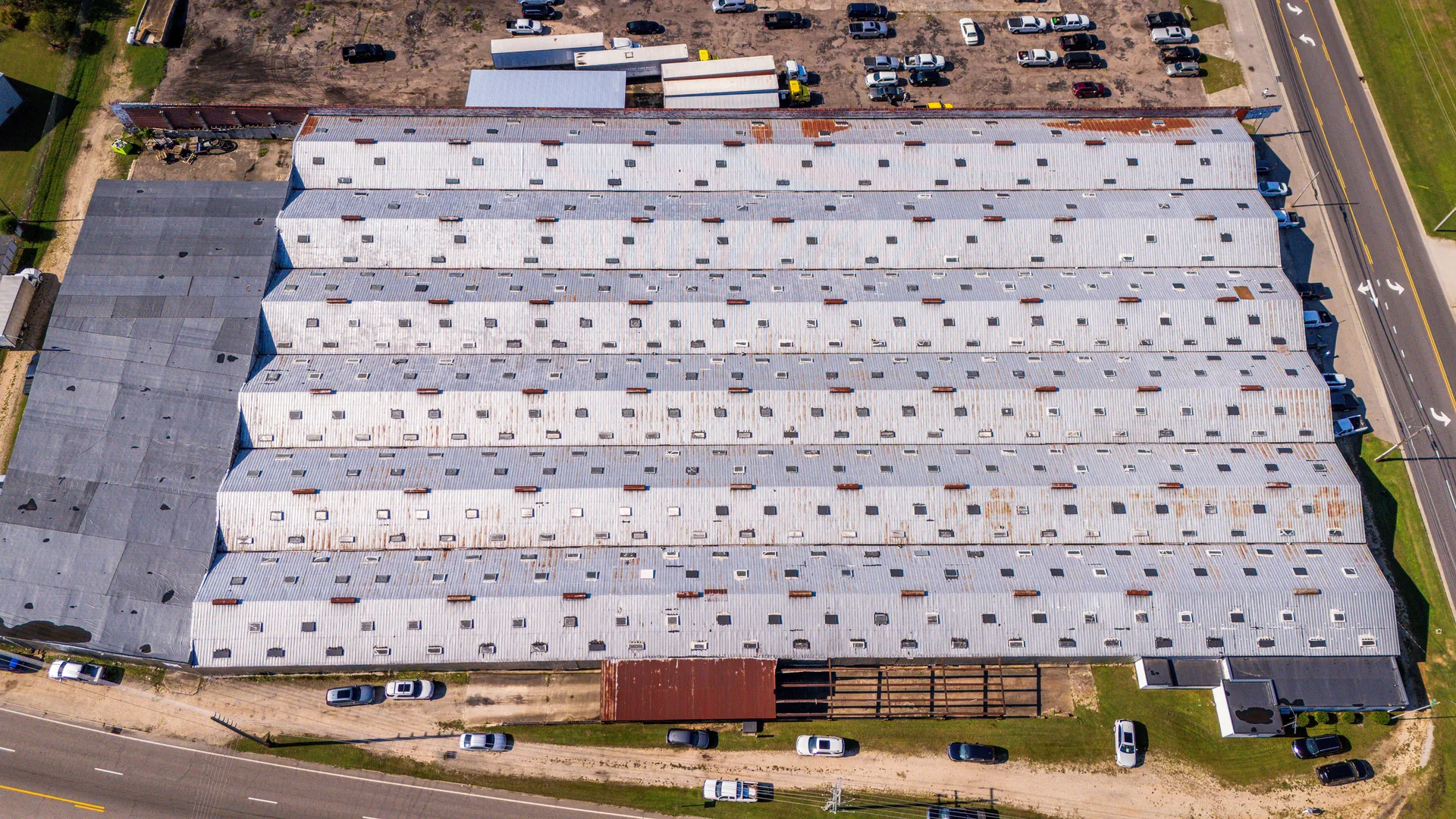
A metal roof leak may begin at one screw, but the repair rarely starts by sealing every fastener in sight. Commercial metal roofs contain long panel runs, formed seams, end laps, ridges, eaves, gutters, curbs, pipes, and transitions between roof levels. Each detail handles water and movement differently.
Begin with the system. A through-fastened roof and a standing-seam roof do not use the same connections. The panel profile, attachment method, slope, drainage layout, previous coatings, and material below the metal all affect the inspection and repair scope.
Identify the Panel and Connection Type
Through-fastened panels are attached with screws that pass through the metal into purlins, decking, or another supporting component. A sealing washer beneath each head helps close the opening. The screw has to remain straight, secure, and properly seated against sound panel material for that detail to keep working.
Standing-seam panels connect along raised vertical seams. Clips and most field fasteners are concealed below the panels, allowing the metal to move through temperature changes as designed. That reduces exposed holes in the field, but seams, clips, end conditions, penetrations, and perimeter flashing still need inspection.
One backed-out screw can be a symptom, not the complete repair
A loose screw may sit in a widened hole, corroded panel, or weak connection below. Driving it back into the same location and covering the head does not prove the washer is sealed or the attachment has been restored.
Read the Fastener Pattern
On a through-fastened roof, check more than the obvious raised heads. Look for washers squeezed out from beneath a screw, washers that barely contact the panel, tilted fasteners, rust halos, cracks around holes, missing heads, and repeated movement along one purlin line. A pattern can point to installation, support, or panel-movement conditions that one isolated patch will not correct.
Replacement fasteners need to match the metal and the existing connection. Size, material, washer, location, and substrate all matter. The Metal Construction Association warns that incorrect driving can damage a fastener or sealing washer. A written repair should explain how failed holes and weak attachment points will be handled.
Follow Seams, End Laps, and Roof Transitions
Vertical panel seams carry water down the slope. Horizontal end laps interrupt that path and deserve careful inspection, especially where a long roof changes pitch or one panel run ends above another. Look for open edges, displaced closures, cracked sealant, loose stitch screws, buckled metal, debris lines, and old patches that bridge moving parts.
Continue the inspection through ridges, hips, valleys, wall joints, and lower roof transitions. The visible drip may sit downhill from the opening after water follows a rib, purlin, insulation facing, or structural member. Our guide to commercial roof seam failures explains why the full lap needs documentation before repair.
Penetrations Concentrate Several Details
Pipes, vents, skylights, exhaust fans, equipment curbs, and rooftop additions interrupt the panel field. Their flashing has to fit the panel profile, remain attached, and direct water back onto the roof. A flexible boot may split. A curb corner may open. A hard metal flashing may restrain movement or separate from the surrounding panel.
Check the uphill side first, then both sides and the downhill discharge. Record open joints, loose counterflashing, distorted panels, standing water, and sealant that has pulled away from either surface. If the leak sits near mechanical equipment, use the separate checks in our HVAC curb leak guide before assigning responsibility to one trade.
Map Corrosion Without Guessing at Depth
Rust-colored staining shows where the protective finish or metal may need evaluation. It does not show the remaining thickness from an aerial photo. Record the boundaries, panel edges, fastener rows, seams, gutters, and areas below repeated discharge. A close inspection can separate light surface oxidation from pitting, perforation, or a weakened connection.
Do not coat over loose scale, active contamination, or damaged metal without a preparation plan. Qualifying a roof for restoration includes cleaning, treating corrosion as required, repairing seams and fasteners, and detailing penetrations before the finish coat. Product compatibility and written application requirements control the final method.
Check the Entire Drainage Path
Large metal slopes can send substantial runoff toward an eave gutter, internal channel, valley, or lower roof. A blocked outlet, bent gutter, open end cap, or undersized temporary drain can hold water against panel ends and flashing that normally shed it quickly. Photograph the roof during rain only from a safe, protected location.
After the surface dries, look for debris lines, overflow marks, stained walls, sediment around outlets, and low areas. Follow water through the gutter and downspout to its final discharge. Our commercial drainage guide provides a full path checklist.
Separate Rain Entry From Interior Condensation
Water below a metal roof is not always rain. Warm, moisture-laden indoor air can reach a cold surface through gaps in the air-control layers and condense. Frost may collect during cold weather and drip later when temperatures rise. Plumbing, process equipment, and HVAC condensate create other possible sources.
Compare the timing. Record whether water appears during rain, wind from one direction, a thaw, a production shift, or equipment operation. Inspect accessible insulation facings, purlins, fasteners, and interior panel surfaces. Moisture screening may help define affected areas, but findings still need to be connected to the roof assembly and verified where appropriate. Read our moisture mapping guide for the limits of non-destructive screening.
Build the Repair Scope in Order
- 01Identify the panel profile, attachment type, slope, substrate, insulation, coating, and previous repair materials.
- 02Map interior water, exterior seams, fastener patterns, penetrations, transitions, corrosion, and drainage conditions.
- 03Confirm which connection or material failed and check for wet or damaged layers before covering the area.
- 04Secure or replace unsound components, prepare clean and dry surfaces, and use compatible repair materials for the identified system.
- 05Photograph concealed work and completed details, then add the repair location and next inspection date to the roof record.
Repair, Restore, or Replace the Affected Area
A focused repair may make sense when the opening is isolated and nearby panels, connections, and supports remain serviceable. Broader restoration may be considered when the metal roof is a sound candidate but seams, fasteners, penetrations, and surface protection need coordinated work. Widespread perforation, weak attachment, damaged supports, or repeated failures can require panel replacement or a larger engineered scope. Platinum evaluates compatible repair and Andek restoration options only after the existing condition is documented.
Frequently Asked Questions
What is the difference between a standing-seam and through-fastened metal roof?
A standing-seam roof typically connects panels with raised seams and concealed clips or fasteners that allow planned movement. A through-fastened roof uses screws that pass through the panels into the supporting structure, usually with sealing washers beneath the heads. Each system has different seams, movement details, and repair methods.
Why do screws leak on a commercial metal roof?
A screw location may admit water if the sealing washer is damaged, unevenly compressed, missing, deteriorated, or no longer seated against sound metal. Panel movement, corrosion, a wallowed hole, or a weak connection below can also affect the detail. The repair should address the connection rather than cover every screw with an unknown sealant.
Does rust mean a metal roof has to be replaced?
Not automatically. Surface oxidation, coating loss, pitting, perforation, and weakened panel edges represent different conditions. An inspection should map the corrosion, check the remaining metal and connections, and identify moisture below before deciding whether cleaning, priming, panel repair, restoration, or replacement is appropriate.
Can a coating stop leaks on a metal roof?
A compatible coating system may be part of a restoration when panels and supporting components are serviceable. Loose metal, failed fasteners, open seams, active corrosion, damaged penetrations, and wet materials need to be corrected first. Coating is the finish of a prepared repair scope, not a substitute for one.
What should a metal roof leak repair estimate include?
The estimate should identify the metal roof type, map affected panels and details, describe fastener and seam work, address corrosion and wet materials where found, name compatible primers and repair products, explain preparation, and include completion photos and inspection terms.
Map the Metal Roof Before Choosing the Repair
Platinum Roofing inspects commercial metal roofs across Grand Rapids, Jenison, Holland, Muskegon, Kalamazoo, and nearby West Michigan communities. Call or text (616) 256-0831 to schedule a free commercial roof assessment and bring any leak records, roof plans, and previous repair documents.