
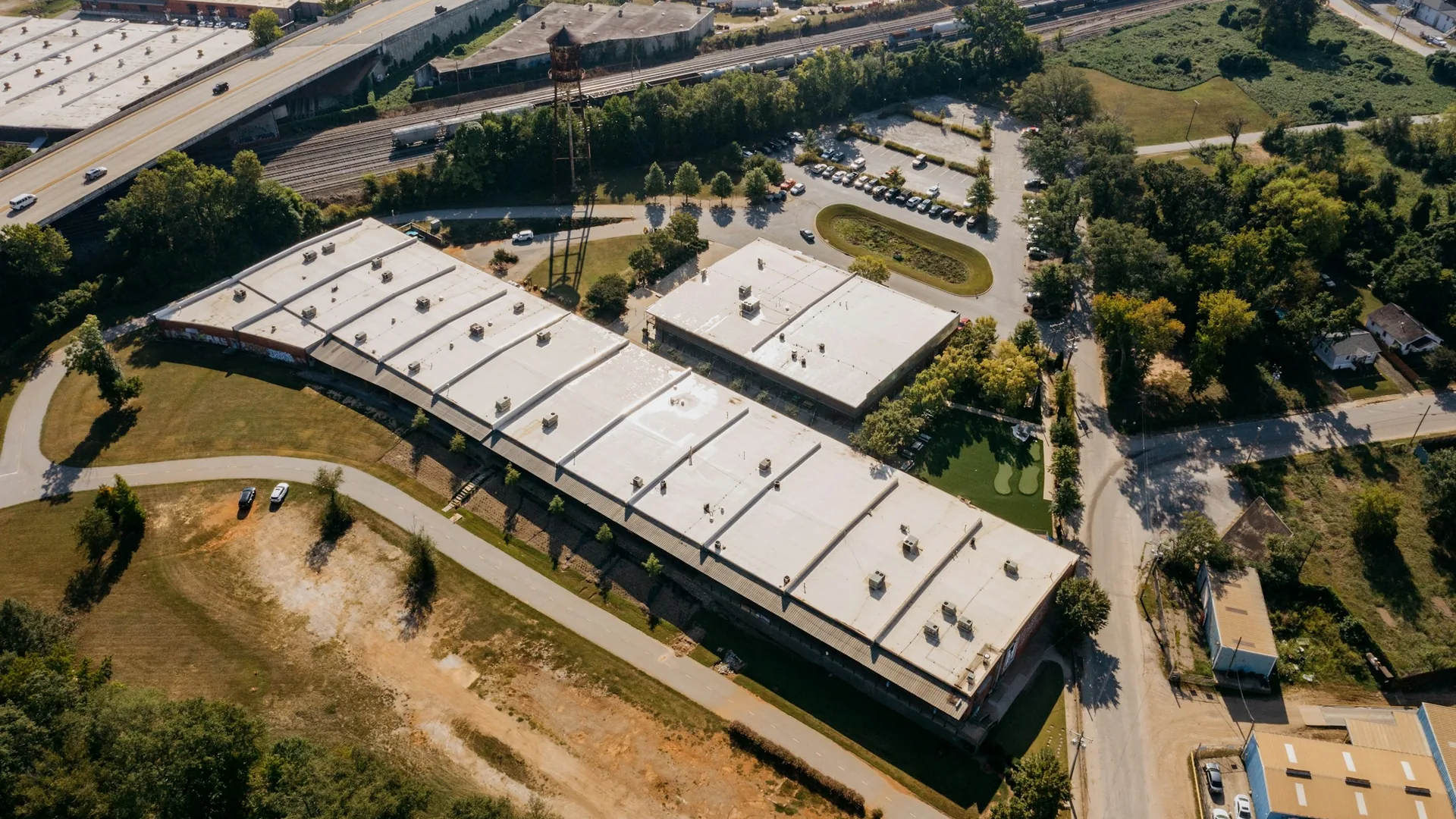
A long raised line across a commercial roof can look like another curb or wide membrane seam. If that line is an expansion joint, movement is part of its job. The repair has to keep water out without locking together sections that were designed to move independently.
Leaks can begin at a joint cover, flexible section, roof tie-in, fastener, end transition, or nearby detail. They can also appear near the joint after entering somewhere else. A useful inspection follows the entire assembly instead of placing one patch directly above the interior drip.
A Movement Joint Is Different From a Field Seam
A field seam connects adjacent sheets or plies within a roof system. An expansion joint creates a weather-protected transition between designated sections that can move relative to each other. The assembly may rise above the roof on curbs, use a flexible cover, sit beneath formed metal, or combine several flashing materials.
That distinction controls the repair. A tape, cement, rigid coating, or membrane strip that works on a limited field defect may restrict the joint or split at its edges. Our guide to commercial roof seams and open laps explains the different inspection needed for ordinary membrane connections.
Do not bridge the joint with a rigid patch by guesswork
A patch that looks tight on installation day can crack, detach, wrinkle, or pull on the surrounding roof as the sections move. Identify the joint assembly and preserve its intended movement before selecting materials.
Inspect the Full Length, Not Only the Wet Ceiling Area
Walk the joint from end to end using a safe roof route. Record changes in height, cover shape, attachment, surface condition, and earlier repairs. Pay close attention where the joint meets a parapet, gutter, drain area, wall, or another joint. End conditions often combine several materials in a small space.
Map every split, loose edge, puncture, displaced cover, open termination, exposed reinforcement, backed-out fastener, and dirt line. A dark line beneath an edge can show that water or debris has moved farther than the visible opening. Do not lift or pull flexible material merely to see how far it releases.
Check the Roof Tie-Ins on Both Sides
The expansion component still has to connect to the surrounding roof. Inspect the membrane or coating where it turns up, terminates, laps, or transitions beneath a cover. Wrinkles, stretched corners, loose flashing, failed reinforcement, and ponding beside the raised joint can create a water path even when the center cover remains intact.
Parapet and wall intersections deserve separate attention because water may move behind the visible roof flashing. Our guide to parapet and coping leaks covers the wall-side details that can meet an expansion joint.
Look for Things That Block or Load the Joint
Conduit, piping, ductwork, cable trays, equipment supports, walkway pads, and loose materials can cross or crowd a movement line. A rigid support attached across both sides may interfere with movement. Service traffic can crush a flexible cover or loosen a metal cap when the joint becomes an informal shortcut.
Record every crossing and which trade owns it. Roofing, mechanical, electrical, and structural work may need coordination so one repair does not create stress in another system. The same planning applies near rooftop equipment, as described in our guide to HVAC curbs and commercial roof penetrations.
Trace the Interior Evidence Along the Same Line
Inside the building, mark the joint line where it can be identified safely. Record ceiling stains, wet insulation, drips, corrosion, odors, and damage at walls or changes in building section. Note when water appears, the wind direction, rain duration, snowmelt, and whether the drip continues after precipitation stops.
The interior stain may sit away from the opening because water can travel along decking, insulation facers, beams, piping, or the joint support. Moisture screening and selected verification points can help define affected material. Our roof moisture mapping guide explains why surface appearance alone cannot map wet insulation.
Unusual Movement Changes Who Needs to Be Involved
A torn roof cover can be a roofing condition. A joint that appears displaced, crushed, separated, or out of alignment may also involve supports or building movement below the membrane. Compare current measurements and photos with earlier records instead of assuming every change is normal seasonal motion.
Roofing contractors can document the weatherproofing and opened roof layers. Questions about unexpected structural movement, damaged supports, or design capacity belong with the appropriate qualified professional. The repair scope should state that division clearly.
Temporary Protection Needs a Permanent Follow-Up
Active entry may require temporary protection before compatible materials, safe conditions, or other trades are available. Mark the temporary work on the roof plan, photograph the materials and limits, and keep drainage paths open. Avoid fastening through unknown joint components or covering the assembly so broadly that later removal causes more damage.
Schedule the permanent evaluation while the leak record is fresh. A temporary patch that stops one rain event has not confirmed the condition of the joint supports, surrounding insulation, substrate, or the rest of the joint run.
Build the Repair Scope Around the Existing Assembly
- 01Identify the roof system, joint type, cover materials, supports, earlier repairs, and every crossing before removal begins.
- 02Map the full joint, end transitions, interior evidence, drainage effects, and moisture findings with wide and close photographs.
- 03Remove incompatible or failed material far enough to inspect the joint support, roof tie-ins, substrate, and wet layers where evidence supports opening them.
- 04Replace unsound materials and rebuild the joint with compatible components that preserve movement and connect securely to the surrounding roof.
- 05Document concealed work, finished edges, end conditions, crossings, drainage, and follow-up observations after the next practical rain.
Frequently Asked Questions
What is a commercial roof expansion joint?
It is a purpose-built transition that allows designated roof or building sections to move while maintaining weather protection. The assembly may include raised supports, flexible material, metal covers, membrane flashings, and end transitions. Its exact construction depends on the building and roof design.
Is an expansion joint the same as a roof membrane seam?
No. A membrane seam joins adjacent roofing sheets within the roof system. An expansion joint is intended to accommodate movement between designated sections. Repairing it as an ordinary lap can restrict movement or move stress to the patch edges.
Can roof coating be applied across an expansion joint?
A coating or reinforced detail may be part of a compatible joint system, but coating should not be used to bridge a moving joint by guesswork. The repair needs to preserve the intended movement and follow the requirements for the existing roof and joint assembly.
Does a leak near an expansion joint prove the joint failed?
No. Water can enter at the joint cover, a membrane tie-in, an end transition, nearby flashing, or another roof detail and then travel. Interior leak timing, a roof map, moisture findings, and inspection of the full joint help identify the path.
Does a failed expansion joint require full roof replacement?
Not automatically. A focused repair may be appropriate when the joint supports, surrounding roof, and substrate remain serviceable. Broader deterioration, wet materials, unusual displacement, or several connected failures can require a larger scope and coordination with the appropriate design professional.
Map the Movement Line Before Choosing the Repair
Platinum Roofing inspects commercial roofs across Grand Rapids, Jenison, Holland, Muskegon, Kalamazoo, and nearby West Michigan communities. Call or text (616) 256-0831 to schedule a free commercial roof assessment and coordinate the roof work with other qualified trades when needed.
The stock photo shows a multi-section low-slope commercial roof with several long raised transitions. It does not document a Platinum Roofing project, confirm that any visible line is an expansion joint, or show a diagnosed leak.