
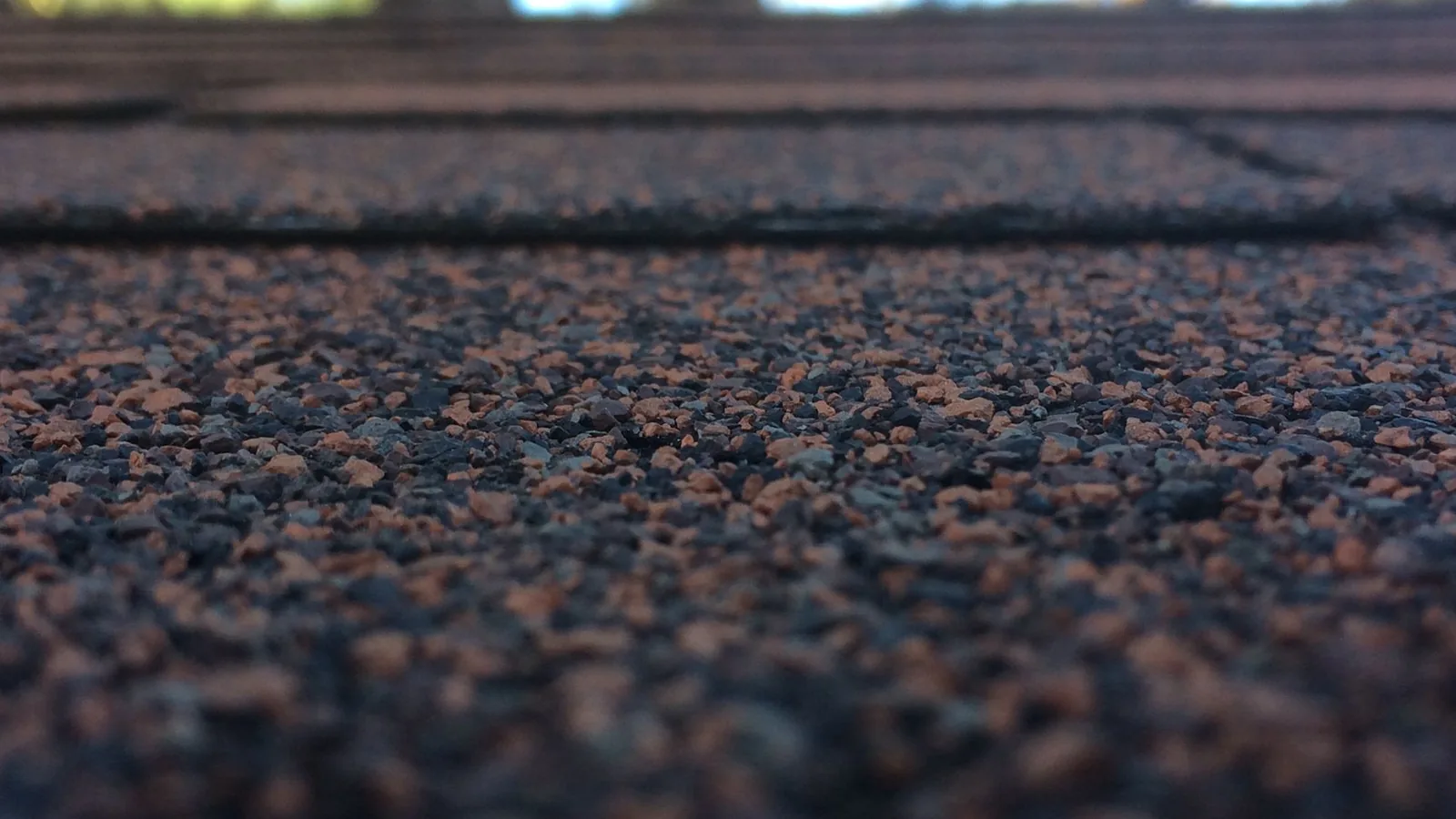
Distorted asphalt shingles rarely change shape in one neat, uniform way. One corner may lift. Several tabs may curl along the same course. A whole slope may look uneven while the neighboring slope stays flat. Those differences give the inspector a better starting point than the word curling by itself.
The pattern still does not name the cause from the yard. Material age, fastening, deck movement, attic conditions, installation details, and earlier roof work can produce similar shapes. Document what is visible, then inspect the roof as a complete assembly.
Name the Shape You Can Actually See
Roofers and homeowners sometimes use curling as a general term for any shingle that no longer lies flat. More precise descriptions make photos and repair notes easier to compare. Cupping usually describes a tab with corners or edges turned upward while the center sits lower. Clawing usually describes a raised center with edges turned downward.
A lifted corner, buckled strip, fishmouth at a joint, or ridge over a deck seam may look similar from a distance. Take one wide photo that shows the roof plane and another closer view from a safe location. Record whether the change involves one tab, one course, a repeated line, or most of the slope.
Stay on the ground
A curled edge can be brittle or loose, and stepping on it may break the shingle or expose a weak area below. Use ground photos, binoculars, or an upper window. Let a qualified contractor handle roof access and close inspection.
The Distribution Matters as Much as the Shape
One changed tab beside an old repair calls for a different inspection than repeated distortion on every slope. Mark each affected area on a simple sketch. Compare north, south, east, and west roof planes, then note valleys, walls, chimneys, vents, gutters, and additions nearby.
- ●A few isolated tabs near a penetration or previous patch
- ●A straight raised line that follows a course or deck joint
- ●More change on one sun exposed roof plane than the others
- ●Repeated distortion near an eave, valley, wall, or ridge
- ●Widespread curling combined with cracking, missing granules, or fragile edges
Older listing photos, inspection reports, and dated street images can show whether the pattern is stable or getting worse. The guide to wavy and sagging rooflines explains how broader deck or framing changes differ from shingle surface distortion.
Check Material Condition and Fastening
Asphalt shingles need enough flexibility to lie against the roof and enough sound material around each fastener to stay attached. As the surface ages, tabs may become less willing to relax into place. Cracks, torn corners, exposed reinforcement, smooth dark patches, and heavy granule loss add useful context.
Fasteners can also affect the shape. A high nail may hold the next course above the roof. A nail driven at an angle can distort a small area. A fastener that missed sound decking may back out and raise the tab above it. Our guide to nail pops and exposed fasteners covers what a focused repair should inspect below the surface.
Inspect the Deck and Earlier Roof Layers
Shingles follow the surface beneath them. A raised deck edge, open joint, old patch, soft section, or material trapped under the underlayment can telegraph through the finished roof. The visible ridge may run in a straight line even when the surrounding shingles remain in good condition.
A roof overlay adds another possible layer to the investigation because the new covering follows the old shingles below it. An inspection should identify the number of roof layers where that can be determined safely and explain which deck areas are accessible. Read more about what remains hidden in the overlay versus tear off guide.
Look Above and Below the Roof
The attic can add evidence that the exterior cannot provide. From a safe, accessible area, an inspector can look for darkened decking, rusted fastener tips, frost history, blocked airflow paths, disconnected exhaust ducts, changed insulation, or daylight through an opening. None of those observations should be assigned to the curled shingle without tracing the relationship.
Ventilation also needs to be evaluated as a system. Intake near the eaves and exhaust higher on the roof have to work with insulation and air sealing. Adding a vent at random may disturb the intended flow. The attic ventilation guide shows the parts that deserve review together.
Curling Changes Wind and Water Exposure
Asphalt shingles shed water through overlapping courses. When an edge turns up or a center rises, wind can reach farther beneath the tab and rain may reach a joint that was previously covered. A broken seal strip, cracked corner, or loose fastener can increase that exposure.
Indoor water still needs a separate record. Note the first time a stain appeared, the rain direction and intensity, and whether it changes during dry weather. A ceiling mark may involve flashing, plumbing, condensation, or water that traveled along the deck. Curling nearby is evidence to inspect, not proof of the entry point.
Decide Between a Focused Repair and a Larger Scope
A few workable shingles around one confirmed defect may support a focused repair. The roofer still needs enough sound material to lift, fasten, overlap, and seal the replacement without breaking adjacent tabs. The scope should name any deck, underlayment, or flashing work below the surface.
Widespread distortion changes that calculation. Brittle shingles can crack during a small repair. Repeated fastening trouble, several affected slopes, widespread granule loss, or movement below the covering may support a broader plan. Ask the contractor to connect the recommendation to photographed conditions instead of relying on roof age alone.
What a Useful Inspection Record Includes
- ●Wide photos of every roof plane and close photos of each distortion pattern
- ●Locations marked by slope, course, and nearby roof detail
- ●Material condition, fastener observations, and the flexibility of surrounding shingles
- ●Accessible deck and attic evidence without unsupported cause statements
- ●Interior moisture locations and the weather conditions when they changed
- ●A repair or replacement scope tied to the layer that needs work
Frequently Asked Questions
What is the difference between cupped and clawed shingles?
A cupped tab usually has edges or corners that turn upward while the middle sits lower. A clawed tab usually has a raised middle with edges that turn downward. Roofing terms are not always used consistently, so clear photos and a description of the exact shape are more useful than the label alone.
Do curled shingles mean the roof is leaking?
Curling does not prove that water has entered the house. It can change how shingles overlap, seal, and resist wind, though, so the roof should be checked for openings, brittle material, loose fasteners, damaged underlayment, deck changes, and interior moisture evidence.
Can individual curled shingles be repaired?
A focused repair may be reasonable when distortion is limited, surrounding shingles remain workable, and the layers below are sound. Widespread curling, brittle material, repeated fastening trouble, or problems across several slopes may make isolated repairs unreliable. The inspection should support the scope.
Can attic ventilation cause shingle curling?
Heat and moisture conditions in an attic can contribute to roof aging, but a curbside view cannot confirm that cause. Intake and exhaust openings, insulation, air leakage, bath or kitchen exhaust routing, and the underside of the roof deck need to be evaluated with the exterior pattern.
Should curled shingles be sealed down with roof cement?
A surface patch may hide a loose fastener, brittle shingle, deck movement, or another problem without restoring the original shingle system. The repair should identify the affected layer, use compatible materials, and preserve the intended drainage path.
Get the Pattern Documented Before Winter
Fall is a useful time to document changed shingles before snow and ice limit the view. Platinum Roofing inspects residential roofs across Grand Rapids, Jenison, Holland, Muskegon, Kalamazoo, and nearby West Michigan communities. Call or text (616) 256-0831 to schedule a free roof assessment and review whether the evidence supports a focused repair or a larger scope.
The stock photo shows the granule surface and layered edges of asphalt shingles. It does not document a Platinum Roofing project or confirm curling, cupping, clawing, or a leak.