
Many single-family asphalt shingle roofs in West Michigan are replaced in one to two working days. That answer surprises homeowners who expect a week of disruption, and it comes with conditions worth understanding before the crew arrives.
The honest version is that duration depends on the roof, not the calendar. Size, pitch, the number of old layers, hidden deck damage, and the weather each add or remove hours. This guide walks through what decides the timeline, what happens during each phase of the day, and what you can do beforehand to keep the job moving.
What Decides How Long Your Roof Takes
- ◆Roof size and pitch. More area means more tear-off and more shingles. Steep slopes slow every step because the crew works from staging and safety lines instead of walking freely.
- ◆Complexity. Valleys, dormers, chimneys, skylights, and wall intersections each need flashing work that takes longer than open field shingling. A simple ranch roof and a cut-up two-story roof of the same square footage are very different jobs.
- ◆Existing layers. A roof with two old layers takes noticeably longer to strip than a roof with one, and produces roughly twice the debris.
- ◆Deck condition. Soft or rotten decking discovered during tear-off has to be replaced before anything covers it. This is the most common reason a one-day estimate becomes two.
- ◆Weather and access. Rain pauses the work, and West Michigan forecasts can change quickly. Tight driveways, landscaping close to the house, and long carries from the material drop also add time.
The Day Before: Delivery and Staging
Shingles, underlayment, flashing, and vents usually arrive a day or so ahead of the crew, either loaded onto the roof by a boom truck or stacked near the house. A dumpster or dump trailer is often dropped at the same time, typically in the driveway.
This is the moment to confirm logistics: where the trailer sits, which side of the house the crew starts on, and how they will reach you during the day if something needs a decision.
Morning: Protection, Then Tear-Off
Crews generally start early, often shortly after sunrise in the summer. The first work happens on the ground: tarps over flower beds and shrubs, protection at windows and doors below the eaves, and equipment staged so debris has a controlled path from the roof to the trailer.
Then the tear-off begins. This is the loudest, messiest part of the job. Old shingles and underlayment come off in sections, and the crew works the debris downslope and off the roof as they go.
A crew that strips only what it can dry in before the next weather window is protecting your house. A crew that opens the entire roof at once with rain in the forecast is protecting its schedule. Our guide to overlays versus tear-offs explains why removing the old roof is worth this disruption.
Midday: Deck Inspection and Dry-In
With the deck exposed, the crew walks it, marks soft or damaged wood, and replaces what cannot hold fasteners. This step should be documented with photos, because everything after it covers the evidence. It is also where the schedule can honestly move: nobody can see rot through old shingles from the driveway.
Next comes the dry-in. Ice and water protection goes on at the eaves and in the valleys, underlayment covers the field, and drip edge finishes the perimeter. Once the roof is dried in, the house can typically shed light weather even though the shingles are not on yet. Our guide to what goes under asphalt shingles covers each of these hidden layers in detail.
Afternoon: Shingles, Flashing, and Details
Shingling moves quickly across open field areas and slows at every detail: step flashing along walls, new flashing at the chimney, boots at plumbing vents, and clean lines through the valleys. The finishing work is the ridge, where cap shingles cover the peak and the exhaust vent that lets the attic breathe.
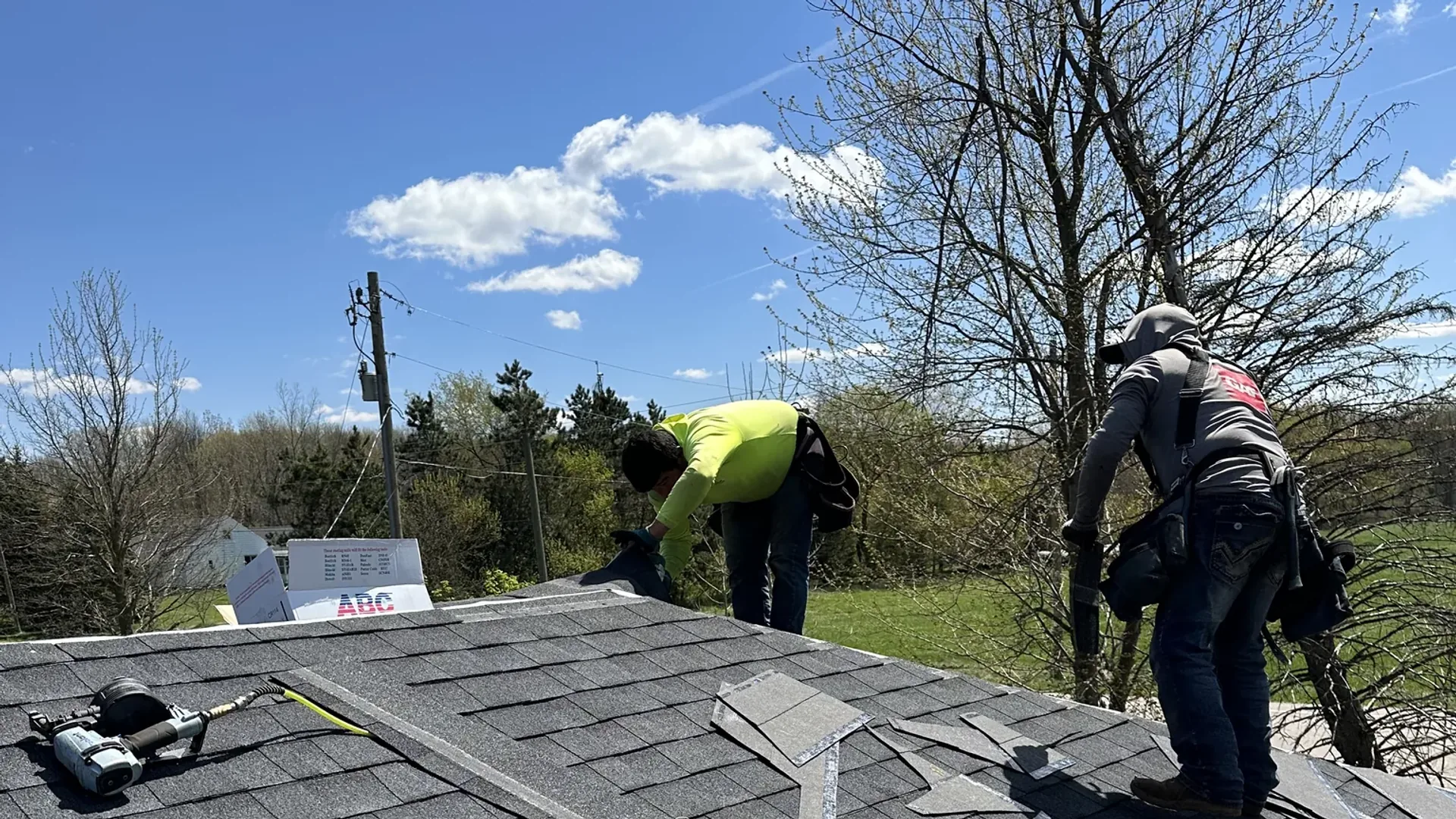
The photo at the top of this page shows one of our crews on that phase, capping the ridge after the field shingles are down. When you see ridge caps going on, the roof itself is hours from done.
Fast is fine. Rushed is not.
A full crew moving quickly through a well-planned job is normal. Skipped deck repairs, shingles over wet underlayment, and reused flashing to hit a finish time are not. If weather forces a pause, the right call is a dried-in roof today and shingles tomorrow.
End of Day: Cleanup and Walkthrough
Cleanup is part of the job, not a favor. The crew hauls debris, blows off gutters, and runs a magnetic sweep across the lawn and driveway to pick up dropped nails. It is reasonable to ask for a second pass anywhere kids, pets, or tires go.
Before the trailer leaves, walk the property with the crew lead. Look at the ridge lines, the flashing details, the gutters, and the yard. Ask for the photos taken during tear-off and dry-in, and confirm how any deck repairs were counted against the estimate. Our guide to reading a roofing estimate explains the line items those photos should match.
How to Get Your Home Ready
- 01Clear the driveway. The trailer, the boom truck, and falling debris all need the space. Park on the street for the duration.
- 02Expect vibration inside. Tear-off and nailing shake the structure. Take down or secure pictures, mirrors, and shelf items on upper floors, and expect dust to sift down in the attic.
- 03Cover what is stored in the attic. Old sheathing gaps let grit fall through during tear-off. A few drop cloths save an afternoon of cleaning.
- 04Plan for pets and noise. A replacement day is loud for hours at a stretch. Dogs and remote meetings both do better somewhere else.
- 05Point out what matters. Show the crew lead the koi pond, the new landscaping, the sprinkler heads, and anything else that deserves extra protection before the first shingle comes off.
When the Schedule Should Worry You
Speed by itself is not a red flag. Speed without process is. Be cautious when a contractor guarantees a finish time before measuring the roof, shrugs off questions about deck repairs, or plans a full tear-off with rain in the afternoon forecast.
Those habits show up together with door-knocking after storms and pressure to sign today. Our guide to choosing a roofing contractor covers the checks that separate a fast crew from a careless one.
Frequently Asked Questions
How long does a typical roof replacement take?
Many single-family asphalt shingle roofs are replaced in one to two working days. Larger homes, steep or cut-up rooflines, multiple old layers, hidden deck repairs, and weather interruptions can extend the schedule. A contractor who has measured your roof should be able to explain the expected duration and what could change it.
Can a roof really be replaced in one day?
Some can. A modest, walkable roof with one existing layer, good access, and a full crew can often be torn off and reshingled in a single day. One day is an outcome of good conditions and planning, not a promise every roof can keep. Be cautious with anyone who guarantees a one-day finish before examining the roof.
What happens if it rains in the middle of the job?
Crews plan tear-off around the forecast and open only the area they can protect. Once the deck is covered with underlayment, the roof is dried in and can typically shed light weather while work pauses. Pausing for rain is the correct response. Installing shingles over a wet deck or wet materials to save a day creates problems that outlast the storm.
Do I need to be home during the replacement?
Usually not for the full day. It helps to be reachable by phone for decisions such as deck repairs, and many homeowners like to be present at the start to review access and at the end for the walkthrough. Ask how the crew will reach you if they uncover something that needs approval.
How will my landscaping, driveway, and belongings be protected?
Ask this before work starts. Common measures include tarps over plants and beds, plywood or board protection at windows and doors, keeping vehicles out of the driveway so falling debris and the dump trailer are not a risk, and a magnetic sweep of the yard and drive for nails afterward. The plan should be specific to your property, not a vague reassurance.
Why do deck repairs change the schedule and the price?
Rotten or delaminated decking is often hidden until tear-off exposes it. Replacing bad wood adds material and labor that no honest estimate can price exactly in advance. A clear estimate states the per-sheet or per-board rate and the approval process ahead of time, so a schedule change never becomes a pricing surprise.
Get a Real Timeline for Your Roof
The only accurate schedule comes from someone who has measured your roof, counted its layers, and looked at its details. An estimate that explains the expected duration, the weather plan, and the deck repair process tells you the crew has done this before.
Platinum Roofing replaces asphalt shingle roofs across Grand Rapids, Jenison, Holland, Muskegon, Kalamazoo, and surrounding West Michigan communities. For a free inspection and a straight answer on what your roof needs, call or text (616) 256-0831 or send the details through our contact form.