
A few brown fastener tips can be easy to dismiss during a quick look through the attic hatch. A roof plane covered with rusty points deserves a closer record. So does one tight cluster below a vent, valley, chimney, or old repair.
Rust shows that exposed metal met moisture. It does not say whether that moisture came through the roof, condensed from humid attic air, or stopped months ago. The pattern around the fasteners is more useful than the color by itself.
Start With What the Fasteners Can Prove
The points visible below the roof deck may belong to shingles, roof accessories, or the deck attachment, depending on the assembly. Their exposed surfaces can cool along with the roof. Humid air reaching cold metal can leave droplets or frost on the tips even when rain never crossed the shingles.
Corrosion confirms prior moisture contact, but appearance cannot date it reliably. Dark rust may be old and dry. A lighter mark may still sit beside active moisture. Photograph the condition before cleaning or covering anything, then look for evidence that changes with rain, cold weather, or indoor humidity.
Inspect from a safe access point
Unfinished attics can contain exposed wiring, hidden ceiling surfaces, loose insulation, sharp fasteners, poor footing, and tight clearances. Do not step between framing members or reach into a wet electrical area. A photo from an existing hatch can preserve useful evidence until qualified help can enter safely.
Map a Broad Pattern and a Localized Pattern Differently
Rust scattered across many fasteners on several parts of the roof deck can point the inspection toward attic-wide moisture. Record which slopes are affected, whether the pattern reaches the eaves and ridge, and whether similar marks appear above bathrooms, bedrooms, an attic hatch, or mechanical runs.
A concentrated group deserves a corresponding location on the roof plan. Mark its distance from the ridge, eave, gable wall, and nearby penetration. Look for a defined stain, water track, damp insulation, or altered wood around that cluster. Water can travel along a nail, rafter, wire, or deck joint, so the first rusty tip may still be downhill from the entry point.
Widespread Rust Can Fit an Attic Moisture Problem
Indoor moisture can reach an attic through gaps around wiring, plumbing, recessed fixtures, partition tops, pull-down stairs, and other ceiling openings. A disconnected bathroom exhaust duct can deliver warm, damp air directly below cold roof sheathing. An open attic hatch or disturbed insulation can add another path.
Intake and exhaust ventilation also need a clear, coordinated route. Blocked soffit channels or an incomplete exhaust layout can slow drying, but adding roof vents by guesswork may not stop air leakage or misplaced exhaust. Our guide to attic ventilation and shingle condition explains why intake, exhaust, insulation, and interior air paths belong in one inspection.
Localized Rust Can Follow Roof Entry
Fasteners below a plumbing vent, chimney, wall intersection, valley, ridge detail, or roof-mounted accessory may rust after water reaches that area from outside. The strongest evidence is a repeatable connection with rain or snowmelt plus a water track on the deck or framing. One correlation still needs exterior confirmation.
Rain direction and duration can change the path. A roof may stay dry through a short shower and show moisture only during wind-driven or prolonged rain. Compare the attic map with the exterior details described in our guide to leaks that appear only in heavy rain.
Read the Wood and Insulation Around the Metal
Check the roof deck for a defined water line, repeated darkening around fasteners, raised panel edges, surface checking, swelling, delamination, or softness identified by a qualified inspector. Look at rafters and trusses for drip marks. Wet or compressed insulation below the same area can preserve a path after the wood surface dries.
Odor or surface growth deserves professional evaluation without guessing at the material or species. Do not scrape, sand, bleach, or paint over it before the moisture source is documented. Disturbing unknown material can create exposure and remove evidence needed to define the repair.
Compare the Attic Map With the Roof Surface
The exterior inspection should cover shingles, flashing, vents, exposed or backed-out fasteners, sealant patches, ridge details, walls, valleys, and roof accessories near the attic marks. A rusty tip inside does not prove the matching shingle nail was installed incorrectly. The contractor should identify the fastener and open enough material to inspect hidden layers when the evidence supports it.
Nail pops visible on top of the roof create a different water-shedding problem. Our guide to nail pops and exposed roof fasteners covers attachment from the exterior side.
Find Out Whether the Condition Is Active
Take wide and close photographs from the same safe position. Record outdoor temperature, recent rain or snowmelt, indoor humidity when available, bathroom or laundry use, and whether frost or droplets were visible. Repeat the same views after a dry period and after the next relevant weather condition.
A moisture meter, thermal imaging, or targeted material testing can add information when used and interpreted for the assembly. No single reading replaces the pattern. The photo sequence in our guide to documenting a roof leak can help preserve changes before an inspection.
Repair the Moisture Path Before Covering the Rust
A roof opening or failed flashing belongs in the roofing scope. Disconnected exhaust, ceiling air leakage, insulation gaps, and ventilation restrictions may require coordination with other qualified trades. Wet insulation and deteriorated wood need evaluation rather than being sealed inside the assembly.
The final record should show the original pattern, measurements, moisture findings, exterior location, opened roof layers where applicable, corrected air or exhaust paths, repaired wood and roofing, and follow-up observations. Treating the visible metal without correcting the source leaves the important part of the work unfinished.
Frequently Asked Questions
Do rusty roof nail tips mean my roof is leaking?
Rust confirms that the exposed metal contacted moisture at some point. It does not identify where the water came from or whether the condition is active. A broad pattern can fit attic condensation, while a concentrated pattern with a water track may fit roof entry. The roof, attic, weather timing, and nearby materials need to be checked together.
Why can nail tips collect moisture before the roof deck looks wet?
Exposed metal can cool quickly. When humid attic air reaches a cold fastener tip, moisture may collect on that small surface. The surrounding wood can look dry later, so the inspection should also look for repeated rust patterns, staining, frost history, damp insulation, and indoor moisture paths.
Can attic ventilation fix rusty roof nails?
Ventilation may be part of the correction when intake and exhaust are missing, blocked, or poorly arranged. It does not replace repairs to a roof opening, disconnected bath exhaust, ceiling air leakage, or wet insulation. The moisture source and airflow path should be identified before changing vents.
Should rusty nail tips be painted or treated?
Covering the visible rust does not correct the moisture that caused it and can hide future evidence. Document the pattern first, determine whether moisture is active, repair the source, and let a qualified inspector decide whether any fastener, roof deck, or other material needs replacement.
Do rusted attic fasteners mean I need a new roof?
No. A focused roof repair or attic correction may be enough when the affected area is limited and the roof deck and covering remain serviceable. Widespread wood deterioration, recurring entry, or broader roof wear can support a larger scope. Rust color alone cannot make that decision.
Inspect the Attic Evidence Before Winter Changes It
Platinum Roofing inspects residential roof and attic evidence across Grand Rapids, Jenison, Holland, Muskegon, Kalamazoo, and nearby West Michigan communities. Call or text (616) 256-0831 to schedule a free roof assessment and identify which trade should handle each part of the moisture path.
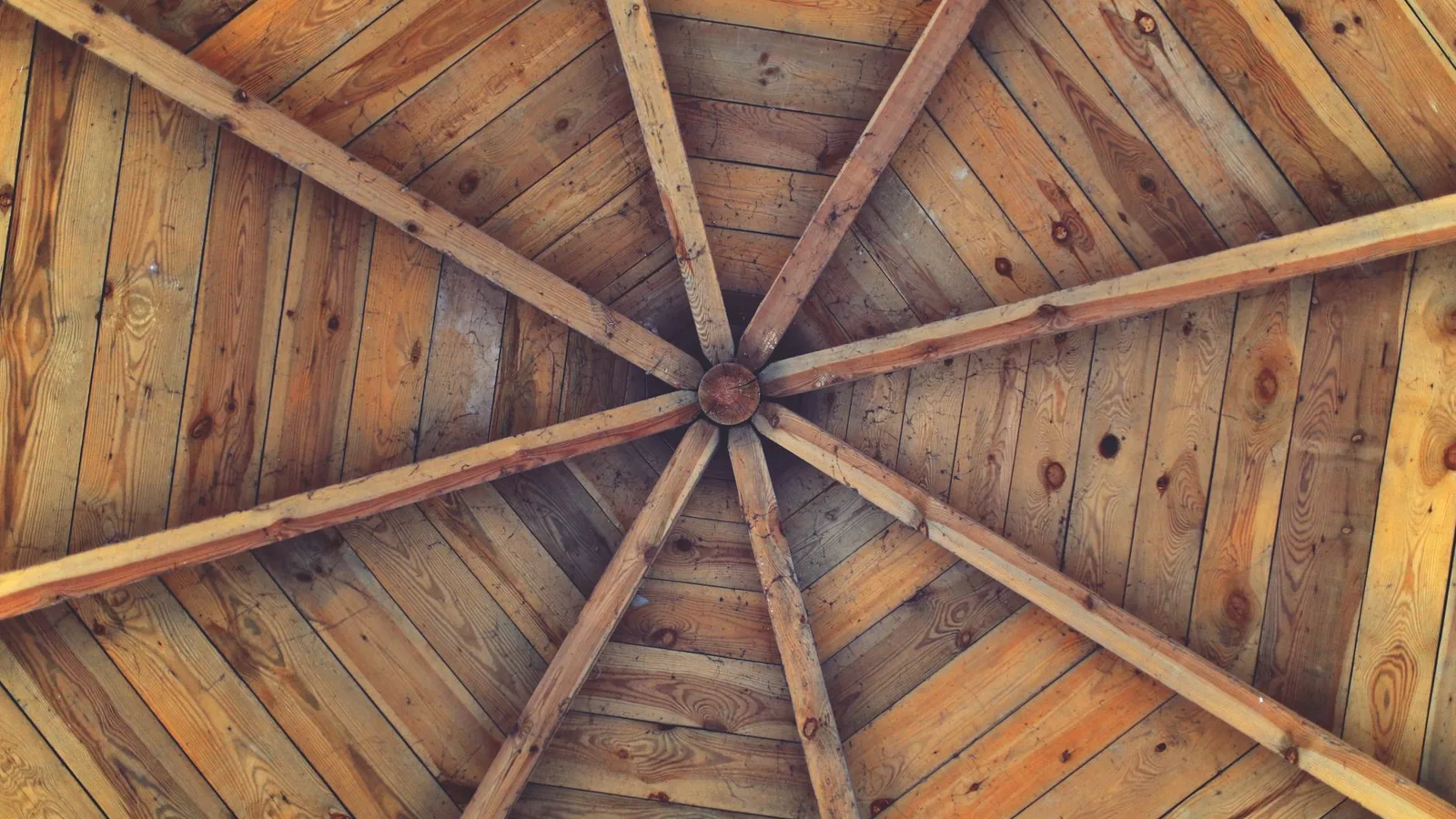
The stock photo shows an exposed wood roof underside and framing as a general material illustration. It does not document a Platinum Roofing project, an attic inspection, rusty fasteners, or a diagnosed moisture condition.